
Last Updated: November 2, 2026
Quick Summary
Protecting pearl finish luxury car paint means defending a multi-stage system where a thin mid-coat carries the flake and cannot be spot-repaired like a solid color. The strongest approach is paint protection film on high-impact areas, a ceramic coating over the rest, and a pH-neutral two-bucket wash routine.
- Rock chips strike through the clear coat and expose the mid-coat in a single hit.
- Ceramic coating adds gloss and hydrophobicity but does not stop a rock.
- Wash with two 5-gallon buckets, grit guards, and a pH-neutral car shampoo.
- Avoid drive-through brush washes, which put swirl marks into a pearl clear coat fast.
- Polish conservatively before protection, since the clear coat on multi-stage paint is thin.
Table of Contents
- Why Pearl and Tri-Coat Finishes Need a Different Protection Plan
- Paint Protection Film vs Ceramic Coating for a Luxury Car
- How to Wash a Pearl White Car Without Dulling the Finish
- Ceramic Coating for Pearl Paint: What It Does and What It Cannot Do
- PPF Maintenance: Keeping Clear Film Clear on a Pearl Finish
- Paint Correction and Decontamination Before Any Protection Goes On
- Repairing Chips and Scratches on Pearl Paint
- Book a Pearl Finish Protection Assessment
- Frequently Asked Questions
Why Pearl and Tri-Coat Finishes Need a Different Protection Plan
Protecting pearl finish luxury car paint starts with one fact most owners learn too late: a pearl finish is not a single color, and protecting pearl finish luxury car paint means planning for every layer.
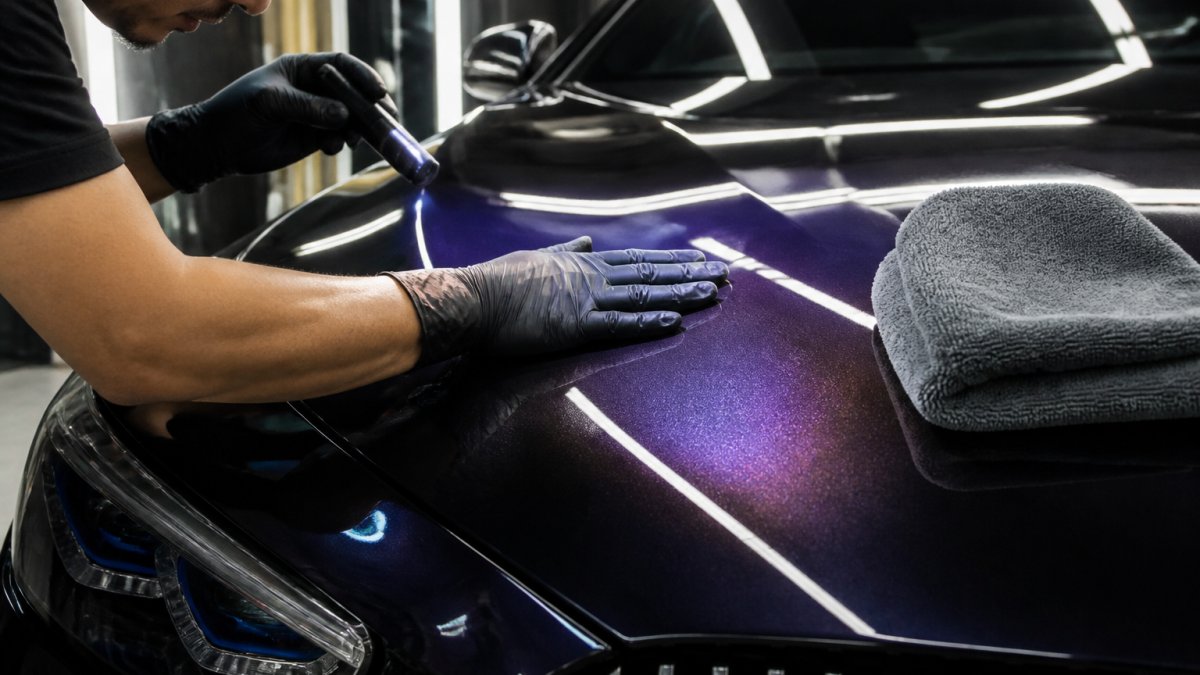
How a Pearl Finish Is Built: Base, Mid-Coat, and Clear
A pearl finish is a multi-stage paint system in which a tinted base coat, a pearl or mid-coat carrying mica or synthetic flakes, and a clear topcoat work together to produce color that shifts with the angle of light. The mid-coat is the fragile part. It is thin, it is what gives the paint its depth, and it cannot be spot-repaired the way a solid color can.
What Damages Pearl Paint First: Chips, Swirls, and UV
Rock chips top the list because they strike through the clear coat and expose the mid-coat in a single hit. Swirl marks come second, typically from improper washing. UV rays drive oxidation and fading over years. Chips are impact damage, swirls are abrasion, and fading is chemical, each needs a different defense. For practical prevention of the first one, see our guide on how to protect car paint from gravel and rock chips.
Paint Protection Film vs Ceramic Coating for a Luxury Car
Paint protection film is a transparent urethane layer bonded to the painted surface that absorbs impact from road debris; ceramic coating is a thin, hard, hydrophobic layer that adds gloss and makes washing easier but does not stop a rock.
| Protection Type | Stops Rock Chips | Blocks UV Fading | Adds Gloss | Typical Role |
|---|---|---|---|---|
| Paint protection film | Yes | Yes | Mild | Impact zones |
| Ceramic coating | No | Partial | High | Whole-body gloss |
| Paint sealant | No | Partial | Moderate | Short-term upkeep |
| Wax | No | Minimal | Moderate | Frequent top-up |
For a high-end vehicle with a tri-coat finish, the strongest approach is usually film on high-impact areas and a coating over the rest. If you are weighing the two directly, our breakdown of paint protection film vs ceramic coating covers the trade-offs in more detail.
How to Wash a Pearl White Car Without Dulling the Finish
Washing a pearl white car safely comes down to lubrication, clean media, and pH-neutral chemistry. Abrasion, not dirt, is what dulls a pearl finish, and most of it happens in the wash bucket. On a multi-stage paint, the clear coat is the only layer you can safely touch, and every swirl scatters light in a way that flattens the flake effect the mid-coat produces.
The tools that actually matter
- Two 5-gallon buckets with grit guards, one for wash solution and one for rinse water.
- A pH-neutral car shampoo, not a dish detergent, which strips wax and sealant and leaves the clear coat unprotected.
- Two or more plush microfiber wash mitts, kept separate from wheel and lower-panel media.
The wash sequence, step by step
- Pre-rinse with a pressure washer from the top down to lift loose grit before anything touches the paint. Keep the nozzle at a safe distance and avoid blasting directly at film edges.
- Foam the car if you have a foam cannon, let it dwell briefly, then rinse. This removes the bulk of surface dirt before contact washing.
- Wash the wheels and tires first with dedicated media, then set that bucket aside.
- Wash the paint top-down with the two-bucket method: dip the mitt in wash solution, wash one panel, rinse the mitt in the rinse bucket, then reload. One panel at a time, straight-line passes rather than circles.
- Rinse the whole car before it dries, working top-down so soap never dries on a panel.
- Dry with a plush microfiber towel laid flat and pulled in straight lines, or use a filtered-air blower to push water off the surface and out of panel gaps and mirror housings. Never wipe in circles.
- Apply a spray sealant as a drying aid on a damp panel to restore slickness and make the next wash easier.
A drive-through brush wash will put swirl marks into a pearl clear coat faster than almost anything else. The brushes trap grit, and the marks they leave scatter light in a way that flattens the flake effect. Touchless washes are safer, but the high-pH soaps some of them use can degrade wax, sealant, and even coating over time, check what the operator is using.
Drying and contamination control
Drying is where many owners undo a careful wash. A damp panel left in the sun spots, and a dirty drying towel grinds grit across the clear coat. Keep two drying towels in rotation, wash them separately with no fabric softener, and retire any towel that has touched the ground or wheel wells. Between washes, a quick detailer or waterless wash is fine for light dust, but dragging a towel across a gritty panel is the same abrasion in a smaller dose.
What to do when the finish already looks dull
If the paint has lost its pop, the fix is decontamination and a light polish, not a heavier wash routine. A chemical iron remover followed by a clay bar treatment pulls bonded contamination, and a finish polish on a soft pad restores clarity, but on a pearl finish, polish conservatively and check your work under an inspection light, because the clear coat is thin and the mid-coat underneath is unforgiving.
Ceramic Coating for Pearl Paint: What It Does and What It Cannot Do
Ceramic coating for pearl paint delivers hydrophobicity and a sharper gloss that makes the flake pop.
What a coating genuinely helps with is surface contamination.
Where it falls short is the front bumper, hood leading edge, and mirror caps, the areas that take road debris. Coating those without film is a decision owners regret.
PPF Maintenance: Keeping Clear Film Clear on a Pearl Finish
PPF maintenance is mostly about keeping the film clean and letting its self-healing top layer do its job. Modern clear film reflows light scratches with heat, but it still needs care. What separates a film that looks invisible after five years from one that yellows or lifts is usually decided before the first wash, by coverage choices and installer quality, then maintained with a few consistent habits.
Coverage decisions: full body vs high-impact areas
Most owners choose between two approaches:
- High-impact coverage, front bumper, hood leading edge (or full hood), fenders, mirror caps, and often the headlights and rocker panels. This is where road debris actually strikes, capturing most of the chip risk for a fraction of full-body cost.
- Full-body coverage, every painted panel, including doors, roof, and rear bumper. It protects against door dings, shopping-cart contact, and environmental fallout, and avoids the visible line where a partial film ends.
A common pattern is high-impact coverage on a daily-driven luxury car and full-body coverage on a collectible or exotic where any seam is unacceptable. The trade-off is cost and installation time versus the visibility of film edges. On a pearl finish, a partial hood line can catch light differently than the surrounding paint, so ask your installer to show you where the edge will land before the film is cut.
Seams, edges, and installer-quality checks
Film is only as good as its installation. Before you commit, ask to see:
-
Wrapped edges where possible, film tucked around panel edges rather than cut flush, which hides the edge and reduces lift.
-
A clean, dust-free install bay, contamination trapped under film is permanent and shows as specks or bubbles.
-
Post-install inspection under bright light, check for lifted edges, trapped debris, and stretch marks, and ask about the cure window before washing.
Ask your installer for any warranty terms in writing and confirm who honors them.
Realistic durability and maintenance schedule
Manufacturer claims and real-world outcomes differ. Actual lifespan depends on sun exposure, parking habits, and wash routine. A practical schedule:
- Weekly or biweekly, wash with pH-neutral products on the same schedule as the paint.
- As needed, remove bird droppings and bug splatter promptly; they etch film as they etch paint.
- Seasonally, inspect edges and high-stress areas for lifting, and check for yellowing under direct sun.
Avoid abrasive polishes on film; they cloud the surface. Park in shade where possible to slow yellowing. Yellowing is the concern most owners raise, and it is legitimate, film quality and installation method both matter.
Cost factors to weigh before you commit
Pricing depends on coverage area, vehicle complexity, and the film and labor involved. Contact 203wraps directly for current prices or a quote, and ask whether the price includes a post-install inspection.
Paint Correction and Decontamination Before Any Protection Goes On
Paint correction before protection is non-negotiable. Film and coating lock in whatever is underneath them, including swirl marks, and a pearl finish hides defects until sunlight hits it at the right angle.
Decontamination comes first: a chemical iron remover, then a clay bar treatment to pull bonded surface contamination. Correction follows, using a machine polisher with a finish polish rather than an aggressive compound, because the clear coat on a multi-stage paint is thin and unforgiving.
Repairing Chips and Scratches on Pearl Paint
Repairing damage to pearl paint is where tri-coat finishes separate from everything else. A chip that reaches the mid-coat cannot be touched up with a single color-matched pen and blended invisibly. The flake orientation and layer thickness have to be reproduced, and a spot repair often shows as a patch under direct light.
Small chips that stay in the clear coat can sometimes be polished out. Deeper chips that expose the mid-coat generally call for a professional blend or panel refinish.
Book a Pearl Finish Protection Assessment
A pearl finish rewards planning more than any other paint type. The layers that give it depth are the layers that show damage first, and the repair path is harder and costlier than on a solid color.
At 203wraps, our certified technicians specialize in high-end and collectible automobiles, with over a decade of experience. We offer paint protection film, vinyl vehicle wraps, and professional window tinting, with a focus on clean installs and premium finishes.
Frequently Asked Questions
How do you protect pearl-finish car paint?
Start with a clean, corrected surface, then choose protection based on where the car drives. Paint protection film on high-impact areas (bumper, hood, mirrors, rocker panels) absorbs stone chips and road debris, while a ceramic coating or paint sealant adds hydrophobic protection and UV resistance across the rest of the body. Wash with a pH-neutral shampoo and the two-bucket method, and avoid automatic brush washes that cause swirl marks on multi-stage paint.
Is paint protection film safe for pearl paint?
Yes, when the film is installed by certified technicians on a properly prepared surface. Quality clear film is optically clear and does not change the color or flop of a pearl or tri-coat finish. The risk comes from cheap film or poor installation, which can yellow, lift at edges, or trap contamination. Ask about the film brand, warranty terms, and whether the installer has worked with multi-stage finishes before booking.
Is PPF or ceramic coating better for a luxury car?
They solve different problems. PPF is the only option that physically stops rock chips and scratches from road debris, so it belongs on high-impact areas. Ceramic coating for pearl paint adds gloss, hydrophobic protection, and easier washing but will not stop a stone chip. Many owners combine film on the front end and high-impact zones with a protective coating over the remaining panels for simpler maintenance.
Can ceramic coating protect pearl paint from rock chips?
No. A ceramic coating is a thin, hard layer measured in microns and cannot absorb the impact of a stone at highway speed. It helps with UV rays, oxidation, water spotting, and wash-induced swirl marks, but chip protection requires paint protection film. If chip resistance is the priority on a pearl finish, budget for PPF first and treat the coating as a maintenance and gloss upgrade.
How should you wash a pearl-finish car?
Use a pH-neutral wash, two buckets with grit guards, and a soft microfiber mitt, working top down and rinsing often. Dry with a plush microfiber towel or filtered blower rather than a squeegee. Skip automatic brush washes and avoid washing in direct sun or on a hot panel. On a coated or filmed car, a maintenance spray or drying aid keeps the hydrophobic layer working and reduces the chance of water spots on the clear coat.
Does paint protection film change the appearance of pearl paint?
A quality clear film is designed to be optically invisible and preserves the color shift that makes pearl and tri-coat finishes distinctive. Gloss film can add a slight depth, while satin or matte film changes the look entirely, so confirm the finish before installation. On older or single-stage paint, a test panel is worth doing. Poor-quality film is the usual cause of a hazy or yellowed look, not the pearl paint itself.
How often should you maintain paint protection on a luxury car?
Wash every one to two weeks, decontaminate and apply a coating booster every three to six months, and have a professional inspection once a year. PPF maintenance includes checking edges, removing tree sap and bird droppings promptly, and avoiding pressure washing within a foot of film edges. Ceramic coatings typically need a professional refresh every few years depending on climate, parking, and mileage.
Your pearl finish is only original once, and every chip shortens the window to protect it. Get started with 203wraps and keep the depth, the flake, and the showroom gloss intact for the life of the car.
