
Last Updated: November 21, 2026
Quick Summary
Professional window tinting delivers UV protection, heat rejection, and glare reduction in one install, while quality film also adds privacy and shatter resistance. A careful install and a budget one can look very different within a single season, so film grade and surface prep matter as much as price.
- Ceramic film offers the highest heat rejection and clarity with no signal interference, making it best for premium cars.
- Metalized film reflects heat well but can interfere with GPS, toll transponders, and cell signals.
- Dyed film is the lowest-cost option and fades fastest, often turning purple after a few summers.
- Every state sets its own window tint laws, usually expressed as a minimum visible light transmission percentage.
- A transparent quote should break out film brand, panes covered, warranty length, and old film removal.
Table of Contents
- Why Professional Window Tinting Beats a Cheap Chain Shop
- UV Protection, Heat Rejection, and Glare Reduction: What the Film Actually Does
- Privacy, Security, and Shatter Resistance for Daily Drivers
- Ceramic Tint vs. Dyed, Carbon, and Metalized Film
- The Disadvantages of Tinting Car Windows You Should Know
- What Drives the Cost of Tinting Car Windows
- How Professional Installation and Quality Checks Work
- Book Your Window Tinting Consultation
- Frequently Asked Questions
Why Professional Window Tinting Beats a Cheap Chain Shop
The benefits of professional window tinting start with what you cannot see: film that stays flat, optics that stay clear, and an install that survives summer heat without bubbling. A careful install and a budget one can look very different within a single season.
A cheap shop may compete on price, but preparation is where installs differ. Film may be cut on the car instead of plotted, and glass may not be checked for contamination before application. Professional window tinting is a discipline of surface prep, controlled environment, and calibrated film choice.
Film applied over dirty or improperly prepped glass is a common cause of lifting at the edges and trapped debris.
If you are still weighing the decision, our guide on whether professional window tinting is worth it walks through the full value case.
UV Protection, Heat Rejection, and Glare Reduction: What the Film Actually Does
Window film works on three fronts at once: it filters ultraviolet light, rejects a share of solar heat, and cuts the intensity of glare that reaches your eyes. Each front matters for a different reason, and the film you choose trades one against another.
Blocking UV Rays That Damage Skin and Fade Interiors
UV protection is the benefit most drivers undervalue. Ultraviolet radiation, particularly UVA, reaches skin through untinted glass and drives cumulative sun exposure on long commutes. The same radiation breaks down the dyes and polymers in upholstery, dashboards, and door panels.
Quality automotive film is designed to reject a large share of UV rays, which can slow interior fading and reduce UV exposure for occupants. Cumulative sun exposure through vehicle side glass is generally recognized as a factor in skin damage over time.
Our technicians explain the fading mechanism in more detail in how professional tint prevents interior fading.
Cutting Solar Heat and Cabin Temperature
Heat rejection targets the infrared portion of sunlight, the part you feel as radiant warmth through the glass. Ceramic and carbon films handle this far better than basic dyed film, and the difference shows up in cabin temperature within minutes of parking in direct sun.
Lower cabin temperature means the air conditioning works less to reach a comfortable setting, which supports passenger comfort on long drives and reduces the load on the system.
Reducing Glare for Safer Driving Visibility
Glare reduction is a safety feature, not a cosmetic one. Tint lowers the intensity of low-angle sun and headlight glare without blacking out the view. Visible light transmission is the number that governs this trade-off, and it is the same number your state’s tint law regulates.
If night driving is your concern, our article on whether tinting affects night driving visibility covers how film choice and VLT percentage interact after dark.
Privacy, Security, and Shatter Resistance for Daily Drivers
Privacy is the benefit drivers notice first. Tint reduces how much of your cabin and belongings are visible from outside, which matters most in parking structures and at stoplights. A darker film on rear glass does more for privacy than the windshield ever will.
Security works alongside it. Film holds shattered glass together after an impact, so a broken window tends to stay in the frame rather than scattering across the cabin. That shatter resistance slows entry and protects occupants from flying glass in a collision.
Shatter resistance is not a substitute for an alarm or a locked door, and we never sell it as one. It buys time and reduces glass spray. For high-end and collectible cars, that combination is worth the upgrade on its own.
Ceramic Tint vs. Dyed, Carbon, and Metalized Film
Ceramic tint is the top tier for heat rejection and clarity, and it is what we recommend for luxury and exotic vehicles.
| Film Type | Heat Rejection | Clarity | Signal Interference | Durability | Relative Cost | Best For |
|---|---|---|---|---|---|---|
| Dyed | Low | Fair | None | Fades fastest | Lowest | Budget builds, short ownership |
| Carbon | Moderate | Good | None | Good | Moderate | Daily drivers |
| Metalized | High | Good | Possible | Very good | Moderate to high | Heat-heavy climates |
| Ceramic | Highest | Excellent | None | Excellent | Highest | Premium and collectible cars |
Dyed film uses color to absorb light and fades fastest, often turning purple after a few summers of direct sun. Carbon film adds durability without metal content, so it holds color longer than dyed film while staying signal-friendly.
A useful way to think about the choice is by priority. If heat rejection is the goal and the car parks outside all day, ceramic or metalized film earns its cost.
Performance numbers deserve a caveat. Manufacturers publish visible light transmission, UV rejection, infrared rejection, and total solar energy rejected for each film line, but real-world results vary by film, by glass, and by how much of the vehicle is covered.
Watch out: metalized film’s signal interference is not universal, but it is common enough that drivers who rely on toll transponders or satellite radio should test a small pane before committing to a full vehicle.
For a deeper performance comparison across film options, see our breakdown of the best window tints for heat rejection.
The Disadvantages of Tinting Car Windows You Should Know
The disadvantages of tinting car windows are real, and any shop that skips them is selling, not advising. Legal limits are the first constraint: every state sets its own window tint laws and legal tint limits, usually expressed as a minimum visible light transmission percentage on side and rear glass. Install film too dark and you risk a citation and a re-tint.
Second, cheap film fails visibly. Bubbling, peeling, and purple discoloration are the classic symptoms, and they almost always trace back to low-grade film or poor prep. Third, very dark tint can hurt driving visibility at night and in rain.
Finally, film is permanent until removed, and removal on a poorly installed job can cost more than the original tint. None of these are reasons to skip tinting. They are reasons to choose film and an installer carefully.
What Drives the Cost of Tinting Car Windows
The cost of tinting car windows depends on film grade, vehicle geometry, and how much glass you cover. Ceramic film costs more than dyed film because the material itself costs more. A coupe with simple flat glass takes less labor than an exotic with curved rear glass and tight tolerances.
Coverage is the other lever. A full-vehicle tint costs more than a partial job, and many drivers start with the front doors and windshield strip before committing to the whole car.
Quotes can reflect film brand, warranty length, and prep time.
What a Tint Job Typically Costs
Pricing depends on film type, vehicle, and coverage. For current prices or a quote, visit the 203wraps website. Partial coverage, such as front doors only or a windshield strip, costs less than a full-vehicle job because it uses less film and less labor. Trucks and SUVs with more glass cost more than sedans. Vehicles with curved or tightly toleranced rear glass cost more again, because the installer spends more time fitting and shrinking film.
A transparent quote should break out film brand and line, the panes covered, warranty length, and whether removal of old film is included. If a quote is a single number with no line items, ask what film is going on the car and what happens if a pane fails inspection.
Warranty, Lifespan, and Long-Term Value
Warranty coverage can vary between installers and film lines, so ask what is covered and for how long. Keep the paperwork; a warranty is only as good as the record that proves you bought the film.
Expected lifespan tracks film grade. Dyed film is the shortest-lived and most likely to fade or turn purple. Carbon and metalized films hold up longer. Ceramic film is the most durable of the four and the least likely to need replacement during typical ownership.
A low-cost install that fails early can end up costing more than doing it right the first time. Add the interior protection, heat rejection, and resale presentation that quality film delivers, and the higher upfront price often pays back over the life of the vehicle.
Watch out: a warranty that excludes labor, or one that requires you to ship the failed film back at your own cost, is worth less than it appears on the sales sheet.
How Professional Installation and Quality Checks Work
Professional installation follows a fixed sequence, and each step protects the next. Installation involves preparing and cleaning the glass before film is applied.
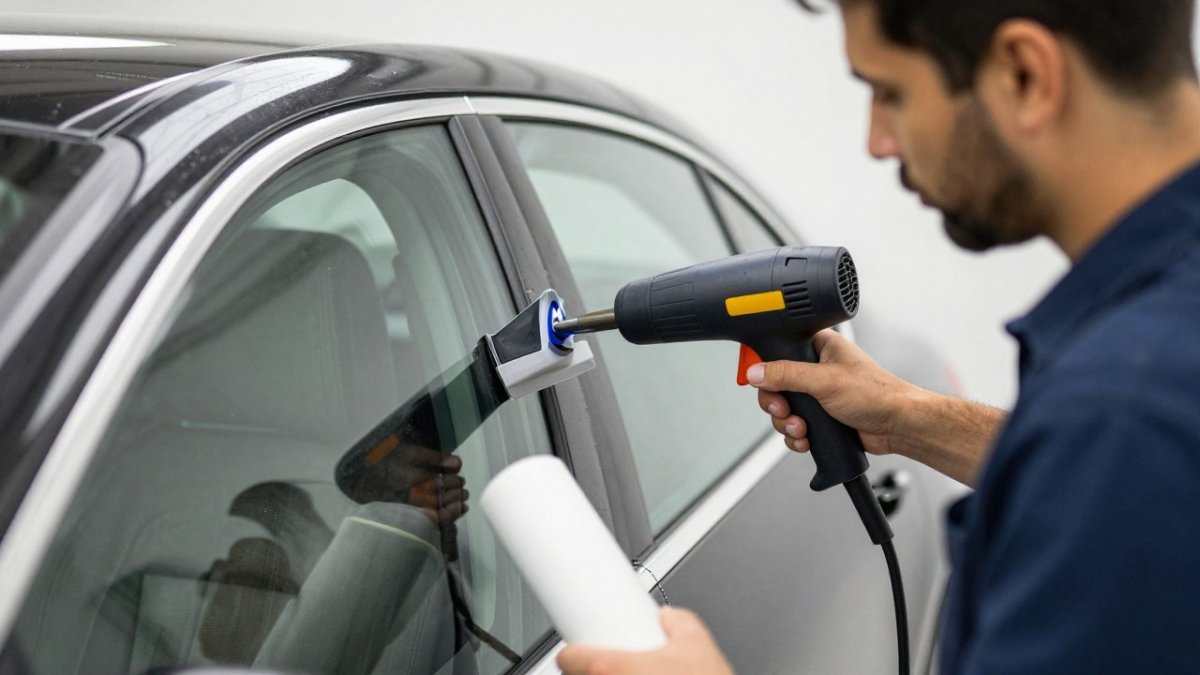
Quality checks can be performed after film has cured. Film durability depends on this step as much as on the film itself.
Watch out: film needs time to cure, and rolling windows down too early is the fastest way to ruin a fresh install.
Book Your Window Tinting Consultation
Choosing film is a decision about heat, UV exposure, privacy, and resale value, and it deserves more than a price sheet. Bring your car in and tell us how you drive it, and we can discuss which film fits your priorities.
203wraps brings over a decade of experience and a team of certified technicians to every install, with a focus on high-end and collectible automobiles and clean, premium finishes. We specialize in paint protection film, vinyl wraps, and professional window tinting, and we treat each vehicle with the care its finish deserves.
Get started with 203wraps and protect your cabin, your interior, and your investment in one appointment. You can also book high-end automotive window tinting near you when you are ready to schedule.
Your car sits in the sun every day, and the film on its glass is the only thing standing between that exposure and your interior. Let our certified technicians spec the right film for your vehicle and install it to a standard you can inspect. 203wraps offers professional window tinting, paint protection film, and vinyl wraps backed by over a decade of hands-on work with high-end and collectible automobiles.
Frequently Asked Questions
Is professional window tinting worth it compared to a cheap tint job?
Professional window tinting costs more up front but usually lasts longer and performs better. Cheap dyed film can bubble, peel, and turn purple within a couple of years, while a quality install with ceramic or carbon film holds up for many years and keeps its heat rejection.
What are the disadvantages of tinting car windows?
The main disadvantages of tinting car windows include state tint laws that restrict visible light transmission, especially on front side windows, and the risk of a ticket if you go too dark. Very dark film can also hurt night driving visibility, and metalized films may interfere with GPS or phone signals. Cheap film bubbles and peels, and DIY installation often leaves trapped dirt or air pockets.
Is ceramic tint better than regular tint?
Ceramic tint blocks more infrared heat than dyed or carbon film and does not interfere with cell or GPS signals the way some metalized films can. It also holds its color longer and lets you get strong heat rejection at a lighter shade, which helps you stay within legal tint limits. The trade-off is price: ceramic film costs more than standard dyed film, so it makes the most sense on vehicles you plan to keep and drive daily.
How long does professional car window tinting take?
Larger vehicles, curved rear glass, or a full removal of old film add time. Ask your installer about cure time before you roll the windows down or wash the car, since the film needs a few days to settle and any trapped moisture to evaporate.
