
Table of Contents
- How Professional Tint Prevents Interior Fading
- How UV Radiation Breaks Down Interior Materials
- Why Fading Varies by Material and Exposure
- Automotive Window Tint UV Protection: What the Numbers Actually Mean
- Ceramic Window Tint Benefits for Interior Preservation
- Protecting Seats, Upholstery, and Dashboard Surfaces
- Does Car Window Tint Fade Over Time? Film Lifespan and Failure Signs
- Professional Window Tint Installation: Why Certified Application Matters
- Realistic Limits and Complementary Protection
- Conclusion
- Frequently Asked Questions
Last Updated: October 21, 2026
How Professional Tint Prevents Interior Fading
Your dashboard is a slow-motion science experiment. At 203wraps, we’ve spent over a decade installing film on high-end and collectible cars, and the single most common reason owners call us is this: they want to know how professional tint prevents interior fading before the damage is permanent.
Here’s the short answer. Professional window tint blocks the ultraviolet radiation that breaks chemical bonds in leather, vinyl, and fabric. Block the UV, and you slow the fading, cracking, and drying that follow sun exposure.
How UV Radiation Breaks Down Interior Materials
Ultraviolet radiation is the invisible part of sunlight that carries enough energy to break molecular bonds. When UV rays pass through untreated glass, they strike your upholstery and dashboard and start pulling apart the chemical chains that give those materials their color and flexibility.
The result is a chain reaction:
- Color loss: dye molecules absorb UV energy and break down, so surfaces fade
- Drying: plasticizers and oils migrate out of leather and vinyl, leaving them brittle
- Cracking: weakened material loses elasticity and splits under normal use
- Discoloration: uneven sun exposure leaves patchy, blotchy surfaces
Glass blocks some UV, but standard automotive glass still lets a meaningful share through. Film closes that gap.
Why Fading Varies by Material and Exposure
Not every interior surface fades at the same rate. Material type and sun angle matter as much as total hours of exposure.
Leather tends to show drying and color shift first on bolsters and headrests, where the sun hits at a direct angle.
Exposure patterns explain the rest. A car parked outside all day fades faster than a garaged one. A vehicle with a large windshield and a low roofline collects more solar energy.
The surfaces that fade first are almost always the ones facing the glass at a shallow angle: dash tops, rear parcel shelves, and the top of the back seat. Check those first when you evaluate a used car.
Automotive Window Tint UV Protection: What the Numbers Actually Mean
Automotive window tint UV protection is usually quoted as a percentage of ultraviolet rejection, and quality films commonly claim up to 99% UV blocking. That number refers to UV specifically, not to heat and not to visible light.
Here’s where buyers get confused. A film can block nearly all UV and still let plenty of heat and glare through. UV rejection, infrared rejection, and visible-light transmission are three separate specs. Ask for each one by name.
| Spec | What It Measures | Why It Matters |
|---|---|---|
| UV rejection | Share of ultraviolet radiation blocked | Directly tied to fading and skin protection |
| Infrared rejection | Share of infrared heat blocked | Affects cabin heat and comfort |
| Visible-light transmission (VLT) | Share of visible light allowed through | Affects visibility and legal compliance |
| Total solar energy rejected (TSER) | Share of all solar energy, UV, visible, and infrared, blocked | The closest thing to a single performance number |
| Solar heat gain coefficient (SHGC) | Share of solar heat that passes through the glass assembly | Lower is better for heat; useful for comparing full assemblies |
How to read a film data sheet without getting fooled
Reputable manufacturers publish performance data for each film line, usually broken out by VLT shade. A 70% VLT film and a 20% VLT film from the same product family will post different infrared and TSER numbers, because a darker film physically absorbs more solar energy. That means you cannot compare a dark film’s TSER against a light film’s TSER and conclude one product is better, you are comparing two different shades.
A few practical rules for reading the sheet:
- Compare like shades. Pull the row for the VLT you actually plan to install, not the best-performing row in the table.
- Look for the test method. UV rejection is typically measured per an industry test protocol; ask the shop which standard the manufacturer cites. If the data sheet lists no method, treat the number as marketing.
- Separate UV from everything else. A 99% UV claim is common and not a differentiator. The differentiators are TSER, infrared rejection, and how those hold up over time.
- Check the warranty terms against the data. A film that claims 99% UV rejection but carries a three-year warranty is telling you something about its expected lifespan.
Why UV rejection is not the same as fade prevention
UV is the primary driver of fading, but it is not the only one. Visible light and heat also contribute to color shift and material degradation, which is why a film with 99% UV rejection can still leave a dashboard warm to the touch and a leather seat slowly drying out. The best interior-protection films pair high UV rejection with meaningful infrared heat rejection and a TSER figure that reflects the whole solar spectrum.
When you request a quote, ask for the data sheet for the exact film and shade being installed, not the brand’s flagship product. A shop that can produce it on the spot is a shop that stands behind its numbers.
Verification matters too. Reputable manufacturers publish film performance data, and a good shop will show it to you. If a quote comes with a UV claim but no documentation, treat it as marketing.
Ceramic Window Tint Benefits for Interior Preservation
Ceramic window tint benefits go beyond UV blocking.
For interior preservation, the payoff is real. Less heat inside the cabin means less thermal stress on leather, vinyl, and adhesives. UV protection handles the fading; heat rejection handles the baking.
What most guides miss is that ceramic film’s advantage is durability as much as performance. Ceramic layers resist breakdown better than dyed films, which matters on a car you plan to keep.
Protecting Seats, Upholstery, and Dashboard Surfaces
Every interior surface needs the same thing: a barrier between it and the sun. Film on the glass is the first line of defense. A few habits reinforce it.
- Park in shade or a garage when you can
- Use a windshield sunshade on hot days
- Condition leather on a regular schedule to replace lost oils
- Wipe dash surfaces with a UV-safe protectant, not a shiny silicone dressing
For car seats and upholstery, film does the heavy lifting because it stops UV before it ever reaches the material. Routine care handles the rest. Neither one replaces the other.
Skipping film and relying on a sunshade alone leaves your side and rear glass unprotected. Most fading on seats and door panels comes through side windows, not the windshield.
Does Car Window Tint Fade Over Time? Film Lifespan and Failure Signs
Does car window tint fade over time? Yes, all film degrades eventually, but quality film and proper installation push that timeline out considerably. Cheap dyed films can lose color and turn purple within a few years. Ceramic and other high-quality films typically hold up far longer.
Watch for these signs of film failure:
- Purple or blue tint shift: dye breakdown, common in low-cost film
- Bubbles or blisters: trapped moisture or adhesive failure
- Peeling at edges: poor installation or film shrinkage
- Hazy or cloudy patches: layer separation
Film lifespan depends on sun exposure, film type, and installation quality. A garaged car with quality ceramic film will outlast a sun-baked car with bargain film by a wide margin.
Professional Window Tint Installation: Why Certified Application Matters
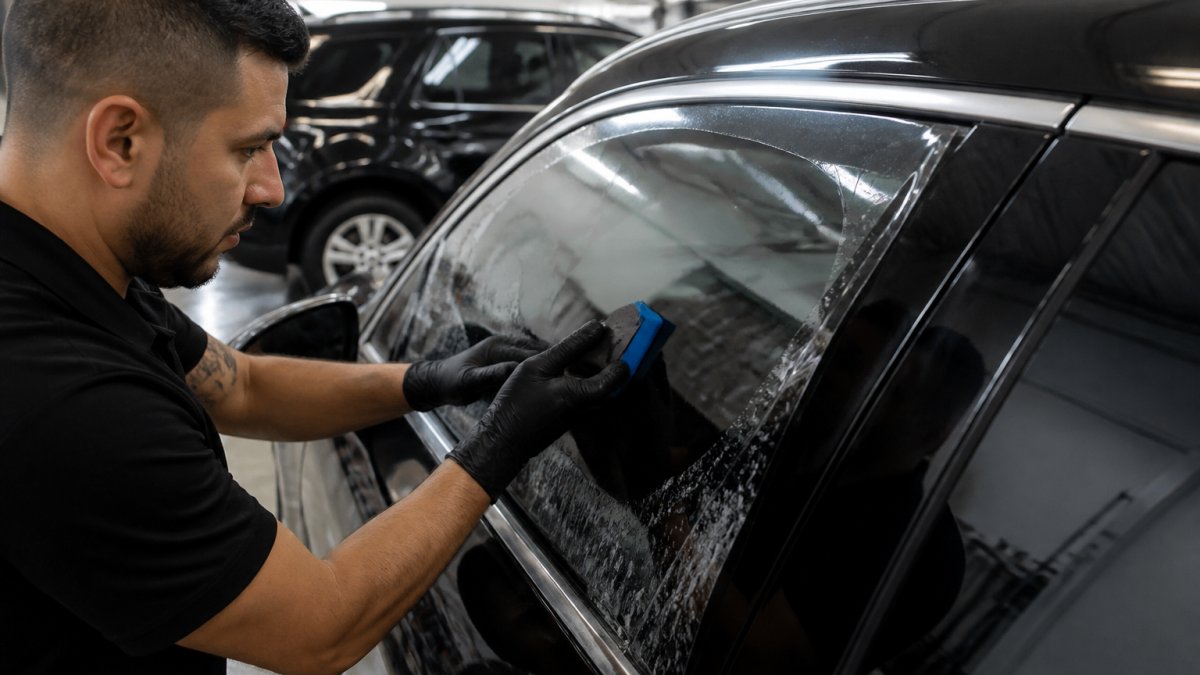
Professional window tint installation decides whether you get the film’s rated performance or a compromised version of it.
Certified technicians work in controlled conditions. They prep glass properly, shrink film to match curved glass, and finish edges cleanly. That’s the difference between film that performs for years and film that fails in one.
The film is only half the product. Installation quality determines how much of the film’s UV and heat rejection you actually get, and how long it lasts.
Realistic Limits and Complementary Protection
Window film is powerful, but it isn’t magic. It cannot reverse fading that already happened, and it can’t protect surfaces that never sit behind glass. It also won’t stop heat from entering through the roof, floor, or firewall. Being honest about those limits is what separates a real protection plan from a sales pitch.
What tint can and cannot do
Tint’s core job is to reduce the solar energy reaching your interior through the glass. It does that well. What it cannot do is eliminate fading entirely, because some visible light and heat still pass through even a high-performance film, and because materials degrade from the inside out as plasticizers and oils migrate regardless of sun exposure.
State law sets limits on how dark tint can be on side and rear windows, and windshield rules are stricter still. Check your state’s rules before you choose a shade, and let a professional confirm compliance.
Warranty, lifespan, and when to replace film
Film warranties vary widely by product line and installer. A common pattern is a multi-year manufacturer warranty against bubbling, peeling, and discoloration, often contingent on professional installation and sometimes on the film being installed by an authorized dealer.
Watch for the signs that film has reached the end of its useful life:
- Purple or blue shift: dye breakdown, most common in low-cost dyed films
- Bubbles or blisters: trapped moisture or adhesive failure
- Peeling at edges: poor installation or film shrinkage
- Hazy or cloudy patches: layer separation
Degraded film is not just cosmetic. A film that has lost its UV-blocking layer is no longer protecting the interior, and bubbles and peeling can trap moisture against glass and trim.
Complementary protection that fills the gaps
- Parking habits: shade, a garage, or a carport reduces total solar exposure more than any single product.
- Windshield sunshades: a reflective shade cuts dashboard surface temperature dramatically during short stops.
- Interior conditioning: leather and vinyl benefit from regular conditioning to replace oils lost to heat and light.
- UV-safe dressings: use a protectant formulated for interiors rather than a shiny silicone dressing that can accelerate cracking.
- Film on every glass surface: side and rear glass are major UV paths, especially on long commutes; protecting only the windshield leaves most of the interior exposed.
Together, these steps give your interior the best realistic defense, film does the heavy lifting on UV and heat, and the habits around it handle the exposure film cannot reach.
Conclusion
Fading is patient. It works every sunny day, and by the time you notice it, the damage is often set. The fix is to block UV before it reaches your materials, and that means quality film installed correctly.
At 203wraps, our certified technicians install premium window film built for high-end and collectible cars, with clean installs and documented film performance.
Book now with 203wraps and protect the interior you’ve invested in.
Frequently Asked Questions
How does professional window tint help prevent a car interior from fading?
Quality window film blocks the ultraviolet radiation that breaks down dyes and polymers in leather, vinyl, and fabric. Films rated for UV rejection stop most of that radiation before it reaches your dashboard or seats. Professional installation matters because gaps, bubbles, or poor adhesion let UV through at the edges. Combined with heat rejection, tint slows both color loss and the drying that leads to cracking.
Does ceramic window tint protect a car’s interior better than dyed tint?
Ceramic film typically delivers stronger heat rejection and holds its performance longer than dyed film, which relies on a dark layer that can fade itself. Both can block UV when rated for it, but ceramic’s infrared rejection keeps cabin surfaces cooler, reducing heat-driven drying and cracking. For luxury or collectible cars, ceramic window tint benefits usually justify the higher cost over a basic dyed film.
Does car window tint fade over time, and how long does it last?
Yes, all film degrades eventually, but quality and installation set the timeline. Cheap dyed films can discolor within a few years, while quality ceramic films often hold up much longer under proper care. Watch for purple or hazy patches, bubbling, and peeling edges as signs of failure. Parking in shade and avoiding harsh cleaners extend film lifespan, and a reputable shop should explain its warranty terms clearly.
Can window tint prevent a dashboard from cracking?
Tint reduces but does not eliminate dashboard cracking. UV-blocking film slows the breakdown of vinyl and the color loss that precedes cracking, and heat rejection lowers surface temperatures that accelerate drying. A dashboard left in direct sun for years can still degrade. Pair tint with a sunshade when parked and periodic conditioning of leather and vinyl for the best protection.