
Last Updated: November 17, 2026
Quick Summary
The best car wrap for winter driving is a cast vinyl film from an established manufacturer, installed above the film’s minimum temperature and sealed at the edges. Cast vinyl conforms tightly with less edge tension, so it resists the lifting that freezing cold and road salt cause on calendared film.
- Rinse rocker panels and wheel arches after each salt exposure to remove brine before it dries.
- Many films become difficult to work with below roughly 60°F to 65°F, so use a heated garage.
- Durability ratings are published for vertical panels; hoods and roofs get shorter warranty coverage.
- Hand wash with pH-neutral soap every two to three weeks and dry edges and seams each wash.
- Skip automatic brush washes, since bristles catch lifted edges and tear them back.
Table of Contents
- What Winter Does to a Car Wrap
- Cast Vinyl and Wrap Construction: What Resists Cold
- Best Vinyl Wrap Brands for Cars in Winter Conditions
- Vinyl Wrap vs. Paint Protection Film for Winter Driving
- How Cold Is Too Cold to Wrap a Car
- Car Wrap Winter Care: A Maintenance Schedule That Works
- Matte or Gloss: Picking a Finish for a Salt-Belt Commute
- Book a Winter-Ready Wrap Consultation
- Frequently Asked Questions
What Winter Does to a Car Wrap
Winter is one of the hardest seasons on any vinyl wrap, and the failures that occur most often trace back to two forces: road salt working at the edges and freezing temperatures stiffening the film. Below, we’ll show you what each one does and how to defend against it.
A vinyl wrap is a thin, flexible film applied over a vehicle’s painted panels to change its color or finish. It sits on top of the clear coat rather than replacing it, which means its winter performance depends on adhesion quality and edge sealing more than on film thickness.
Road Salt and De-Icing Chemicals
Road salt is the quiet killer of wrap edges. Brine spray creeps under a lifted edge, dries into abrasive crystals, and slowly works the adhesive loose every time the film flexes. A common mistake is letting salt sit on the lower panels for weeks. Rinse the rocker panels and wheel arches regularly through the winter months, not just after a storm.
Freezing Temperatures and Edge Lifting
Cold makes vinyl less elastic. When temperatures drop below freezing, film that was stretched during installation wants to return to its original shape, and that memory pulls hardest at corners and seams. Edge lifting is the first sign, and once an edge lifts, salt and moisture get underneath. Garage parking helps, but it won’t fix an edge that was never properly post-heated.
Cast Vinyl and Wrap Construction: What Resists Cold
Cast vinyl is generally regarded as conforming well to curves without heavy stretching. Calendared film is generally stiffer, with more built-in tension, which cold weather can exploit.
A quick comparison of the main material types:
| Material | Cold-Weather Behavior | Best For | Watch Out For |
|---|---|---|---|
| Cast vinyl (PVC) | Conforms tightly, less edge tension | Full-body wraps, curved panels | Higher material cost |
| Calendared vinyl | More memory, lifts sooner in freeze | Flat panels, budget jobs | Edge lifting at corners |
| TPU film (PPF) | Stays flexible, self-heals | Impact zones, leading edges | Higher price, clear only |
Film construction and installation quality both affect how a wrap performs. Understanding what separates a good install from a bad one is worth more than any spec sheet, and our breakdown of signs of poor car wrap installation covers the red flags to check before winter arrives.
Best Vinyl Wrap Brands for Cars in Winter Conditions
When comparing winter candidates, look at the specific cast-film line rather than the brand name alone. Ask your installer which product line is being quoted and compare the published specifications.
A practical way to compare winter candidates is to line up four data points for each film: the manufacturer’s minimum recommended installation temperature, the stated outdoor durability in years, whether the warranty covers vertical and horizontal panels differently, and whether the film is cast or calendared. Most major makers publish these on their technical data sheets, and the differences between series from the same brand are often larger than the differences between brands.
| Brand | Cast-Film Line to Ask About | Typical Published Durability | Winter Consideration |
|---|---|---|---|
| 3M | 3M Wrap Film Series 2080 | Up to 7 years vertical, less on horizontal panels | Broad installer support; confirm the specific 2080 variant, since gloss, matte, and textured finishes carry different handling notes |
| Avery Dennison | Avery Dennison SW900 | Up to 5-7 years depending on finish | Long-standing cast line with strong installer familiarity; matte and gloss variants have different care rules |
| ORAFOL | ORACAL 970RA | Up to 5-7 years depending on color | Useful third comparison point when you want published specs beyond the two largest names |
| KPMF | KPMF cast range | Varies by series; confirm on the data sheet | Matte finishes are a common choice for winter-driven cars; verify cold-weather install limits |
| HEXIS | HEXIS cast range | Varies by series; confirm on the data sheet | Compare warranty language on horizontal panels, which see the most sun and salt |
Watch out: durability figures are published for vertical panels.
Warranty language is where winter buyers get surprised. Most manufacturer warranties cover film defects such as cracking, bubbling, and excessive fading, but they exclude damage from road debris, pressure-washing, and improper installation.
Best for: drivers who want a cast film from an established manufacturer with published cold-weather limits. Confirm the warranty terms with your installer before committing.
One more winter-specific check: ask whether the quoted film is the current generation of the product line.
Vinyl Wrap vs. Paint Protection Film for Winter Driving
Vinyl wrap and paint protection film do different jobs. A wrap changes appearance and offers light surface protection. PPF is a clear urethane film designed to absorb rock chips and road debris, which is relevant if impact protection is a priority on a salt-and-gravel commute.
| Factor | Vinyl Wrap | Paint Protection Film |
|---|---|---|
| Primary purpose | Color and style change | Impact and chip protection |
| Winter debris defense | Light | Strong |
| Finish options | Any color or texture | Clear, some tinted |
| Best placement | Full body | Front bumper, hood, mirrors |
Many owners combine both: PPF on the impact zones, wrap on the rest. If you’re weighing whether vinyl alone shields your paint, our article on whether vinyl wrap protects car paint from rock chips breaks down exactly what it does and doesn’t stop.
How Cold Is Too Cold to Wrap a Car
Most vinyl manufacturers specify a minimum installation temperature, and many films become difficult to work with below roughly 60°F to 65°F. Below that range, the film loses flexibility, adhesive tack drops, and edges won’t seal properly. A heated garage solves this; an unheated one in January does not. Because cold conditions can undermine both flexibility and edge adhesion, McLogan’s advice on choosing and maintaining durable vinyl can help keep those installation considerations in view.
Installation guidance from film manufacturers generally focuses on the surface temperature of the panel as well as the air temperature, since a cold metal body can run well below ambient even in a heated space.
DIY Versus Professional Cold-Weather Limits
For a DIY install, treat the manufacturer’s minimum as a hard floor and add margin. A common pattern is that hobbyists who apply film at the low end of the published range see edge lifting within the first hard freeze, because the adhesive never reached full bond before the film saw cold.
Ask your installer what surface temperature they work to, how they handle edges and seams, and how long they recommend keeping the car above freezing after the wrap is finished.
Curing and Post-Installation Exposure
Installation is only the first half of the cold-weather problem. Adhesive continues to cure after the film is laid, and cold slows that cure.
Film manufacturers’ care instructions typically address keeping a newly wrapped vehicle above freezing and delaying the first wash while the adhesive cures. Follow the specific guidance provided for the film you choose.
Watch out: a wrap installed below the film’s recommended temperature can look fine at first and then lift at the corners after a hard freeze. Because the failure is delayed, the cause is easy to misattribute to the film itself.
What This Means for Winter Scheduling
If you are planning a wrap in a cold-weather month, the timing matters as much as the film. Choose an installer who can explain how they manage temperature through the install and cure, and plan to keep the car out of a hard freeze for the first couple of days. If that is not possible, waiting for milder weather is often the safer choice.
Car Wrap Winter Care: A Maintenance Schedule That Works
A winter wrap maintenance schedule centers on frequent salt rinsing, gentle hand washing, and quick drying of edges and seams. Skip the automatic brush wash: bristles catch lifted edges and tear them back.
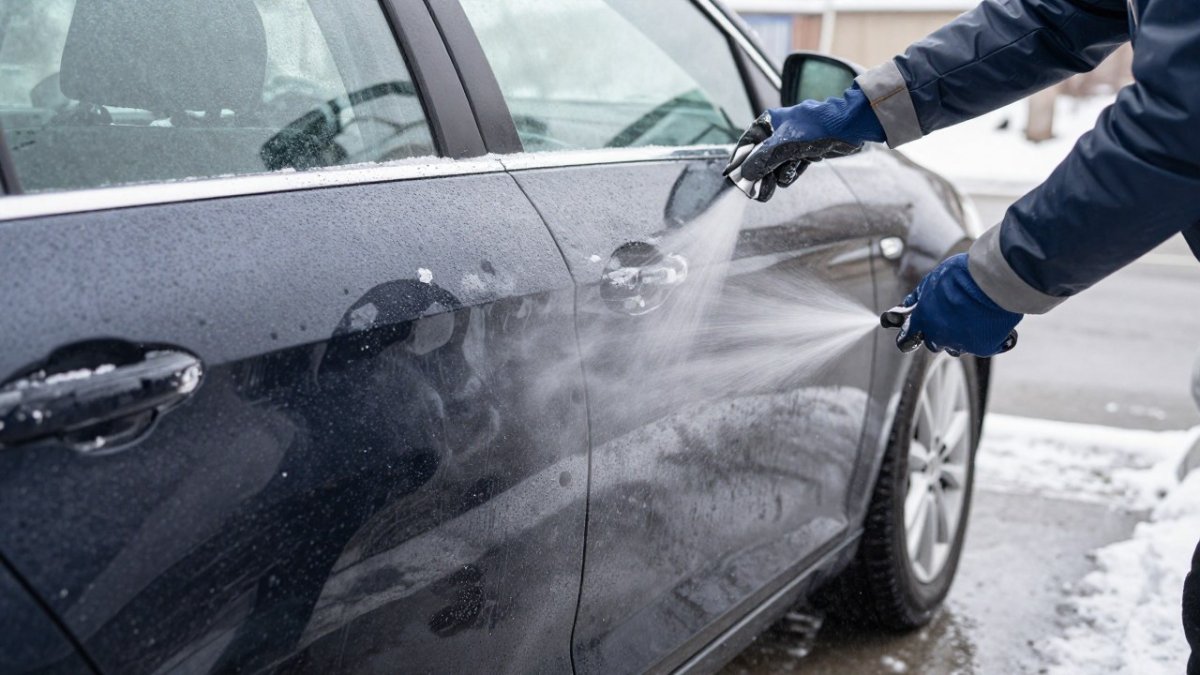
Here’s the schedule we recommend to our clients:
| Task | Frequency | Why It Matters |
|---|---|---|
| Rinse lower panels and arches | After each salt exposure | Removes brine before it dries |
| Hand wash with pH-neutral soap | Every two to three weeks | Lifts grime without harming film |
| Dry edges and seams | Every wash | Prevents moisture trapping |
| Inspect corners for lifting | Monthly | Catches failures early |
| Full professional inspection | Once in spring | Confirms film health after winter |
Watch out: pressure washing a lifted edge at close range will peel the film back fast. If you’re planning long-term care, our guide to how long professional wraps last explains how winter conditions shorten that timeline.
Matte or Gloss: Picking a Finish for a Salt-Belt Commute
Matte finishes hide swirl marks and light scratches better than gloss, which matters on a car that sees salt spray and gravel. The tradeoff is care: matte film can’t be polished, so any contamination that bonds to the surface stays there. Gloss shows every swirl but tolerates more aggressive cleaning.
For a daily winter commuter, we lean matte for its forgiving look and easy rinse-down routine. If you choose matte, learn the care rules before you commit; our guide on how to maintain a matte finish vinyl wrap covers the washing routine that keeps it looking sharp through salt season.
Book a Winter-Ready Wrap Consultation
Winter doesn’t have to mean a dull, unprotected car. The right film, a temperature-controlled install, and a salt-focused care routine will carry a wrap through the harshest months. That’s the difference between a wrap that lasts and one that lifts by February.
At 203wraps, our certified technicians specialize in high-end and collectible automobiles, and we install vinyl wraps and paint protection film. If you want to understand what a premium installation involves before you commit, our breakdown of what premium vehicle wrap installation costs walks through the factors that shape the quote.
Book now with 203wraps to discuss your vehicle.
Winter punishes shortcuts. A wrap that was rushed in a cold shop or neglected after the first salt storm will show it by spring. The fix is straightforward: choose a cast film, insist on a temperature-controlled install, and rinse the salt off before it sets.
Frequently Asked Questions
Can road salt damage a vinyl car wrap?
Salt itself does not dissolve vinyl, but dried salt and de-icing chemicals can sit on the film and hold moisture against edges and seams. Left there, that buildup can contribute to edge lifting and make grime harder to rinse away. Rinsing the lower panels and wheel arches after heavy salt exposure and drying the edges fully is a common care approach; follow the care guidance provided for your film.
How cold is too cold to wrap a car?
Many cast vinyl films have a minimum installation temperature listed by the manufacturer, and applying film below that range can make bonding less reliable. Cold film is stiff and can be harder to stretch into recesses. Check the specific film’s data sheet, and if the space cannot be heated, consider waiting for warmer weather.
What is better for winter driving, PPF or a vinyl wrap?
They do different jobs. Paint protection film is a clear urethane layer designed to absorb gravel strikes, which can suit a daily commute on salted highways. A vinyl wrap changes color and finish and offers light protection. Some owners combine the two. Ask a certified installer which approach fits your driving.
How long does a car wrap last in harsh winter conditions?
Wrap lifespan depends on several factors, including film grade, edge quality, and care. Repeated freeze-thaw cycles, salt spray, and UV exposure can shorten lifespan. Regular winter rinsing, garage parking where possible, and prompt attention to lifted edges are common care steps. Check the film manufacturer’s published durability figures and warranty terms.
Which vinyl wrap brands are best for cars in winter?
Brand alone does not guarantee winter performance. Ask for the specific film series, its published temperature range, and its warranty terms, then confirm the installer is certified. Film grade and install quality matter more than the logo on the box.
