
Last Updated: November 14, 2026
Quick Summary
Premium vehicle wrap installation in the United States typically ranges from $2,400 to $3,800 for a compact car, $2,800 to $4,500 for a sedan, and up to $4,500 to $7,500 for a van. Final pricing depends on vehicle size, film grade, finish, and coverage, so request a quote for your specific vehicle.
- Published industry figures put wrap material at roughly $8 to $12 per square foot and installation at $2 to $3 per square foot.
- Industry guides commonly place premium-vinyl full wraps with professional installation at $2,500 to $4,000 for passenger cars.
- Ask every shop to itemize film, labor, design, preparation, disassembly, and removal so quotes compare on equal terms.
- A premium cast film with full prep costing $4,500 over six years works out to $750 per year.
- Luxury and exotic vehicles cost more to wrap because of curved bodywork, tight tolerances, and delicate trim clips.
Table of Contents
- Premium Vehicle Wrap Installation Cost: What the Number Actually Covers
- Price Ranges by Vehicle Size and Wrap Quality
- Partial Car Wrap Cost vs Full Coverage
- Car Wrap Cost vs Paint: Which Holds Value Longer
- How Long Does a Car Wrap Last, and What It Costs to Own
- Your Car Wrap Quote Checklist Before You Sign
- Book a Premium Wrap Consultation with 203wraps
- Frequently Asked Questions
Premium Vehicle Wrap Installation Cost: What the Number Actually Covers
The cost of premium vehicle wrap installation in the United States depends on vehicle size, film grade, and finish. At 203wraps, we quote every job after inspecting the actual vehicle, because two sedans of the same model year can need very different labor. Contact 203wraps or visit our website for a current quote.
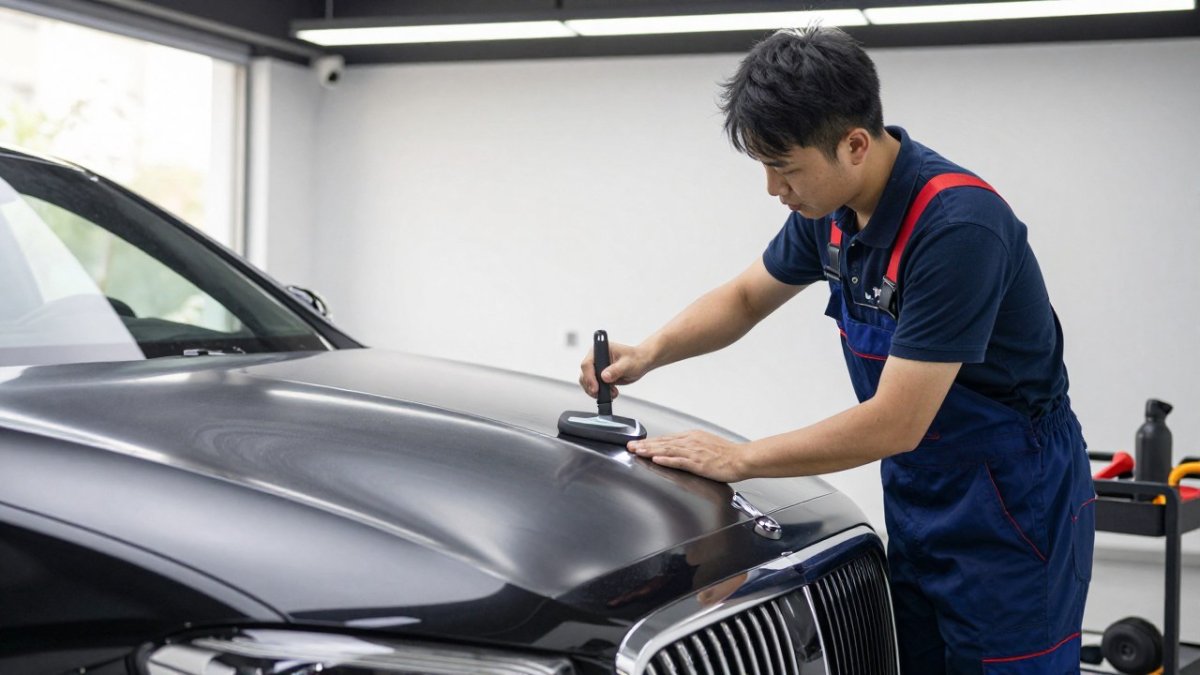
A vehicle wrap installation is the process of applying a conformable vinyl film over a vehicle’s painted panels, using heat, squeegees, and edge-sealing techniques to bond the film to the surface. Premium installation means premium film, full panel disassembly where needed, and a technician who seals every edge.
Here’s what most buyers get wrong: they compare the bottom line of two quotes and assume the difference is markup. It usually isn’t.
Why the Lowest Quote Is Rarely the Full Story
A low quote usually means something was left out of it. Common omissions include bumper and door jamb coverage, edge sealing, removal of trim and badges, and any post-install inspection. Those items carry real labor hours.
Ask any shop to itemize material, labor, surface prep, and design time separately. A quote you can’t break down is a quote you can’t compare. The Federal Trade Commission’s guidance on pricing and advertising claims is a useful reminder that advertised prices should reflect what a typical buyer actually pays.
Price Ranges by Vehicle Size and Wrap Quality
Vehicle size drives material volume and labor hours more than any other single factor. A compact car needs far less film and far fewer disassembled panels than a full-size truck. But size alone does not explain why two quotes for the same SUV can differ by $2,000. Film grade, finish type, and how much of the vehicle gets disassembled fill that gap.
Published industry figures put material at roughly $8 to $12 per square foot and professional installation at $2 to $3 per square foot, according to Wrapmate’s breakdown of vehicle wrap costs. Multiply those rates by your vehicle’s surface area and you have a working estimate before finish and design enter the picture. Premium film sits at the top of that material band; economy calendared film sits at the bottom.
| Vehicle Type | Typical Surface Area | Premium Full-Wrap Installed Range | What Drives the Number |
|---|---|---|---|
| Compact car | Smallest | $2,400 to $3,800 | Fewer panels, less film waste, simpler curves |
| Sedan | Moderate | $2,800 to $4,500 | Standard benchmark; door jambs and bumpers add hours |
| SUV / crossover | Large | $3,500 to $5,500 | More square footage, more trim, roof rails |
| Full-size truck | Largest | $4,000 to $6,500 | Bed, cab, complex curves, disassembly time |
| Van | Largest | $4,500 to $7,500 | Tall flat panels, heavy film use, ladder racks |
Premium Full-Wrap Installed Range
Final pricing depends on quantity, film selection, coverage, and delivery timing, so request a quote for your specific vehicle.
Compact Cars, Sedans, SUVs, Trucks, and Vans
Compact cars and sedans sit at the entry point of the premium range. Industry guides commonly place premium-vinyl full wraps with professional installation at $2,500 to $4,000 for passenger cars, per Rims and Calipers Paint’s wrap pricing guide. SUVs, trucks, and vans push past that because of sheer surface area and panel complexity.
Luxury and Exotic Vehicle Pricing
Luxury and exotic vehicles cost more to wrap, and not because of the badge. Curved bodywork, tight tolerances, delicate trim clips, and paint finishes that punish careless handling all add labor hours. A pearl or multi-stage finish demands a film that won’t dull it.
We treat every high-end vehicle with meticulous care, ensuring a clean install and premium finish.
How to Normalize Two Premium Quotes
A quote you can’t break down is a quote you can’t compare. Ask every shop to itemize the same six lines so the numbers line up:
- Film: brand, product line, and square footage of coverage.
- Labor: estimated hours and the shop’s hourly rate.
- Design: whether artwork, proofs, and print time are included.
- Preparation: wash, decontamination, clay, and any paint correction.
- Disassembly: which panels, badges, and trim come off, and whether reassembly is included.
- Removal: what it costs to take the film off later, and who pays if it fails.
When the six lines match, the comparison is real. When they don’t, the cheaper quote is often the one with more exclusions, not the one with less markup.
Partial Car Wrap Cost vs Full Coverage
Partial car wrap cost is lower because you’re buying less film and less labor. A partial wrap covers selected panels such as the hood, roof, mirrors, or a single accent zone, while a full wrap covers every painted exterior panel.
The trade-off is visual consistency. Partial coverage on an older vehicle can highlight fading on the panels you didn’t wrap. Full coverage hides it. If your goal is a color change, full coverage is the only option that delivers it.
Car Wrap Cost vs Paint: Which Holds Value Longer
Car wrap cost vs paint is a comparison of reversibility more than raw dollars. A wrap is removable; a repaint is permanent. That matters at resale, where an original factory finish typically supports value better than a respray of uncertain quality.
Wraps also protect the paint underneath from road debris and sun exposure for the life of the film. If you’re weighing the two, read our guide on whether removing vinyl wrap damages paint before you decide, since removal quality depends entirely on the original install.
How Long Does a Car Wrap Last, and What It Costs to Own
Lifespan depends on film grade, sun exposure, and how the vehicle is washed.
Total cost of ownership is where cheap quotes lose. A wrap that fails at year two costs more per year than one that lasts seven. Run the math on annual cost rather than sticker price:
| Scenario | Installed Cost | Expected Life | Cost per Year |
|---|---|---|---|
| Economy film, minimal prep | $2,000 | 2 years | $1,000 |
| Premium cast film, full prep | $4,500 | 6 years | $750 |
| Premium film plus laminate | $5,500 | 7 years | $786 |
Maintenance and Repair Costs Over the Life of the Wrap
Hand washing, avoiding automated brushes, and prompt attention to lifted edges all extend life. Budget for the recurring costs that don’t appear on the install invoice:
- Wash supplies: pH-neutral soap and microfiber towels.
- Edge repair: a lifted edge can be resealed; contact 203wraps for pricing.
- Panel replacement: a damaged panel can be re-wrapped in matching film; contact 203wraps for pricing.
- Removal: professional removal is available at end of life; contact 203wraps for pricing.
Removal and Repaint Risk
A wrap is removable, and that reversibility is part of its value. But removal quality depends entirely on the original install.
For the full picture on durability, see our breakdown of what decides how long professional wraps last.
Your Car Wrap Quote Checklist Before You Sign
Use this checklist to compare quotes on equal terms:
- Material brand and product line named in writing
- Square footage of coverage specified
- Full or partial coverage stated panel by panel
- Surface prep steps listed, including decontamination
- Trim and badge removal included or excluded
- Edge sealing and post-heating confirmed
- Warranty terms for film and workmanship in writing
- Removal terms and any associated cost disclosed
- Installation timeline and cure time provided
Before signing, learn to spot the signs of poor car wrap installation so you can vet the shop, not just the price. You can also view the vinyl wrap service and what a premium installation includes to see how the process should be structured.
Book a Premium Wrap Consultation with 203wraps
Comparing quotes is the right first step. Getting an accurate number for your specific vehicle is the second.
At 203wraps, our certified technicians have over a decade of experience with high-end and collectible automobiles. We specialize in clean installs and premium finishes. Our services include paint protection film, vinyl wraps, and professional window tinting.
Get started with 203wraps and request a quote built around your actual vehicle. Book a premium wrap consultation with our team.
The gap between a cheap quote and a premium one is usually labor you can’t see until year three. Get the number right the first time by having your vehicle assessed in person.
Frequently Asked Questions
How much does a premium vehicle wrap installation cost?
There is no single number because premium vehicle wrap installation cost depends on film grade, vehicle size, finish, and installer skill. Request an itemized quote for your exact vehicle rather than relying on a broad online range.
Does a vehicle wrap protect the original paint?
Yes, a properly installed premium vinyl wrap acts as a sacrificial layer over your factory finish. It shields the paint from road debris, salt spray, and UV exposure, and when removed by a trained technician it typically leaves the original paint intact. The key is surface preparation and film quality: a wrap applied over contaminated paint or with low-grade adhesive can trap moisture or leave residue. Ask your installer how they prep and remove film.
How long does a car wrap last compared with paint?
A premium vinyl wrap typically lasts five to seven years with proper care, while a quality repaint can last a decade or more but costs significantly more and cannot be reversed. Wrap lifespan depends on sun exposure, cleaning habits, and film brand. Parking indoors and hand-washing with pH-neutral soap extends life. If you plan to sell the car, a wrap lets you return to the factory finish, which many collectors prefer.
Is wrapping a car cheaper than painting it?
In most cases, yes. A full premium wrap generally costs less than a quality full repaint, and it preserves the original paint rather than covering it permanently. Painting also requires extensive prep and curing time, and a poor paint job can reduce resale value. A wrap is removable, reversible, and can be refreshed with a new color or finish later. Compare itemized quotes for both before deciding.
How can I compare quotes from vehicle wrap installers?
Use a car wrap quote checklist: confirm the film brand and grade, ask whether installation, removal of trim, and post-install inspection are included, verify the warranty terms in writing, and check that the quote specifies panel coverage and vehicle size. Ask for the installer’s certification and photos of similar vehicles. A low quote that omits surface preparation or uses economy film is not comparable to a premium installation quote.
