
Last Updated: October 25, 2026
Quick Summary
Yes, a vinyl wrap partly protects car paint from rock chips by adding a thin sacrificial layer that absorbs small impacts from road debris. It handles light gravel and low-speed strikes well, but a large rock at highway speed can tear or punch through the film and reach the paint.
- Paint protection film is the stronger choice for rock chip defense because it is engineered to absorb impacts.
- A well-installed vinyl wrap lasts about five to seven years with proper care.
- Small chips and cracks in vinyl wrap can often be repaired with a patch instead of replacing the whole panel.
- The front end takes the most abuse, so PPF on high-impact zones is the smarter spend for a daily commuter.
- Wrapping over failing or peeling paint traps moisture and can make the problem worse.
Table of Contents
- How Vinyl Wrap Handles Rock Chips and Road Debris
- Vinyl Wrap vs. Paint Protection Film for Rock Chips
- Vinyl Wrap Durability and Lifespan in Real Conditions
- Can You Wrap a Car With Chipped Paint?
- How to Fix Rock Chips in Vinyl Wrap
- Protection Limits by Impact Severity and Vehicle Location
- Book Your Paint Protection Assessment
- Frequently Asked Questions
How Vinyl Wrap Handles Rock Chips and Road Debris
Does vinyl wrap protect car paint from rock chips? A quality vinyl wrap adds a thin sacrificial layer over your paint, and that layer takes the hit from small road debris instead of your clear coat.
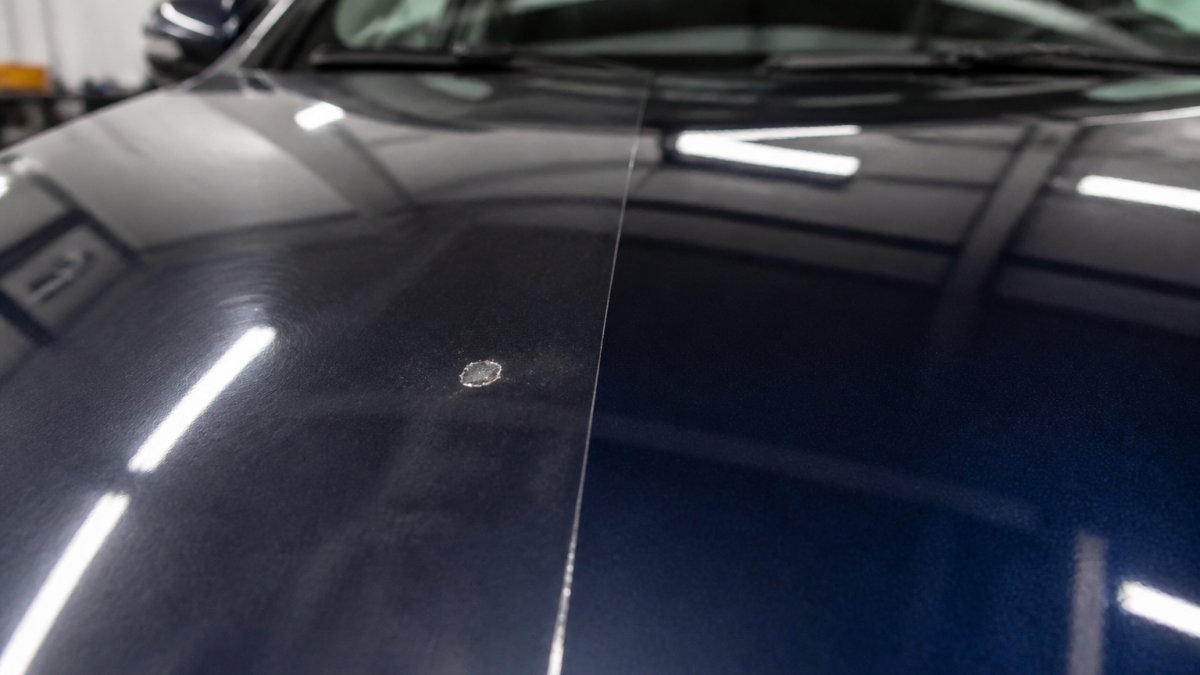
The wrap works as a cushion. When gravel flicks up from a truck tire on the highway, the soft vinyl absorbs some of that energy.
But the protection has a ceiling. Vinyl is decorative first and protective second. It handles light debris well. It does not stop a heavy strike.
What Happens When a Rock Hits a Wrapped Surface
The outcome depends on the rock’s size and speed. A small pebble at low speed usually leaves a scuff or a tiny mark in the vinyl. The film absorbs the impact, and your paint is untouched.
A larger rock at highway speed behaves differently. The vinyl can tear, crack, or punch through. Once the film is breached, the impact reaches the paint below. In that case, the wrap did its job as a first line of defense, but it could not stop everything.
What most guides miss is that a damaged wrap is easy to spot and easy to replace in a single panel. A damaged paint panel is a much bigger repair.
Vinyl Wrap vs. Paint Protection Film for Rock Chips
Paint protection film wins for rock chip defense, and the reason is in how the two films are built. PPF is a clear thermoplastic urethane film made specifically to absorb and deflect impacts. Vinyl wrap is a colored or textured PVC film made to change how your car looks.
The distinction matters because the word “wrap” gets used loosely. A color-change vinyl install and a PPF install are different products with different jobs, different thicknesses, and different price points. Choosing based on the label rather than the material is how owners end up disappointed.
Here is the honest split we give customers:
- Vinyl wrap: changes color or finish, adds light protection, costs less than PPF
- PPF: stays clear, adds serious impact protection, keeps your factory color visible
- Both together: PPF on high-impact zones, vinyl over the rest for style
The two are not rivals. Many owners combine them. PPF goes on the front bumper, hood, and mirrors, then vinyl covers the rest of the body. That layering puts the impact-focused film where rocks actually land and the decorative film where they mostly do not.
Film Thickness, Softness, and Impact Absorption
Thicker, softer film absorbs more impact. PPF is engineered for exactly that. Vinyl is thinner and more pliable, which makes it easy to stretch around curves, but that same quality means it gives way sooner under a hard strike.
A soft film deforms on impact and spreads the force across a wider area. That is impact absorption. A stiffer surface deflects the rock and sends it bouncing away.
A useful way to think about it: vinyl is a sacrificial cosmetic layer, and PPF is a sacrificial impact layer. Both take the hit so your paint does not, but they are tuned for different energy levels.
If you are choosing between the two on a daily driver, put the budget into PPF on the front clip first. A color change can wait; a chipped bumper cannot be un-chipped.
You can read more about the stronger option on our paint protection film page. If cost is on your mind, our breakdown of paint protection film installation pricing factors explains what drives the number.
Vinyl Wrap Durability and Lifespan in Real Conditions
A well-installed vinyl wrap lasts about five to seven years with proper care. That figure holds up in real conditions, including salty winters and gravel-heavy commutes. Cheap film installed poorly can fail in a year or two.
Three things shorten a wrap’s life:
- Sun exposure: constant UV fades and dries out the film
- Improper washing: abrasive brushes and harsh chemicals wear the surface
- Neglect: dirt left on the film grinds in over time
A common mistake is skipping the post-install care routine. Hand washing with a gentle soap and parking in shade when you can will add years to the film. We tell every customer the same thing: the wrap protects your paint, but you still have to protect the wrap.
Can You Wrap a Car With Chipped Paint?
You can wrap a car with chipped paint, but the chips will show through. Vinyl is thin enough that surface imperfections telegraph through the film.
That is why surface preparation matters so much. Before any install, the paint needs to be clean, smooth, and sound. Small chips get filled and leveled. Larger damage may need paint repair first.
Watch out: wrapping over failing or peeling paint traps moisture and can make the problem worse. If the paint is already lifting, the wrap will lift with it.
If you are weighing removal down the road, our guide on whether removing vinyl wrap damages paint covers what to expect.
How to Fix Rock Chips in Vinyl Wrap
Small chips and cracks in vinyl wrap can often be repaired without replacing the whole panel. The fix depends on how deep the damage goes and whether the film has started to lift. Here is how we approach it, including the checks most guides skip.
- Clean the area with a gentle soap and let it dry fully. Dirt trapped under a patch is the most common reason a repair fails.
- Inspect the damage under good light. Look for three things: a surface scuff that has not broken the film, a puncture or tear that reaches the paint, and any lifted or curled edge around the impact. Each points to a different fix.
- Check the paint underneath. If the film is breached, gently probe the spot. A mark that wipes away is film damage. A mark that catches a fingernail is paint damage, and that changes the plan.
- Trim the damage. Cut away any loose or lifted film edges with a sharp blade. Leaving a lifted edge invites water and dirt under the film.
- Apply a patch. A small piece of matching vinyl can cover the spot on a flat panel. Press it firmly and check the edges.
- Replace the panel if the damage is large, on a curved or textured surface, or if the film around the impact has lost adhesion.
A patch on a flat hood or door usually blends well. On a curved bumper or a textured finish, a full panel replacement gives a cleaner result. Catch damage early and the repair stays small.
When a Patch Is Not Enough
Three situations call for a panel replacement rather than a patch:
- The film has lifted around the impact. Once adhesion breaks at an edge, water and grit work their way under the film and the repair will not hold.
- The damage sits on a compound curve. A flat patch cannot conform to a bumper corner or a mirror cap without wrinkles.
- The paint underneath is damaged. A patch hides the film damage but does nothing for the paint, and the paint damage can spread under the film.
Do not wrap over a chip you have not addressed. A deep chip or a rough edge creates a visible bump under the film, and if moisture gets into the chip, it can lift the wrap from underneath. Fill and level small chips before install, and repair larger damage first.
Removal Risk on Damaged or Repainted Surfaces
How the film comes off matters as much as how it went on. On factory paint in good condition, a properly installed vinyl wrap generally removes cleanly, especially if it has not been baked on for years.
That is why we inspect paint condition before quoting a job. If the paint is already lifting, the wrap will lift with it, and removal later becomes a paint repair. The same logic applies to PPF: film is only as stable as the surface under it.
If you are weighing removal down the road, our guide on whether removing vinyl wrap damages paint covers what to expect.
Protection Limits by Impact Severity and Vehicle Location
Not every part of your car faces the same risk. The front end takes the most abuse. The hood, bumper, and lower side panels catch the bulk of road debris, especially on highways.
Here is how protection holds up by impact type:
| Impact Type | Vinyl Wrap Result | PPF Result |
|---|---|---|
| Light gravel, low speed | Absorbs, minor scuff | Absorbs, no visible mark |
| Medium debris, highway speed | May tear or crack | Absorbs, holds up well |
| Large rock, high speed | Punches through to paint | Absorbs most, may still mark |
| Sand and fine grit | Gradual wear over time | Strong abrasion resistance |
The pattern is clear. Vinyl handles the small stuff and softens the medium hits. PPF is built for the heavier strikes. For the front end of a daily commuter, PPF on the high-impact zones is the smarter spend.
Book Your Paint Protection Assessment
Vinyl wrap gives your paint real, measurable help against rock chips, but it is a cushion, not a shield. For light debris and everyday driving, a quality wrap earns its keep. For serious front-end protection, PPF is the stronger choice.
At 203wraps, our certified technicians install both, and we will tell you honestly which one fits your car and your commute. We specialize in high-end and collectible vehicles, and we treat every install with the care your finish deserves. If you want a clear answer on what your paint actually needs, book your paint protection assessment and we will walk you through the options.
Frequently Asked Questions
Can you put vinyl wrap over chipped paint?
You can, but the chips will show through as visible imperfections, and the wrap may not adhere properly to exposed primer or bare metal. Surface preparation is critical: any loose or flaking paint must be removed, and deep chips should be filled and sanded smooth before installation. If the paint is actively peeling, wrapping over it risks trapping moisture and causing further delamination. A professional assessment of your paint condition before wrapping is the safest approach.
Is paint protection film better than vinyl wrap for rock chips?
For impact protection, yes. Paint protection film (PPF) is thicker, softer, and designed to absorb and deflect rock strikes, while vinyl wrap is primarily a color-change product with limited impact resistance. PPF also self-heals minor scratches and carries longer warranties. Vinyl wrap can shield against light abrasion and UV exposure, but it will not stop a gravel strike at highway speed the way PPF can. Many owners combine both: PPF on high-impact zones and vinyl wrap elsewhere for style.
How do you fix rock chips in a vinyl wrap?
Small chips can sometimes be cleaned and sealed with a matching vinyl repair kit, but the result is rarely invisible. For larger or multiple chips, the affected panel section usually needs to be removed and re-wrapped. If the chip has penetrated to the paint, inspect for corrosion before re-wrapping. A professional installer can often replace just the damaged section rather than the entire panel, which keeps costs down and preserves the overall finish.
How long does vinyl wrap last on a car?
A quality vinyl wrap typically lasts three to five years, depending on sun exposure, climate, and care. In the Northeast, road salt, gravel, and freeze-thaw cycles can shorten that lifespan, especially on the front bumper and hood. Regular hand washing and garage parking extend the wrap’s life. Paint protection film generally lasts longer, often seven to ten years, because its thicker construction resists abrasion and impact better than decorative vinyl.
Your paint is only original once. Whether you choose a vinyl wrap for style, PPF for impact protection, or both together, the right install protects your investment for years. Get started with 203wraps and give your finish the protection it deserves.
