
Last Updated: November 15, 2026
Quick Summary
Paint protection film cost for sedans reflects coverage, film grade, and installation labor far more than the car itself, so two quotes for the same sedan can differ by thousands of dollars and both be fair. Partial-front packages are listed at $600 to $1,200, while full-front and full-body coverage cost more.
- Partial-front coverage typically includes the front bumper, 18 to 24 inches of hood, fender edges, mirrors, and headlights.
- Full-front coverage extends the hood and fenders to full length for a cleaner look and complete protection.
- Premium clear film with a self-healing top coat costs more than entry-level film, and matte or color PPF adds cost again.
- Every quote has three buckets: film material, labor, and surface preparation.
- Ask each shop for the panel list, film brand and grade, whether correction and removal are included, and the quote date.
Table of Contents
- Paint Protection Film Cost for Sedans: What the Numbers Actually Reflect
- How Much Is PPF for the Front of a Car? Front-End Package Pricing
- Full-Body PPF Cost and What Changes It
- Ceramic Coating vs Paint Protection Film Cost
- Best Paint Protection Film for Sedans: What to Look For
- The Quote Breakdown: Where Your PPF Dollar Goes
- Book Your Sedan PPF Consultation with 203wraps
- Frequently Asked Questions
Paint Protection Film Cost for Sedans: What the Numbers Actually Reflect
Paint protection film cost for sedans is one of the few automotive expenses where the sticker price tells you almost nothing on its own.
Below, we break down each variable so you can read a quote the way an installer does. For a deeper look at the line items behind a quote, see our breakdown of paint protection film installation pricing factors.
How Much Is PPF for the Front of a Car? Front-End Package Pricing
Front-end coverage is the most common PPF purchase for sedans because it protects the panels that take the most abuse: the front bumper, hood, fenders, and side mirrors. Published partial-front packages from other providers vary widely, and full-front packages generally cost more because they add full hood and full fender coverage. The problem with most published ranges is that they are not standardized to a sedan, so two quotes that both say “front-end” can describe very different amounts of film.
What Partial-Front Coverage Includes on a Sedan
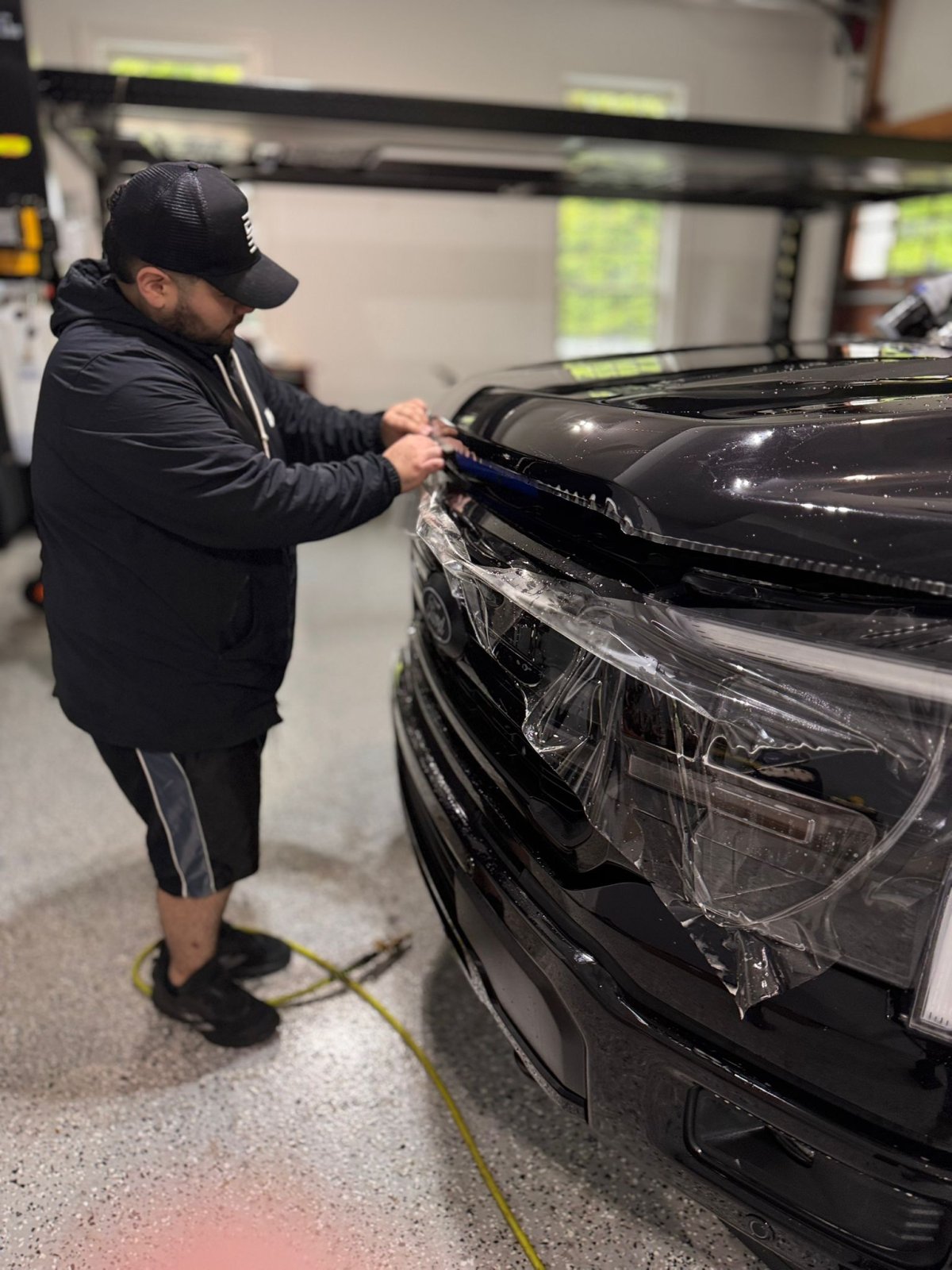
A typical partial-front package covers the front bumper, a partial hood (often the leading 18 to 24 inches), partial fenders, side mirrors, and headlights.
A partial-front sedan package generally covers the following areas, though coverage varies by provider:
- Front bumper, full coverage
- Hood, leading 18 to 24 inches
- Front fenders, leading edge only
- Side mirrors, both caps
- Headlights, both
What is often excluded and should be confirmed in writing: fog lights, parking sensors, the lower lip or splitter, door edges, rocker panels, and the rear bumper. Those exclusions matter because a quote that looks cheap may simply be leaving off panels another installer includes.
Full-Front vs Partial-Front: The Price Gap
Full-front coverage extends the hood and fenders to their full length, which means more film, more cutting, and more installation time. The trade-off is honest: partial front leaves a visible film edge partway up the hood, while full front wraps entire panels for a cleaner look and complete protection.
Full-front coverage adds the remainder of the hood and fenders, along with the extra cutting and stretching time those panels require. A full-front sedan package generally covers the following areas:
- Front bumper, full coverage
- Full hood
- Full front fenders
- Side mirrors
- Headlights
| Coverage Level | Panels Covered | Relative Cost | Best For |
|---|---|---|---|
| Partial front | Bumper, partial hood and fenders, mirrors | Lowest | Leased sedans, tight budgets |
| Full front | Full bumper, hood, fenders, mirrors | Mid | Daily drivers on highways |
| Full body | Every painted panel | Highest | Collectible and exotic sedans |
Sedan-Specific Price Ranges and Regional Variation
Because the keyword is sedan-specific, it helps to separate a sedan from a truck or SUV.
Regional variation is real and worth asking about directly. Quote dates matter too: film prices and labor rates change, so a range published a year ago may no longer reflect current pricing.
Watch out: a partial-front quote that is dramatically cheaper than others often trims the hood length, skips the mirrors, or uses an entry-level film, so confirm the panel list before comparing the number.
Full-Body PPF Cost and What Changes It
Full-body PPF is the premium tier. Its cost depends on panel count, film grade, and how much disassembly the install requires.
How Vehicle Size, Body Style, and Panel Complexity Move the Quote
A sedan’s size and body design drive material and labor more than its badge. Longer hoods, curved fenders, and tight panel gaps all increase the time a certified technician spends on surface preparation and film stretching. Larger or more complex vehicles are generally quoted after inspection, and that is the honest answer: a four-door sedan with simple panels costs less to wrap than a low-slung sports sedan with compound curves.
Film Quality, Self-Healing, Matte, and Color PPF
Film grade is an important cost driver alongside coverage. Premium clear film with a self-healing top coat costs more than entry-level film, and matte or color PPF adds cost again because the material itself is more expensive and less forgiving to install. If you are weighing whether the upgrade pays off, our guide to self-healing paint protection film walks through the trade-offs directly.
Ceramic Coating vs Paint Protection Film Cost
Ceramic coating and PPF solve different problems, and their costs reflect that. Ceramic coating is a liquid polymer that adds gloss and chemical resistance but does not stop rock chips. PPF is a physical urethane layer that absorbs impact from road debris.
For a sedan, the practical answer is often both: film on the impact zones, coating on top for easier washing. If you are deciding between the two, our head-to-head on paint protection film vs ceramic coating lays out where each one earns its price.
Best Paint Protection Film for Sedans: What to Look For
The best PPF for a sedan is a premium film with a clear top coat, a written warranty, and an installer certified to apply it. Film brand matters, but installation quality matters more: a top-tier film applied poorly will peel, lift at the edges, and yellow prematurely. Ask for the film’s warranty terms in writing and confirm the installer is certified by the manufacturer.
Warranty, Durability, and Expected Service Life
Warranty terms vary by film brand and by installer, so treat any specific number as something to verify on the quote rather than assume. What you should confirm: whether the warranty covers yellowing, bubbling, and peeling, whether it is prorated, and whether it transfers if you sell the car. For a brand-level comparison, see our roundup of the best paint protection film brands.
The Quote Breakdown: Where Your PPF Dollar Goes
Every PPF quote has three cost buckets: film material, labor, and preparation. Material is the film itself, priced by the square foot and by grade. Labor is the installer’s time, which scales with panel complexity and disassembly. Preparation is the surface work: washing, decontaminating, and correcting paint flaws before film goes down.
How the Three Buckets Split on a Sedan Quote
The split between film material, labor, and preparation generally shifts with coverage level and film grade. Partial-front packages tend to be more labor-heavy per square foot because setup and trimming time is spread over less film, while full-body packages spread setup across more panels and can make material a larger share. These are planning proportions, not fixed rules, and a shop should be willing to explain its own split.
Line Items That Move a Sedan Quote
- Film grade and brand. Premium clear film with a self-healing top coat costs more than entry-level film, and matte or color PPF adds cost again because the material is more expensive and less forgiving to install.
- Panel complexity. Curved fenders, tight panel gaps, and long hoods increase stretching and trimming time. A simple four-door sedan costs less to cover than a low-slung sports sedan with compound curves.
- Disassembly. Some installs remove mirrors, badges, or trim for a cleaner wrap; that adds labor and should appear as a line item rather than be buried in the total.
- Paint preparation and correction. Washing and decontamination are baseline; paint correction to remove swirls and scratches is additional and varies with the condition of the sedan’s paint.
- Removal or correction fees. If old film, adhesive residue, or damaged paint must be removed before new film goes on, expect a separate charge. Ask whether removal is included or billed hourly.
- Warranty and aftercare. A written warranty and any included aftercare products are part of the value, so confirm what is covered and for how long.
| Quote Component | What It Covers | Why It Varies |
|---|---|---|
| Film material | Urethane film by grade and coverage | Brand, self-healing coat, matte or color |
| Labor | Installer time per panel | Panel complexity, disassembly required |
| Surface prep | Wash, decontamination, paint correction | Condition of the sedan’s paint |
| Removal or correction | Stripping old film, fixing paint flaws | Whether removal is included or billed hourly |
How to Compare Two Sedan Quotes Fairly
To compare estimates apples to apples, ask each shop for the same four things: the exact panel list, the film brand and grade, whether paint correction and removal are included, and the quote date. A quote that is dramatically cheaper than others usually trims preparation, film grade, or both. Watch out: skipping paint correction before installation traps swirls and scratches under the film permanently, and removing film later to fix that costs more than doing it right the first time.
PPF Versus the Alternatives on a Sedan
PPF is one option among several, and they protect against different types of damage. Ceramic coating is a liquid polymer that adds gloss and chemical resistance but does not stop rock chips. Paying for paint repairs as they happen avoids the upfront cost but leaves the paint exposed between incidents. For a sedan, the practical answer is often film on the impact zones plus coating on top for easier washing.
Book Your Sedan PPF Consultation with 203wraps
The number on a PPF quote is a summary of choices: how much of the car you cover, which film grade you choose, and how carefully the surface is prepared.
If you want a quote built around your specific sedan and how you drive it, book a PPF consultation with our team. A consultation can map coverage panel by panel and explain the film options before any work begins.
Frequently Asked Questions
How much does it cost to PPF a sedan?
Pricing depends on coverage level, film type, and installer, so published figures from other providers vary widely. For an apples-to-apples number on your sedan, request a quote that names the exact panels and film type.
How much is PPF for the front of a car compared with full-body coverage?
Front-end coverage protects the areas that take the most road debris: hood, front bumper, fenders, side mirrors, and headlights. Full-body PPF covers every painted panel, so it costs considerably more than partial-front coverage. The gap reflects film quantity, labor hours, and the complexity of wrapping edges on doors, rockers, and quarter panels.
Is ceramic coating vs paint protection film cost a fair comparison?
They solve different problems, so compare them by what they protect against. Ceramic coating is a liquid polymer that adds gloss and makes washing easier, but it does not stop rock chips. PPF is a physical urethane film that absorbs impact from gravel and road debris. A ceramic coating will not shield paint from the chips a daily commute on I-95 throws at a front bumper. Many owners combine both.
What factors affect the cost of PPF installation on a sedan?
Coverage level is the biggest driver: partial-front, full-front, and full-body sit at very different price points. Vehicle size and body design matter too, since a complex bumper with sensors and tight curves takes more film and more labor. Film quality and type, including self-healing, matte, or color PPF, change the material cost. Paint condition and surface preparation add labor if the paint needs correction before installation. Warranty terms and installer certification also factor into the quote.
Is paint protection film worth it for a sedan?
It depends on how you use the car and what a repaint would cost you. A daily-driven sedan facing highway gravel, salt spray, and road debris is the case where PPF earns its keep, because it protects the original paint from rock chips and scratches that are expensive to correct. On a leased car, check the lease terms before installing. For a collectible or exotic finish, the value comes from preserving factory paint, which matters at resale.
