
Last Updated: November 5, 2026
Quick Summary
Self-healing PPF absorbs impact from stone chips, resists contaminants, and recovers from light surface scratches when exposed to heat such as sunlight. It does not prevent scratches or repair deep gouges, tears, or etching, so its value depends on the abuse your paint faces.
- The film recovers from light scratches rather than preventing them, and only within limits.
- Healing is triggered by warmth, sunlight, and exposure time, and slows in cold or garaged cars.
- Deep gouges, tears, cuts, and bird dropping etching stay visible and are not self-healing.
- Wash every two to three weeks with pH-neutral soap and microfiber, and skip abrasive polishes.
- Ceramic coating adds gloss and water beading but provides no physical impact protection.
Table of Contents
- What Self-Healing Paint Protection Film Actually Does
- How Does Self-Healing PPF Work?
- The Real Benefits: Impact, UV, and Chemical Protection
- How Much Does Self-Healing PPF Cost?
- PPF Maintenance: Keeping the Film and Its Healing Ability Intact
- Paint Protection Film vs Ceramic Coating: Which One Do You Need?
- How Long Self-Healing PPF Lasts and When to Replace It
- Book Your PPF Consultation with 203wraps
- Frequently Asked Questions
What Self-Healing Paint Protection Film Actually Does
Self-healing paint protection film is a clear urethane layer applied over factory paint that recovers from light surface scratches when exposed to heat. The benefits of self healing paint protection film come down to three things: impact absorption, contaminant resistance, and the ability to erase the swirl marks that drive owners crazy.
Here’s the part most guides skip. The film doesn’t prevent scratches. It recovers from them, and only within limits. That distinction matters more than any marketing claim.
Paint protection film is a thermoplastic polyurethane sheet, typically several mils thick, bonded to painted panels. The self-healing version adds a flexible top coat engineered to flow back into shape.
Here is the short version of what the film does and does not do.
| Aspect | What the film does | Key limit |
|---|---|---|
| Light surface scratches | Recovers when exposed to heat | Does not prevent scratches |
| Impact | Absorbs energy of stone chips | Cannot heal damage that removed material |
| UV exposure | Helps block UV that fades and oxidizes paint | , |
| Deep damage | , | Gouges, tears, cuts stay visible |
| Etching and staining | , | Bird droppings, tree sap, harsh chemicals stay visible |
| Healing trigger | Warmth, sunlight, exposure time | Healing slows in cold or garaged cars |
How Does Self-Healing PPF Work?
Self-healing PPF works through a polyurethane top coat with elastic memory. When something light abrades the surface, the polymer chains stretch rather than tear. Warmth gives those chains enough mobility to relax back into their original position, and the scratch closes.
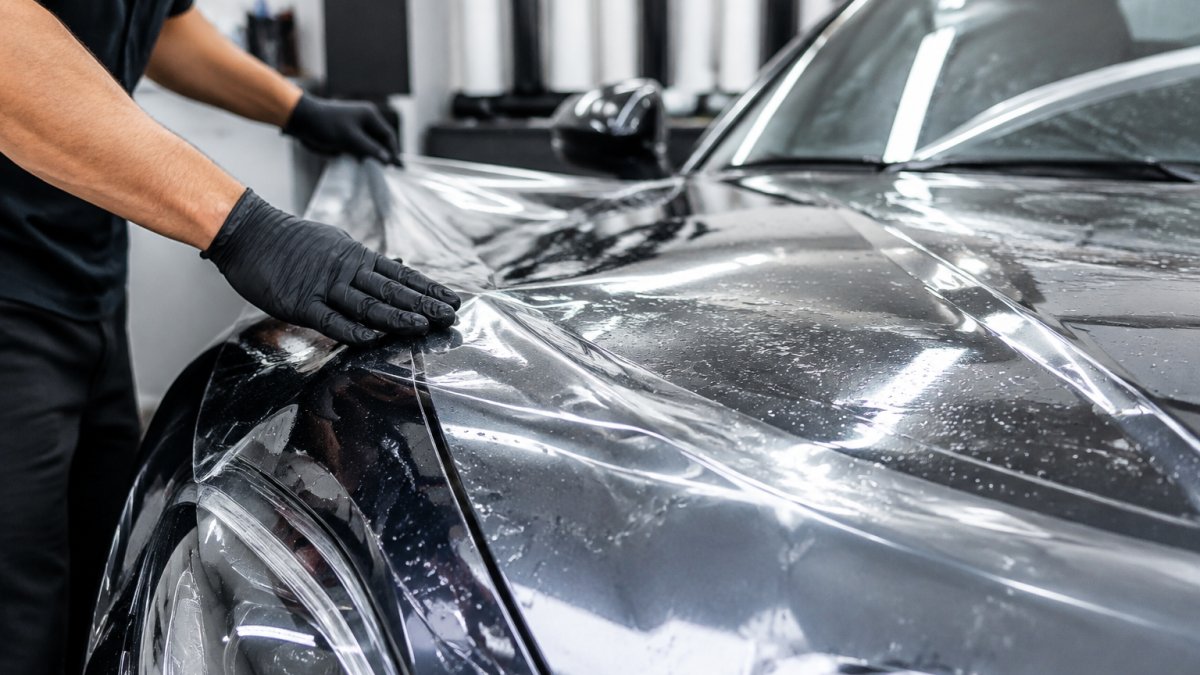
The scratch resistance comes from the chemistry, not from hardness. A hard coating chips. A flexible one absorbs. The top coat is engineered to remain elastomeric across a wide temperature range, so it can deform under a light impact and then return to its original shape instead of fracturing.
Heat Activation: Sunlight, Warmth, and Time
Heat is the trigger, and the variables that matter are temperature, exposure time, and scratch severity. A dark-colored panel parked in direct summer sunlight can reach surface temperatures well above ambient air temperature, which is when light swirl marks and towel scratches may begin to close.
In cold weather, or on a car that lives in a garage, healing generally slows.
You can accelerate healing with warm water poured over the panel or a heat gun held at a safe distance and kept moving. Watch out: concentrated heat from a gun held too close or stationary in one spot can distort or burn the film permanently, and that damage is not self-healing. Let sunlight do the work when you can, and treat any heat gun as a last resort used with a surface thermometer.
What Self-Healing Film Cannot Repair
Self-healing film cannot fix damage that penetrates the top coat. Deep gouges, tears, cuts, and scratches that reach the base coat stay visible. So does etching from bird droppings or tree sap left too long, and staining from harsh chemicals.
The film also won’t heal damage that has physically removed material. Deep marks that stay visible when the panel is wet generally indicate the film has been cut.
The Real Benefits: Impact, UV, and Chemical Protection
The headline benefit is impact protection. A polyurethane layer absorbs the energy of stone chips that would otherwise reach factory paint.
Stone Chips, Road Debris, and Abrasion
Highway driving throws gravel, sand, and debris at the front bumper, hood, mirrors, and rocker panels. Film takes that abuse instead of your paint. For anyone commuting on rough interstate routes, this is the single strongest argument for coverage. Our guide on protecting car paint from gravel and rock chips covers the high-risk zones in detail.
UV Protection and Paint Preservation
Ultraviolet radiation fades and oxidizes paint over years. Clear film helps block UV exposure. Paint preservation matters most on collector cars, where original finish drives resale value.
How Much Does Self-Healing PPF Cost?
Self-healing PPF cost depends on coverage area, vehicle complexity, and film grade. Pricing depends on these factors, so contact 203wraps for a current quote.
Pricing reflects film material, installation hours, and the skill required for a clean install. For a breakdown of what actually moves the number, see our article on paint protection film installation pricing factors.
PPF Maintenance: Keeping the Film and Its Healing Ability Intact
PPF maintenance is simple, and simple is why the film lasts. Wash with pH-neutral soap and microfiber, and skip abrasive polishes.
- Wash every two to three weeks
- Remove bird droppings and bug splatter promptly
- Avoid wax buildup on the film edge
- Use PPF-safe sealants only
Ceramic coating over film is a common add-on. It boosts gloss and water beading without interfering with scratch recovery.
Paint Protection Film vs Ceramic Coating: Which One Do You Need?
Paint protection film vs ceramic coating is not a fair fight, because they solve different problems. Ceramic coating is a thin chemical layer that adds gloss and water beading. It does not provide physical impact protection. Because ceramic coating adds gloss and water beading rather than impact protection, maintaining luxury vehicle paint also means choosing care that addresses the specific risks your finish faces.
Film absorbs impact and self-heals. Coating makes washing easier and looks great. If you want physical protection, film wins. If you want gloss and easier cleaning on a garaged car, coating is enough. Many owners stack them. Our full comparison of PPF and ceramic coating breaks down the trade-offs side by side.
How Long Self-Healing PPF Lasts and When to Replace It
Service life depends on climate, parking exposure, wash habits, and film grade. Contact 203wraps for details on coverage and expected service life.
How Healing Performance Changes Over the Film’s Lifespan
Self-healing performance can change as the film ages, as the top coat is exposed to washing, road grit, UV, and heat cycles.
When to Replace the Film
Replacement may be needed if the film yellows, lifts at the edges, cracks, or stops recovering from light scratches. Staining that will not wash out and any tear or puncture that exposes the paint generally require replacement.
Maintenance That Extends Service Life
Simple habits extend the useful life of the top coat and preserve healing behavior. Wash with pH-neutral soap and microfiber, remove bird droppings and bug splatter promptly, and avoid abrasive polishes that dull the top coat.
Book Your PPF Consultation with 203wraps
Choosing coverage is the decision that matters most, and it’s worth getting right the first time. With over a decade of experience, our certified technicians work on high-end and collectible automobiles.
See our paint protection film service to understand what we install, or book a PPF consultation and get a coverage plan built around your car.
Frequently Asked Questions
Is self-healing PPF worth it?
For a car you plan to keep or resell at top value, self-healing PPF may be worth considering. Weigh the upfront cost against paint correction and respray bills, and remember that resale value often depends on original paint condition.
How long does it take for PPF to self-heal?
Minor surface scratches and swirl marks may recover with heat, such as direct sunlight on a parked car. In cold weather or shade, healing generally slows. Deeper marks that cut through the film are not expected to heal.
Does self-healing PPF protect against rock chips?
Paint protection film is designed to help absorb impact from stone chips, gravel, and road debris. Installing it on high-exposure areas like the front bumper, hood, mirrors, and rocker panels is a common approach. No film stops every projectile.
How do you maintain self-healing paint protection film?
Hand wash with pH-neutral soap and a soft microfiber mitt, rinse thoroughly, and dry with a clean microfiber towel. Remove bird droppings and bug splatter promptly, as environmental contaminants can stain the film.
Your paint only gets one factory finish. Get started with 203wraps and protect it with a film installation built for the long haul.
