
Last Updated: November 8, 2026
Quick Summary
Window tint maintenance means keeping new film closed, untouched and uncleaned for the first 48 to 72 hours while it cures, then cleaning with mild ammonia-free soap, soft microfiber cloths and straight strokes. Wait for your installer’s go-ahead before rolling windows down, and avoid high-pressure sprays near the edges.
- Keep windows closed and do not touch or clean the film for the first 48 to 72 hours.
- Do not press on bubbles or edges, since this can push adhesive out of place.
- Clean with mild, ammonia-free soap, a soft microfiber cloth and straight top-to-bottom strokes.
- Avoid ammonia-based cleaners, abrasive scrubbers, paper towels and rough sponges.
- Haze and small bubbles are normal during curing; lifting edges or discoloration need an installer’s check.
Table of Contents
- Why Window Tint Maintenance Matters After Installation
- Window Tint Aftercare: The First 48 to 72 Hours
- When Can You Roll Down Windows After Tinting?
- Can You Wash Your Car After Window Tinting?
- How to Clean Tinted Car Windows Safely
- Normal Curing Effects Versus Film Problems
- Long-Term Care for Tinted Windows, Rear Defroster Lines and Warranty Documentation
- Book Your Tint Inspection or Next Service With 203wraps
- Frequently Asked Questions
Why Window Tint Maintenance Matters After Installation
Window tint maintenance is the set of habits that keeps your film clear, bonded and looking good for years. Most of the damage people see comes from a few avoidable mistakes made in the first days or the first cleaning. Learning the right window tint maintenance routine early saves money and frustration.
How you care for window film in the weeks after installation plays a large part in how it looks over time.
Tint film needs time to bond fully to the glass. During that period, moisture trapped under the film can stay visible for days. Rough cleaning, rolling windows down too soon, or using the wrong chemicals can lift edges or cloud the surface.
Window Tint Aftercare: The First 48 to 72 Hours
The first two to three days are the most sensitive period for new film. The adhesive is still curing, so the film can shift if it is disturbed.
Keep these rules for the first 48 to 72 hours:
- Leave the windows closed
- Do not touch the inside of the film
- Do not clean the glass
- Park in shade when possible
Hazy patches, small water pockets and tiny bubbles are normal at this stage. They usually clear as moisture evaporates through the film. Do not poke or press them.
Watch out: Do not press on bubbles or edges with your fingers or a cloth. This can push adhesive out of place and leave permanent marks.
When Can You Roll Down Windows After Tinting?
Wait until your installer confirms the film has cured before rolling down your windows. Some film types and cold or humid weather call for a longer wait, so ask your installer for the exact timing for your film.
Rolling a window down too early can pull the film at the top edge, where it has not fully bonded. Wait until the film is dry and any haze has cleared before you lower the glass. If you are unsure, keep the windows up one more day.
Can You Wash Your Car After Window Tinting?
You can wash the outside of your car after the curing period. Go through a car wash only once the film has fully set, and avoid high-pressure sprays aimed at the edges of the glass.
Hand washing is the safer choice for the first few weeks. Keep the water pressure low and aim the spray away from the film edges.
How to Clean Tinted Car Windows Safely
Clean tinted glass with gentle products and soft tools, and match your method to the film type and its curing stage.
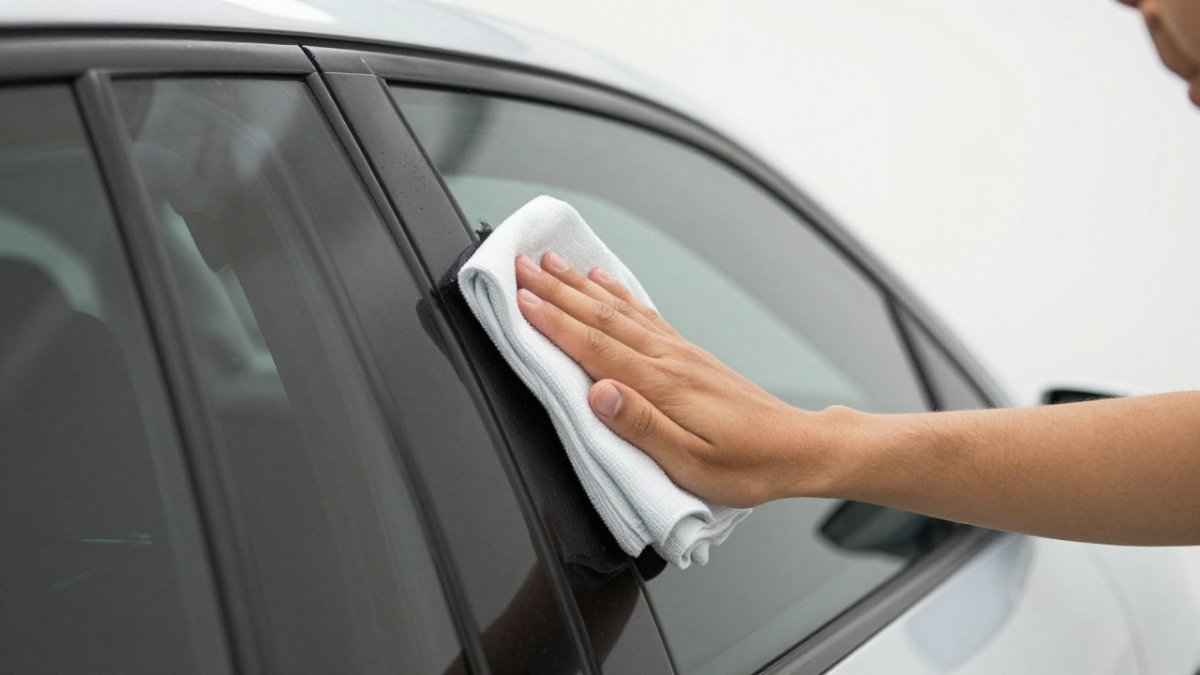
Step-by-Step Safe Cleaning Method
- Wait until the curing period is over, as your installer recommends. In cold or humid conditions, give it extra time.
- Mix a few drops of mild, ammonia-free soap in a spray bottle of water. Avoid dish soaps with degreasers or additives.
- Spray the solution onto a soft microfiber cloth, not directly onto the glass, so liquid does not pool at the edges.
- Wipe the window in straight strokes from top to bottom. Avoid circular scrubbing, which can trap grit and scratch the film.
- Dry the glass immediately with a clean, dry microfiber cloth.
- Clean the edges last: wrap a microfiber cloth around a soft squeegee or your finger and wipe gently along the film edge in one direction, without lifting or pressing under the film.
Cleaning a tinted window with a dry cloth or a squeegee can cause scratches. Use the wet-then-dry method above instead.
Watch out: Do not spray cleaner directly at the top edge of a rolled-down window or use a high-pressure spray near the film perimeter, because liquid forced under the edge can lift the adhesive.
Products and Tools to Avoid
Many everyday cleaners will harm window film. Avoid these:
- Ammonia-based glass cleaners
- Abrasive scrubbers and paper towels
- Harsh chemical cleaners and solvents
- Rough sponges and scouring pads
- Cleaners containing dyes or fragrances that can stain lighter films
Use only tint-safe cleaners and soft cloths. When a product label says ammonia-free, that is a good sign it suits film, but check the label for abrasive additives as well.
Film-Specific Care Notes
Care can vary by film type, so follow the installer’s product-specific instructions first. If you are unsure which film you have, check your installation paperwork or ask your installer before choosing a cleaner.
Normal Curing Effects Versus Film Problems
Many owners worry when they see haze or moisture after installation. Most of the time, these are normal curing effects that fade with time. To see how professional tint is applied and what sets it apart, read how professional tint prevents interior fading.
Normal curing effects usually include:
- Light haze across the glass
- Small water pockets near the edges
- Tiny bubbles that shrink over days
- Slightly soft or cool-feeling film
Possible film problems include:
- Edges that lift or peel after the curing period
- Large bubbles that do not shrink after several weeks
- Discoloration or purple tint
- Creases or tears in the film
Cold weather and high humidity slow curing, so give the film extra time before you judge it. If a problem lasts beyond the normal curing window or gets worse, contact your installer.
The article separates normal curing effects from possible film problems, which can be summarised at a glance:
| Condition | Typical timing | Action |
|---|---|---|
| Light haze across glass | Normal during curing | Wait; it usually clears |
| Small water pockets near edges | Normal during curing | Wait for moisture to evaporate |
| Tiny bubbles | Shrink over days | Do not poke or press them |
| Edges lifting or peeling | After curing period | Possible film problem; contact installer |
| Large bubbles not shrinking | After several weeks | Possible film problem; contact installer |
| Discoloration or purple tint | Any time after curing | Possible film problem; contact installer |
| Creases or tears | Any time | Possible film problem; contact installer |
Long-Term Care for Tinted Windows, Rear Defroster Lines and Warranty Documentation
Good long-term care keeps tint looking sharp. Park in shade when you can, since prolonged sun exposure is the main cause of fading over time. Keep the inside of the glass clean with tint-safe products and avoid scraping ice from the glass.
Rear Defroster Lines, Antennas and Sensors
Rear defroster lines need extra care. Clean them gently in the direction of the lines, never across them, and avoid pressing hard on the grid. Sharp tools and rough pads can break the lines and damage the film around them.
Troubleshooting Timeline: Normal Curing Versus Film Problems
Use a simple timeline to judge whether what you see is normal or a defect. In the first week, light haze, small water pockets near the edges, and tiny bubbles are normal and should shrink as moisture evaporates. By two to four weeks, most haze and small bubbles should be gone. If edges lift, large bubbles persist, the film discolors or turns purple, or creases and tears appear after the curing window, that is a possible film problem rather than normal curing. Cold weather and high humidity slow curing, so give the film extra time before you judge it in winter or rainy seasons. If a problem lasts beyond the normal curing window or gets worse, contact your installer before attempting any repair.
Protecting Your Warranty and Documentation
Keep your installation receipt and any paperwork with your vehicle records. Before attempting a repair, contact your installer. Photograph any bubbles, peeling, or discoloration with a date reference so you have a record. For film-specific guidance, visit our window tint service page.
Book Your Tint Inspection or Next Service With 203wraps
If your film looks cloudy after the curing period, or you want a professional check, schedule a visit. Our team can help you tell whether a problem is normal curing or something that needs attention. Book your tint inspection to get started, and read our guide on whether professional window tinting is worth it before you decide on your next service.
Get started with 203wraps and keep your windows looking flawless for years.
Frequently Asked Questions
How should I care for my newly tinted car windows?
Keep the windows rolled up for the time your installer recommends, usually a few days, and avoid touching the film edges. Park in shade when possible so the film cures evenly. Expect some haze, light moisture or small water pockets during curing; these typically clear on their own as the adhesive dries. Clean only with a soft microfiber cloth and a mild, ammonia-free, tint-safe cleaner once the curing period is over. If bubbles, peeling or discoloration persist after the cure window, contact your installer rather than trying to fix the film yourself.
Should you use Windex on tinted windows?
Avoid Windex and other ammonia-based glass cleaners on tinted windows. Ammonia can break down the film’s adhesive and dye over time, leading to discoloration, bubbling or peeling. Choose an ammonia-free cleaner labeled safe for window film, or use a simple mix of mild soap and water. Spray the cleaner onto the cloth rather than directly onto the glass, and wipe gently to prevent moisture from seeping into the film edges.
How long should I wait before rolling down my windows after tinting?
Keep windows rolled up until your installer confirms the film has cured, since the exact window depends on the film type and weather. Cooler temperatures and higher humidity extend curing time, while warm, dry conditions shorten it. Rolling a window down too early can cause the film to lift or wrinkle at the top edge. If you accidentally lower a window, stop, roll it back up, and let it cure; a small amount of movement usually does not ruin the film, but watch for lifting in the following days.
Can I wash my car after getting the windows tinted?
Wait until the curing period has passed before washing your car, and avoid high-pressure sprayers aimed at the window edges. Keep water away from the film edges for the first week, and do not use abrasive brushes or harsh car wash chemicals on the glass. If you use an automatic car wash, check with your installer first, since some brushes can catch film edges.
