
Last Updated: November 4, 2026
Quick Summary
Professional wraps typically last five to seven years when well installed on a garaged car and maintained with care. That range drops to three to four years for a quality vinyl wrap on a daily driver parked outside, while the same film on a weekend car kept indoors can last past seven years.
- Sun exposure is the single biggest threat to a wrap’s lifespan, attacking the clear coat, pigments, and adhesive.
- Premium cast films from established manufacturers carry published durability ratings that budget calendared vinyl lacks.
- Hand washing with pH-neutral soap beats automated car washes, whose stiff brushes scratch film and lift seams.
- A wrap-safe ceramic coating forms a sacrificial layer that absorbs UV and chemical hits instead of the vinyl.
- Cracking and adhesive failure mean the film is past saving, while peeling edges can sometimes be trimmed and resealed.
Table of Contents
- What the 5 to 7 Year Figure Actually Means for Professional Wraps
- How Long Does a Car Wrap Last in the Sun?
- The Durability Factors That Separate a 3-Year Wrap From a 7-Year Wrap
- Garage-Kept vs. Outdoor Storage: Why Parking Changes Everything
- Car Wrap Maintenance: The Habits That Add Years
- How Long Does a Car Wrap Last With Ceramic Coating?
- Signs That a Wrap Needs Replacement
- How Much Does Car Wrapping Cost and What It Says About Longevity
- The Bottom Line on Wrap Longevity
- Frequently Asked Questions
What the 5 to 7 Year Figure Actually Means for Professional Wraps
Most drivers hear that professional wraps last five to seven years and treat that number like a warranty card. It isn’t. That range is a best-case estimate for a well-installed wrap on a garaged car, maintained with care.
The real answer sits on a sliding scale. A quality vinyl wrap on a daily driver parked outside might hold strong for three to four years.
We’ve seen that range play out in both directions on vehicles of every kind. The film itself matters, but how you treat it matters just as much.
Here’s the honest version: the five-to-seven-year figure assumes premium cast vinyl, a certified install, and regular hand washing. Remove any one of those and the clock speeds up.
The lifespan of a professional wrap depends on a few conditions, and the article lays out the ranges clearly.
| Condition | Expected lifespan |
|---|---|
| Well-installed wrap on a garaged car, maintained with care | Five to seven years |
| Quality vinyl wrap on a daily driver parked outside | Three to four years |
| Same film on a weekend car kept indoors | Past seven years |
| Premium cast vinyl, certified install, regular hand washing | Five to seven years |
How Long Does a Car Wrap Last in the Sun?
Sun exposure is the single biggest threat to a wrap’s lifespan, but the damage isn’t just cosmetic fading.
The mechanism matters because it explains why two cars in the same city can age differently. UV intensity varies dramatically across the country. A wrap in the desert Southwest faces a much higher UV index year-round than one in the Pacific Northwest, and that difference shows up in real-world lifespan.
Humidity adds a second layer of stress. In hot, humid climates, moisture vapor can migrate through micro-perforations or seam edges and attack the adhesive from behind.
Horizontal surfaces take the worst hit everywhere. Your hood, roof, and trunk lid catch direct sun all day, while vertical panels like doors get more shade. That’s why fading often shows up on the roof first.
- Hood and roof: highest sun load, first to fade and chalk
- Vertical panels: slower decay, better protected by angle
- Rear deck and spoiler: heat traps that speed up adhesive wear
Owners in high-UV areas who park outside often see gloss loss and color shift on horizontal panels sooner than owners who garage their cars.
If your car sits outside in a sunny climate, plan on the shorter end of the range.
The Durability Factors That Separate a 3-Year Wrap From a 7-Year Wrap
Two cars can get the same film and end up with wildly different lifespans. The gap comes down to a few factors that matter more than most owners realize.
Material Quality and Manufacturer Ratings
Cheap calendared vinyl is not built to last. Premium cast films from established manufacturers carry published durability ratings, and those ratings mean something. The 3M vehicle wrap film documentation outlines expected outdoor performance for its film lines, and the difference between budget and premium film is measured in years, not months.
Material quality also decides how the film handles heat, humidity, and chemical resistance. A film with a strong clear coat resists staining and holds its gloss longer.
Surface Preparation and Installation Skill
This is where a wrap lives or dies. A dirty or poorly prepped surface traps contaminants under the film. Those contaminants become bubbles, lifting edges, and eventual adhesive failure.
A rushed install tends to show up as peeling corners and lifting seams. If you want to know what a bad install looks like, our guide on signs of poor car wrap installation walks through the red flags.
Garage-Kept vs. Outdoor Storage: Why Parking Changes Everything
Where you park is the most underrated factor in wrap longevity. A garage shields your car from sun, rain, bird droppings, tree sap, and temperature swings. That protection compounds year after year.
An outdoor car faces all of it. Contaminants sit on the film and bake in. Heat and humidity work on the adhesive. Freeze-thaw cycles stress the edges.
Here’s the practical takeaway: if you can’t garage your car, invest in a quality car cover and wash more often. Those two habits can offset a good deal of outdoor exposure.
If your storage situation has you worried about getting the most from your wrap, you can book a professional installation that’s built to maximize lifespan from day one.
Car Wrap Maintenance: The Habits That Add Years
Maintenance is the factor you actually control. A few simple habits can add years to a wrap, and neglect can shave them off just as fast.
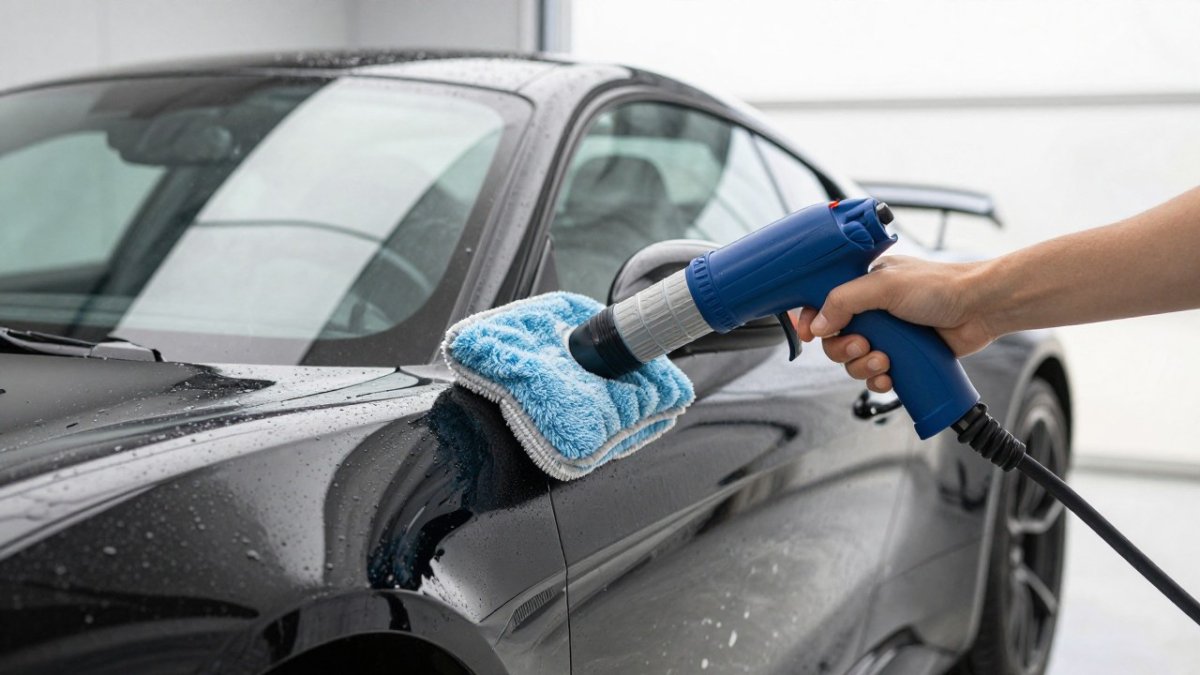
The core routine is simple:
- Wash regularly with pH-neutral soap
- Remove bird droppings and bug splatter fast
- Park in shade when you can
- Skip the wax and use wrap-safe sealants
Contaminants are the quiet killer. Bird droppings are acidic and can etch the film if left to bake. Tree sap bonds to the surface and pulls at it when you scrape. Deal with both quickly.
Hand Wash vs. Automated Car Wash
Hand washing wins, every time. Automated car washes use stiff brushes and harsh chemicals that scratch film and stress edges. The brushes catch on seams and lift them.
A touchless wash is safer than a brush wash, but high-pressure spray aimed at edges can still force water under the film. Stick to a gentle hand wash with a microfiber mitt and soft soap. Dry with a microfiber towel, not a squeegee.
How Long Does a Car Wrap Last With Ceramic Coating?
A ceramic coating on top of a wrap can add meaningful life. The coating forms a sacrificial layer that takes the UV and chemical hits instead of the vinyl.
A coating made for wraps can make cleaning easier and slow fading, though it does not make the wrap bulletproof.
- UV defense: coating absorbs sun damage first
- Easier washing: contaminants release faster
- Gloss retention: finish stays sharper longer
One caveat: not every coating is compatible with vinyl. Use a coating made for wraps, and have it applied by someone who knows film. A coating applied wrong can trap moisture or react with the vinyl.
Signs That a Wrap Needs Replacement
A wrap tells you when it’s done. The trick is knowing what to look for before small issues become expensive ones.
Watch for these signals:
- Fading or color shift: the film looks washed out or patchy
- Peeling edges: corners and seams lift and curl
- Cracking: the surface develops fine cracks, a sign of thermal degradation
- Bubbling: air or moisture trapped under the film
- Adhesive failure: the film lifts from the panel on its own
Cracking and adhesive failure mean the film is past saving. Peeling edges can sometimes be trimmed and resealed, but once a wrap starts failing across panels, replacement is the smarter move.
Before you commit to a new wrap, you’ll want to know whether removal will hurt the paint. Our guide on whether removing vinyl wrap damages paint covers the removal process and what to expect underneath.
How Much Does Car Wrapping Cost and What It Says About Longevity
Price and lifespan are linked, but not in the way most people assume. A low quote often signals cheaper film or less prep, and those savings can come back as a shorter lifespan.
Pricing depends on vehicle size, film quality, coverage, and the shop’s skill level. Pricing depends on quantity, dates, and delivery, so contact 203wraps for current prices or a quote.
The real question isn’t which quote is lowest. It’s what you’re paying for. To see the service and get a quote, explore our vinyl wrap offering.
Warranty vs. Reality
Film manufacturers publish material warranties, but those warranties generally cover the film itself and not the labor to remove and reinstall it. Check the terms of any warranty for maintenance and installation requirements before you rely on it.
That gap between the warranty card and real-world performance is why maintenance records matter. Keep receipts for hand washes and any wrap-safe products you use, and avoid anything that could void coverage. A wrap that fails due to neglect typically won’t be covered, and removal and reinstall add out-of-pocket cost on top of new film.
One more thing worth knowing: a wrap isn’t the same as paint protection film. If protection from road debris is your main goal, our breakdown of how vinyl wrap protects paint from rock chips explains what each option actually delivers.
The Bottom Line on Wrap Longevity
Professional wraps last five to seven years under good conditions, and three to four when sun, storage, and maintenance work against them. The film matters. The install matters more. Your habits decide the rest. The same balance of exposure, care, and installation shapes professional window tint longevity, making it another useful measure of how vehicle films age.
If you want a wrap that hits the top of that range, start with a certified install and a quality film. Then protect it with hand washing, shade, and a wrap-safe coating.
Frequently Asked Questions
How long does a high-quality professional wrap last?
A high-quality professional wrap typically holds up for 5 to 7 years when it is installed on properly prepared paint and cared for correctly. Material quality, sun exposure, storage habits, and washing technique all shift that number. A garage-kept vehicle in a mild climate can push toward the top of the range, while a car parked outside year-round in harsh sun and road salt will land closer to the bottom. Manufacturer-rated films from established brands carry the longest expected service life.
Can a wrapped car go through an automated car wash?
It can, but it shortens the wrap’s life. Brush-based automated washes drag grit across the film, dull the finish, and can lift edges on seams and corners. Touchless washes are gentler but still use strong detergents that degrade the adhesive over time. Hand washing with pH-neutral soap, a microfiber mitt, and two buckets is the safest routine for car wrap maintenance. If you must use a wash, choose touchless and keep it occasional rather than weekly.
Does ceramic coating make a car wrap last longer?
A ceramic coating adds a sacrificial layer that resists UV exposure, contaminants, and chemical staining, which helps a wrap hold its gloss and color longer. It does not stop physical damage from road debris or fix poor installation. Think of it as an extra layer of protection that supports the film rather than a replacement for careful washing and storage. Many owners pair coating with a wrap specifically to slow fading and make maintenance easier.
Will removing a wrap damage the original paint underneath?
Professional removal on healthy factory paint is generally safe when the wrap is taken off within its service life. The risk rises when a wrap is left on for many years past its rating, when the paint underneath was already failing before installation, or when removal is rushed with heat and force. Controlled heat and slow peeling are used to release the adhesive cleanly.
Your wrap’s lifespan is decided long before the first wash. It’s decided by the film on the roll and the hands that install it. At 203wraps, our certified technicians specialize in high-end and collectible vehicles, with clean installs and premium finishes built to last. We treat every car with the care it deserves, from exotic paint jobs to daily drivers. Get started with 203wraps and protect your investment with a wrap built to go the distance.
