
Last Updated: October 28, 2026
Quick Summary
To protect car paint from gravel, add a physical barrier such as paint protection film to the high-impact zones: front bumper, leading hood edge, fenders, side mirrors, and lower door panels. Wax, sealants, and ceramic coatings offer no impact protection against stones, so only film, vinyl, or a temporary sacrificial film absorbs strikes.
- Map high-impact zones first and cover the areas that face the road, not the whole car.
- Ceramic coating has low impact resistance and no physical barrier against gravel.
- Keep extra space behind trucks and reduce speed on unpaved roads and construction zones.
- A loose tarp offers no protection and can scratch paint with wind-driven grit.
- Temporary spray-on film lasts days to a few weeks and suits short trips or rentals.
Table of Contents
- Why Gravel Is So Hard on Car Paint
- How to Prevent Rock Chips on a Car: A Step-by-Step Plan
- Paint Protection Film for Rock Chips: What It Does and Where to Apply It
- Paint Protection Film vs Ceramic Coating: Which Stops Gravel?
- Wax, Sealants, and Ceramic Coatings: Realistic Limits Against Gravel
- How to Repair Rock Chips in Car Paint Before They Spread
- Safe Temporary Protection for a Long Gravel-Road Trip
- Book a Professional Paint Protection Assessment
- Frequently Asked Questions
Why Gravel Is So Hard on Car Paint
Gravel hits your paint at speed and with real force. A stone kicked up by a truck tire can strike your bumper, hood, or fenders before you can react, leaving a chip that exposes bare paint or metal.
At highway speeds, even a pebble carries enough energy to crack through multiple layers of finish. Once the clear coat breaks, moisture and road salt attack the exposed area.
That is why learning how to protect car paint from gravel matters. A focused plan can help protect against this damage.
The core problem:
- Gravel strikes hit the front, sides, and lower panels first
- Damage compounds as chips spread and corrode
- Repainting a hood or bumper costs far more than prevention
Below: a step-by-step plan to protect car paint, a comparison of barrier options, and what to do when a chip appears.
How to Prevent Rock Chips on a Car: A Step-by-Step Plan
Preventing rock chips on a car comes down to three moves: know where impacts land, add a physical barrier, and change how you drive on loose surfaces.
Step 1: Map the High-Impact Zones
Identify where gravel actually hits your vehicle. The front bumper, leading edge of the hood, fenders, side mirrors, and lower door panels take the most abuse. On a low sports car, rocker panels and rear wheel arches catch stones too.
Walk around your car and note these zones. That map tells you where to spend your protection budget first, cover the areas that face the road, not the whole car.
Step 2: Choose Your Physical Barrier
If you are weighing vinyl wrap against film, our guide on whether vinyl wrap protects car paint from rock chips breaks down where each one holds up.
Step 3: Adjust How You Drive on Gravel
A few habits go a long way:
- Keep extra space behind trucks and vehicles with aggressive tires
- Reduce speed on unpaved roads and construction zones
- Stay out of lane edges where gravel piles up
Paint Protection Film for Rock Chips: What It Does and Where to Apply It
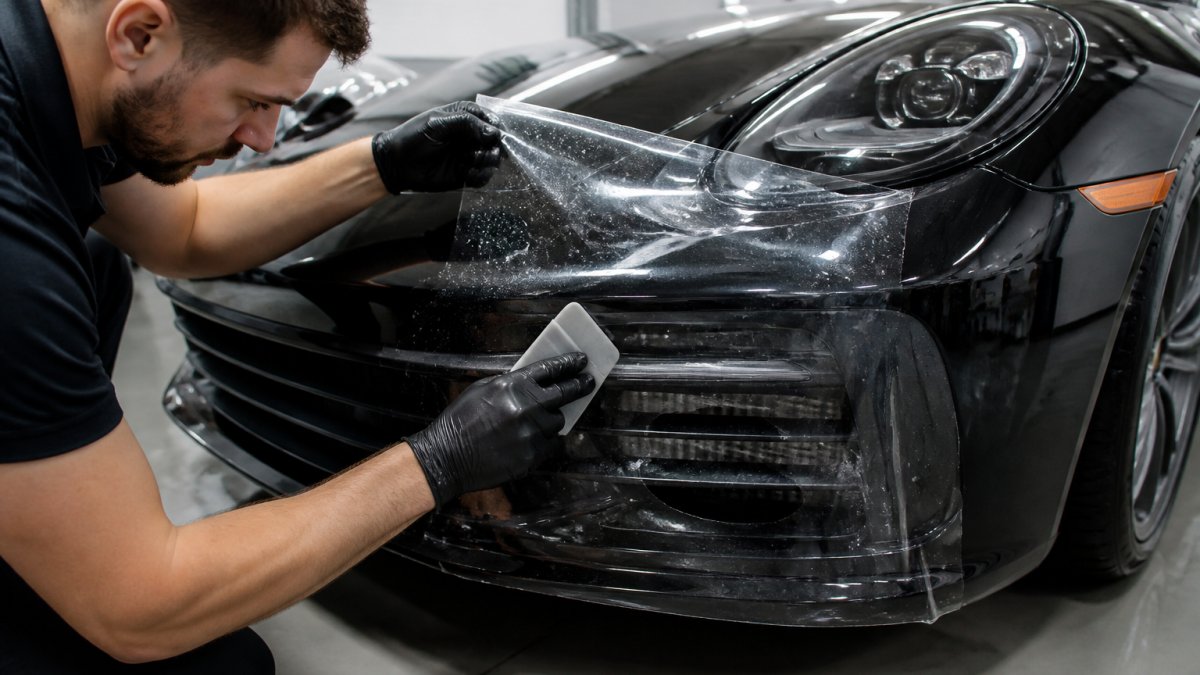
Where you apply PPF matters as much as the product. Prioritize the high-impact zones from Step 1.
For owners who want the actual service, you can explore our paint protection film service and see how we handle installation on high-end and collectible cars.
Paint Protection Film vs Ceramic Coating: Which Stops Gravel?
Here is how the two compare on the factors that matter for gravel:
| Factor | Paint Protection Film | Ceramic Coating |
|---|---|---|
| Impact resistance | High, absorbs stone strikes | Low, no physical barrier |
| Durability | Several years with care | Months to a few years |
| Best for | Chips, gravel, road debris | Gloss, easy cleaning, UV |
| Cost | Higher upfront | Lower upfront |
For a deeper side-by-side, read our full breakdown of paint protection film vs ceramic coating before you decide.
Wax, Sealants, and Ceramic Coatings: Realistic Limits Against Gravel
Surface treatments change how contaminants interact with the paint; they do not change how the paint responds to kinetic energy. A pebble at highway speed carries energy a micron-thin coating cannot dissipate, only a physical layer like film, vinyl, or a sacrificial temporary film does that.
What Each Surface Treatment Can and Cannot Do
| Treatment | Relative thickness | Impact/gravel protection | Environmental protection | Typical reapplication | Relative cost |
|---|---|---|---|---|---|
| Carnauba or synthetic wax | Very thin | None | Good, water beading, UV, light contamination | Weeks to a few months | Lowest |
| Paint sealant (synthetic polymer) | Thin | None | Good to very good, longer durability than wax | Several months | Low |
| Ceramic coating (SiO2-based) | Thin, but harder than wax | None to negligible against stones | Very good, chemical resistance, easy cleaning, gloss | A few years with care | Moderate to high |
| Paint protection film (urethane) | Thick physical layer | High, absorbs stone strikes | Good, and protects against abrasion | Several years | Highest upfront |
Where Coatings Earn Their Keep
That last point matters on gravel roads: a slick, coated surface releases dust and grit more readily during a wash, lowering the risk of grinding particles into the clear coat. It is a secondary benefit, not chip protection.
The Combination That Actually Works
For a deeper side-by-side on the two main categories, read our full breakdown of paint protection film vs ceramic coating before you decide.
How to Repair Rock Chips in Car Paint Before They Spread
Once the paint is sound again, that is the moment to add protection so the same spot does not take another hit.
Safe Temporary Protection for a Long Gravel-Road Trip
Here is the honest breakdown of temporary options, ranked by how much impact they actually absorb.
Temporary and Semi-Permanent Options Compared
| Option | Impact protection | Typical duration | Removal risk | Best use case |
|---|---|---|---|---|
| Temporary spray-on film (peelable coating) | Low to moderate, a thin sacrificial layer | Days to a few weeks | Low if applied to clean, cured paint | Short trips, rental cars, lease vehicles |
| Pre-cut temporary track/road film | Moderate, thicker urethane, but edges lift | Days to weeks | Moderate, adhesive residue if left too long | Front bumper and leading hood edge for a specific trip |
| Fitted car cover (parked only) | None while driving; prevents grit settling overnight | Trip duration | High if used on a dirty car or in wind | Overnight parking at trailheads and campsites |
| Loose tarp | None, actively harmful | N/A | High, scratches from wind-driven grit | Never |
| Permanent PPF installed before the trip | High | Years | Low | The reliable choice if the trip is more than a one-off |
A Before, During, and After Plan
For anything beyond a one-off trip, a permanent film on the front end is the more reliable choice. Temporary protection buys you time; it does not replace a physical barrier designed for highway-speed impacts.
Book a Professional Paint Protection Assessment
At 203wraps, our certified technicians specialize in high-end and collectible automobiles, handling clean installs and premium finishes with meticulous care. When you are ready, you can complete your booking to schedule an appointment for a professional assessment. You can review our paint protection film installation pricing factors to understand what PPF installation will cost before booking.
Frequently Asked Questions
Does paint protection film prevent rock chips?
Yes. Paint protection film is a clear urethane layer that absorbs the impact of gravel and stone chips before they reach your paint. It works best on the high-impact zones: the front bumper, hood leading edge, fenders, mirrors, and rocker panels. A quality film takes the hit and can self-heal minor marks, while your factory finish stays intact underneath. It is the most direct way to protect car paint from gravel on highways and unpaved roads.
Is paint protection film better than ceramic coating for gravel?
For gravel specifically, yes. Ceramic coating is a thin chemical layer that makes washing easier and adds gloss, but it offers almost no impact resistance against stones. Paint protection film is a physical barrier measured in mils of thickness, so it absorbs hits that a coating cannot. Many owners combine both: PPF on the impact zones and a ceramic coating on top for easier cleaning and added gloss.
Can gravel damage paint protection film?
Film can take damage from large or fast-moving debris, but that is the point: it sacrifices itself so your paint does not. Small scuffs often self-heal with heat from the sun or warm water. Deep tears from big rocks are rare, and a shop can usually replace a single panel rather than the whole installation. That is far cheaper than repainting a hood or bumper.
How do I repair small gravel chips in car paint?
Clean the chip with isopropyl alcohol, then apply matching touch-up paint in thin layers with a fine applicator, letting each layer dry. Build slightly above the surrounding surface, then wet-sand and polish flush once cured. Repair chips promptly, because exposed metal or primer can corrode and the chip can spread. For clusters of chips or a larger area, a professional can assess whether repainting or film coverage makes more sense.
Gravel does not have to cost you a repaint. Map your impact zones, choose a real physical barrier, and fix chips before they spread. 203wraps brings over a decade of experience, certified technicians, and a focus on high-end and collectible vehicles to every install. Get started with 203wraps and protect your car’s finish from the road ahead.
