
Last Updated: November 22, 2026
Quick Summary
Professional paint protection film installation services apply a transparent urethane layer over your vehicle’s most exposed panels to shield factory paint from rock chips, road debris, and everyday wear. At 203wraps, certified technicians with over a decade of experience install paint protection film on daily commuters and collectible cars alike.
- Full-front coverage suits highway commuters because the hood and fenders take the brunt of road debris.
- Installation follows a fixed sequence, from decontaminating and correcting paint to curing the adhesive.
- Self-healing film reflows light scratches from wash marring and fingernail scuffs, not deep gravel gouges.
- Avoid pressure-washing within a foot of film edges and remove acidic bird droppings promptly.
- Ask whether film is cut from vehicle-specific patterns, since plotter-cut patterns protect paint from blades.
Table of Contents
- What Professional Paint Protection Film Installation Services Deliver
- How a Paint Protection Film Cost Estimate Is Built
- How Long Does Paint Protection Film Take to Install
- Film Types, Finishes, and Self-Healing Properties
- Paint Protection Film Maintenance Tips for Long-Term Durability
- PPF vs Ceramic Coating and Vinyl Wraps: What Each One Does
- How to Evaluate an Installer Before You Book
- Book Your Paint Protection Film Installation Consultation
- Frequently Asked Questions
What Professional Paint Protection Film Installation Services Deliver
Professional paint protection film installation services put a transparent urethane layer over your vehicle’s most exposed panels, shielding the factory paint from rock chips, road debris, and everyday wear. At 203wraps, our certified technicians have spent over a decade installing paint protection film, or PPF, on daily commuters and collectible cars alike. The difference between a factory-fresh finish and a stone-chipped hood usually comes down to one decision made early.
A clear bra works because the film absorbs impact before it reaches the clear coat.
Why Clear Bra Film Beats DIY Kits
Watch out: trimming film on the vehicle with a blade is how DIYers slice through clear coat, and that repair costs far more than professional installation would have.
How a Paint Protection Film Cost Estimate Is Built
Pricing depends on quantity, dates, and delivery. For a current price or a quote, visit the 203wraps website.
Coverage, vehicle make and model, and paint condition all affect the scope of work. Swirl marks and contamination should be corrected before film is applied, or the film can seal the flaws in.
Ask whether a quote includes paint correction, disassembly of badges and trim, and edge wrapping, so you can compare the scope of work directly.
For the full breakdown of what moves a quote up or down, see our guide to paint protection film installation pricing factors.
Coverage Packages and What They Include
| Package | Panels Covered | Best For |
|---|---|---|
| Partial front | Bumper, partial hood, partial fenders | Budget-conscious daily drivers |
| Full front | Full hood, fenders, bumper, mirrors | Highway commuters facing road debris |
| Track or impact | Full front plus rocker panels and rear quarters | Performance cars and track use |
| Full vehicle | Every painted exterior panel | Collectible and exotic vehicles |
Match the package to how you drive, not to the sticker price alone. A commuter logging highway miles benefits most from full-front coverage because the hood and fenders take the brunt of road debris. A weekend car that lives in a garage may only need partial front. Track and performance owners should price rocker panels and rear quarters, since sticky tires throw gravel along the lower body. Full-vehicle coverage makes sense when the paint itself is the asset, such as a collectible or a factory matte finish that cannot be spot-repaired cleanly.
How Long Does Paint Protection Film Take to Install
Installation time depends on coverage and vehicle complexity. For a timeline specific to your vehicle, contact 203wraps.
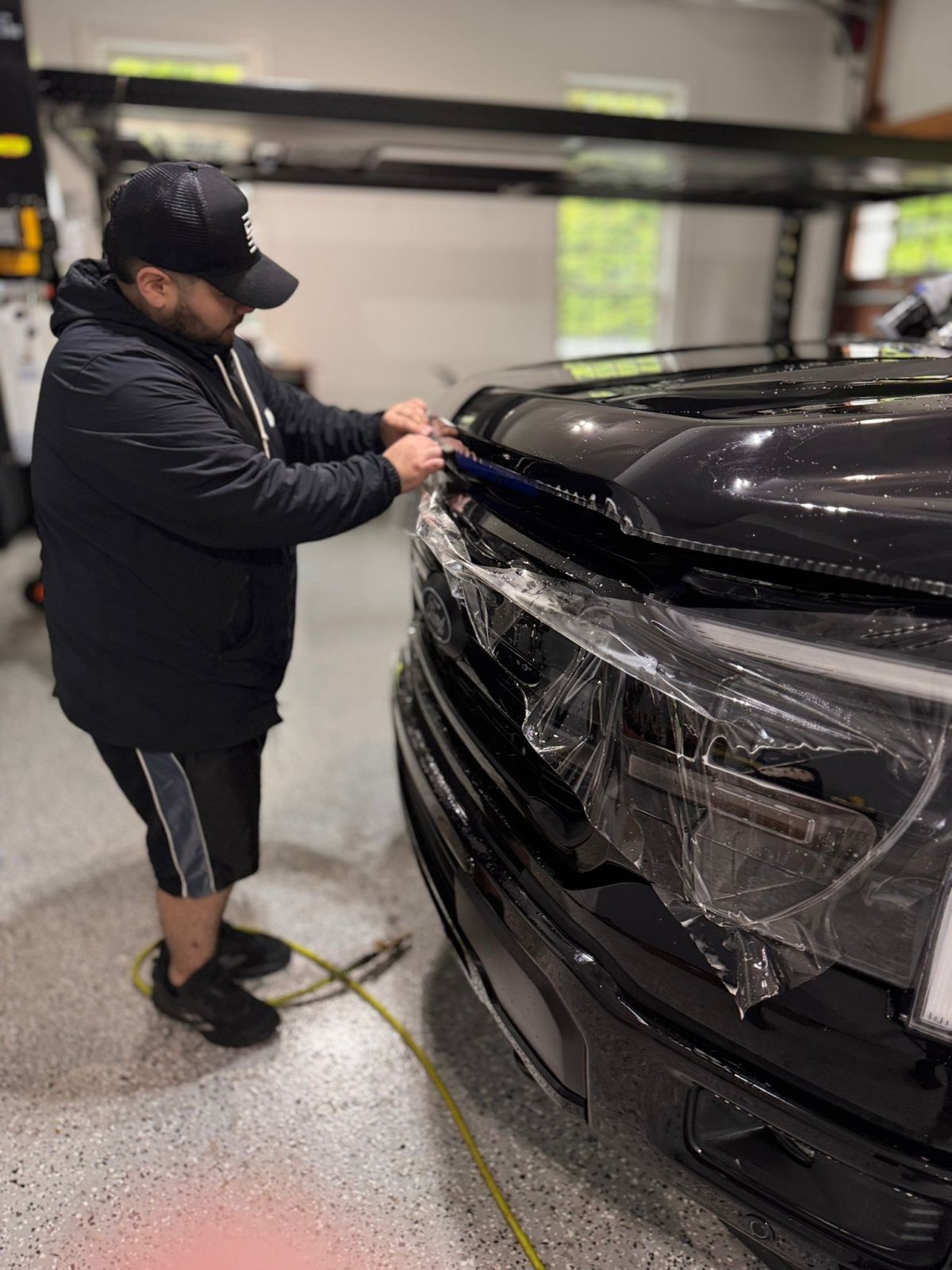
What Happens During the Installation Process
The installation process follows a fixed sequence, and skipping any stage shows up in the finished result.
- Wash, decontaminate, and clay the paint
- Correct swirl marks and defects under proper lighting
- Plot vehicle-specific patterns or hand-cut oversized panels
- Apply film with slip solution, then squeegee out every bubble
- Wrap and tuck film edges behind panels where possible
- Inspect under high-intensity light and cure the adhesive
Film Types, Finishes, and Self-Healing Properties
Self-healing film is a topcoat technology that reflows light scratches when exposed to heat, either sunlight or warm water. It handles wash marring and fingernail scuffs, not deep gouges from gravel.
Finish options change the look as much as the protection. Gloss film disappears against factory paint. Matte and satin finishes convert a glossy panel to a flat sheen, which is why many owners wrap the whole car rather than protect it.
If you are weighing whether the self-healing topcoat justifies its cost, our breakdown of whether self-healing paint protection films are worth it covers the trade-offs directly.
Paint Protection Film Maintenance Tips for Long-Term Durability
Basic care keeps film clear for its full service life. Wash the car by hand or with a touchless system, and skip the stiff-bristle brush at the pay-and-spray bay.
- Remove bird droppings and bug splatter promptly; they are acidic and etch the topcoat
- Avoid pressure-washing within a foot of film edges
- Skip wax on matte film and use a film-safe sealant instead
- Park in shade where possible to slow yellowing
Yellowing worries a lot of owners, and it is a fair concern. It comes from cheap film and sun exposure, not from installation itself. Our guide to preventing yellowing on paint protection film explains what actually causes it and how to slow it down.
PPF vs Ceramic Coating and Vinyl Wraps: What Each One Does
PPF absorbs physical impact; ceramic coating does not. A ceramic layer adds gloss, hydrophobics, and UV resistance, but a stone at highway speed will punch straight through it into the paint. Vinyl wraps change color and finish, yet offer minimal impact protection compared with clear film.
The practical answer for most owners is both: film on impact zones, ceramic on top for easy cleaning. Vinyl is the right call when you want a new look, not maximum shielding. For a side-by-side breakdown, read our comparison of paint protection film versus ceramic coating.
How to Evaluate an Installer Before You Book
Ask three questions before you book any shop. First, is the film cut from vehicle-specific patterns or trimmed on the car? Plotter-cut patterns protect your paint from blades. Second, can you see finished work in person, ideally a full-front job on a dark car where flaws show clearly? Third, what does the warranty cover, and who honors it, the shop or the manufacturer?
Go further than those three. A professional installer should be able to describe their training and certification path, because film manufacturers run their own certification programs and maintain installer locators. Ask about the installation environment: a clean, dust-controlled bay with proper lighting matters more than a fancy showroom, since airborne grit trapped under film is permanent. Ask whether the shop uses a plotter to cut vehicle-specific patterns or hand-cuts oversized panels, and how they handle edges, because wrapped edges that tuck behind panels last far longer than trimmed edges that sit flush on the paint.
Inspect workmanship on a finished car before you commit. Look along the hood and fender edges for lifted corners, trapped debris, or stretch marks in the film. Run your hand along an edge to feel whether it is wrapped or cut. Look at the film under bright light at a low angle, where bubbles and contamination show clearly. Ask how long the shop has been installing film and whether the same technician who quotes the job also installs it.
Ask for the warranty terms in writing before you pay. Confirm who handles a claim, what documentation you need, and whether the warranty transfers if you sell the vehicle. The Specialty Equipment Market Association sets recognized standards for automotive restyling professionals, and membership is a reasonable signal of seriousness. The Federal Trade Commission also requires written warranty terms to be available before purchase, so ask for them in writing.
Watch out: a shop that quotes without inspecting your paint in person is guessing, and a shop that cannot show you a finished full-front job on a dark car is asking you to be their portfolio.
Book Your Paint Protection Film Installation Consultation
The right time to protect paint is before the first chip, not after. Once road debris marks a panel, film preserves the damage rather than preventing it. If you drive a high-end or collectible car, the math gets even simpler: original paint is worth more untouched.
We invite you to review our full range of installation services and see how we handle film, wraps, and tinting under one roof. At 203wraps, our certified technicians bring over a decade of experience, a specialization in high-end and collectible automobiles, and a commitment to clean installs and premium finishes. Book now with 203wraps and protect your vehicle’s finish before the road gets a chance to.
Your paint is only original once. Let our certified team at 203wraps apply a precision-fit film that guards your finish for years, backed by our dedication to clean installs and premium results.
Frequently Asked Questions
How much does professional paint protection film installation cost?
Pricing depends on quantity, dates, and delivery. For a current price or a quote, visit the 203wraps website. Partial coverage such as a front bumper or hood typically costs less than full-front or full-vehicle coverage.
How long does paint protection film take to install?
Installation time depends on coverage and vehicle complexity. For a timeline specific to your vehicle, contact 203wraps before you drop off the car.
Can I install PPF myself instead of hiring a professional?
DIY kits exist, but clear bra film is unforgiving. Dust trapped under the film, stretched edges, and lifting corners are common results, and correcting them usually means buying new film. Professional installation is handled by certified technicians at 203wraps. For high-end or collectible vehicles, the risk of paint damage or a visible seam outweighs any savings from a self-install kit.
Will paint protection film turn yellow or damage my paint when removed?
Quality film from established brands is engineered to resist yellowing. Removal is straightforward when the film was installed correctly and removed by a trained technician: the film peels away without pulling clear coat. The bigger risk comes from cheap film or poor prep work. Ask your installer which film brand they use and how they handle removal.
What is the difference between paint protection film and ceramic coating?
Paint protection film is a thick urethane layer that physically absorbs impacts from rock chips and road debris. Ceramic coating is a thin chemical layer that adds gloss and makes washing easier but does not stop physical damage. Many owners combine both: PPF on high-impact areas for impact protection, then ceramic coating over the film or on uncovered panels for slickness and UV resistance. They solve different problems, so choose based on what you want to prevent.
How do I maintain my vehicle after PPF installation?
Remove bird droppings and tree sap promptly, and park in shade when possible.
