
Last Updated: November 19, 2026
Quick Summary
Paint protection is a physical or chemical barrier applied over your factory clear coat to absorb damage before it reaches the paint. Film absorbs rock chips and scratches, while ceramic coating repels water and contaminants but will not stop a pebble at highway speed. Choose film for impact defense and resale value.
- Paint protection film is a thick urethane layer that absorbs physical impacts.
- Ceramic coating delivers hydrophobic properties and gloss enhancement but not impact protection.
- Vinyl wrap changes appearance and typically lasts three to five years before edges lift.
- Quotes should itemize coverage area, paint prep, film brand, labor, and removal.
- Ask whether the installer is certified and whether the quote includes paint correction.
Table of Contents
- Why Drivers Seek an Autofilmspecialists Alternative for Paint Protection
- Paint Protection Film vs Ceramic Coating: What Each Actually Does
- Vinyl Wrap vs Paint Protection Film: Appearance or Impact Defense
- What Paint Protection Film Cost Really Covers
- PPF Maintenance: Keeping Film Clear and Self-Healing
- DIY vs Professional Application: Risks That Decide the Outcome
- Choosing Your Paint Protection Installer
- Frequently Asked Questions
Why Drivers Seek an Autofilmspecialists Alternative for Paint Protection
Shopping for paint protection usually starts with a quote that feels impossible to compare. One shop bundles film, coating, and tint into a single number; another lists them separately. That confusion is exactly why so many drivers search for an Autofilmspecialists alternative and end up comparing apples to oranges. The pattern is consistently the same: the quote isn’t the problem. The missing detail is.
So here’s the framework we use with every customer. Paint protection is a physical or chemical barrier applied over your factory clear coat to absorb damage before it reaches the paint itself. The two dominant options, film and ceramic coating, protect in completely different ways. Below, we break down what each one actually does, what drives cost, how maintenance differs, and why the installer matters more than the product label.
Paint Protection Film vs Ceramic Coating: What Each Actually Does
The short answer: paint protection film is a thick urethane layer that absorbs physical impacts, while ceramic coating is a thin liquid polymer that bonds to the surface and repels water and contaminants. They solve different problems.
Film carries the real work of rock chip protection, scratch resistance, and self-healing properties on premium grades. Ceramic coating delivers hydrophobic properties and gloss enhancement, but it will not stop a pebble at highway speed.
Where PPF Wins and Where Ceramic Coating Wins
- PPF is the stronger choice for impact: gravel and road debris.
- PPF provides a sacrificial layer that helps keep the original clear coat intact.
- Ceramic coating is generally easier to maintain with a slicker surface.
For a full head-to-head on which one suits your car, see our breakdown of Paint Protection Film vs Ceramic Coating.
Vinyl Wrap vs Paint Protection Film: Appearance or Impact Defense
Vinyl wrap changes how the car looks. PPF keeps the car looking factory-fresh. That’s the core trade-off, and most buyers conflate the two because both are films applied to painted panels. The difference is in the material construction and what each layer is engineered to absorb.
A vinyl wrap is a cast or calendered PVC film with a removable adhesive backing. It gives you a color change, matte or satin finishes, and a basic sacrificial layer against light abrasion and UV fading. What it does not give you is meaningful rock chip protection or self-healing behavior. A pebble at highway speed passes through vinyl and into the clear coat underneath. Vinyl also has a shorter service life than quality PPF, most installers see three to five years before edges lift, corners curl, or the surface dulls from UV exposure, and removal on older film can be labor-intensive.
Paint protection film is a thermoplastic urethane with a clear topcoat engineered for stain resistance and, on premium grades, a self-healing layer that reflows light scratches with heat. It stays transparent, hides nothing, and takes the hits a wrap would pass straight through. Quality film often carries warranties against yellowing, bubbling, and lifting, and it can typically be removed without damaging factory paint when installed and removed correctly.
If your goal is resale value and paint depth preservation, film is generally the smarter spend. If you want a new look, a wrap is an option. Some owners do both, film on the impact zones and wrap for style elsewhere, but the order matters. Film goes on the paint first, then wrap over it only in non-impact areas, because wrapping over film in high-impact zones defeats the film’s ability to absorb energy.
Watch out: a wrap installed over uncorrected paint traps swirls and contamination just like film does, and removing a wrap from a panel with failing clear coat can pull paint with it. Surface preparation is not optional for either product.
For a full head-to-head on which one suits your car, see our breakdown of Paint Protection Film vs Ceramic Coating.
What Paint Protection Film Cost Really Covers
Quotes vary wildly because they cover different things. Film price depends on coverage area, vehicle complexity, film brand, and whether paint correction and surface preparation are included before installation. Pricing depends on quantity, dates, and delivery, so request a quote from 203wraps for current prices.
Here’s what a serious quote should itemize:
| Cost Factor | What It Covers | Why It Matters |
|---|---|---|
| Coverage area | Full front, track pack, or full body | Drives material volume |
| Paint prep | Wash, decontamination, correction | Film traps defects underneath |
| Film brand | Warranty length and clarity | Cheap film yellows early |
| Labor and skill | Certified installer time | Prevents lifting and edges |
| Removal | Future film stripping | Protects paint on takeoff |
Coverage tiers are a major factor in price. A partial front uses less material than a full body application, and labor scales with panel count and complexity. Vehicles with aggressive curves, vents, or one-piece bumpers can take longer to install cleanly. Film brand also matters, as warranty length and clarity vary between products.
Paint correction is the line item buyers most often cut and most often regret. If the paint has swirls, water spots, or contamination when film goes on, those defects are locked under the film permanently. No film removes them later. A quote that skips correction is not cheaper, it’s incomplete.
Ask whether a quote includes removal and warranty registration, since these details affect the total cost of ownership. Ask what happens at removal and who honors the warranty if the installer closes.
For a closer look at how a sedan quote breaks down, read what drives your PPF quote.
PPF Maintenance: Keeping Film Clear and Self-Healing
Film is not install-and-forget. Hand washing with a pH-neutral soap, avoiding automatic brushes, and removing bird droppings promptly all protect the topcoat and its self-healing ability. Heat, whether from the sun or warm water, reactivates that healing property on light scratches.
Yellowing is the fear we hear most. Modern films resist oxidation and UV degradation far better than older generations, but quality and installation still decide the outcome. We walk through the causes in our guide on preventing yellowing on paint protection film. If you’re weighing whether the self-healing tier is worth the upgrade, our article on self-healing PPF covers the trade-offs.
DIY vs Professional Application: Risks That Decide the Outcome
DIY kits look affordable until you factor in the failure modes. Trapped surface contamination, stretched film, lifted edges, and bubbles that never settle are the common outcomes, and each one can mean a full redo.
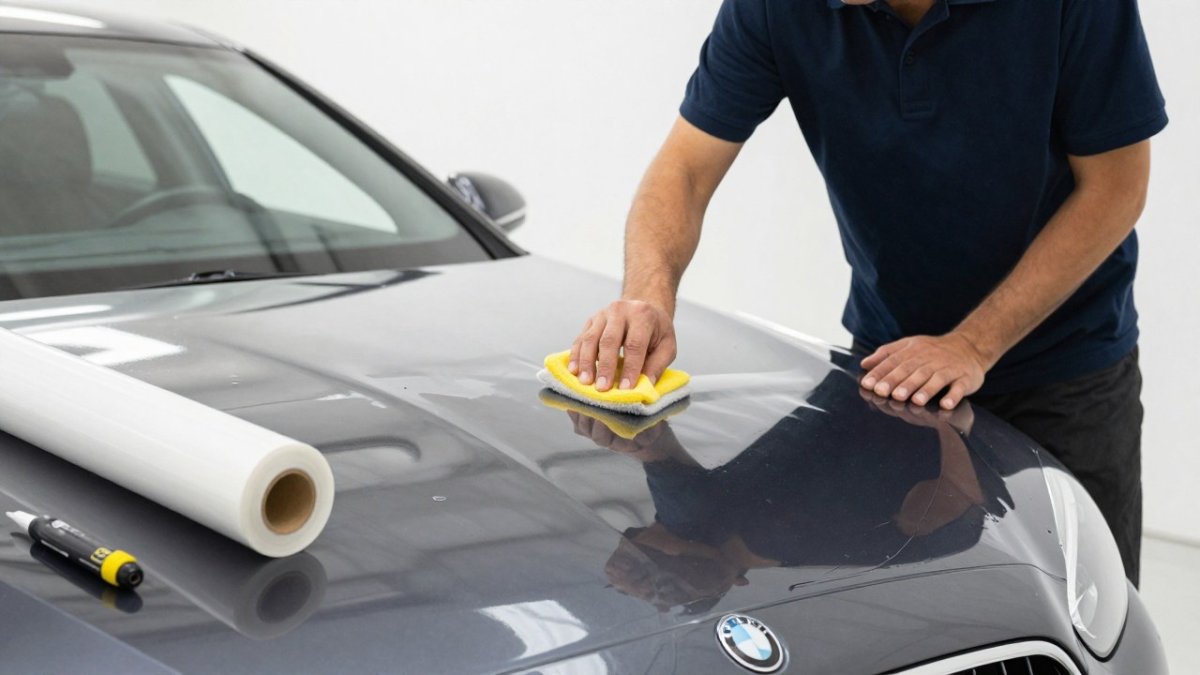
Professional installation typically involves controlled conditions and attention to the application process and curing time. Watch out: installing film over uncorrected paint can lock swirls and scratches beneath the surface.
Choosing Your Paint Protection Installer
Certification, warranty terms, and prep standards separate a lasting install from a short-lived one. Ask three questions: is the installer certified for the film brand, does the quote include paint correction, and what does warranty coverage actually promise on yellowing and lifting?
203wraps’s certified technicians specialize in high-end and collectible automobiles. If you’re ready to talk through your car, contact us to request a quote.
Comparing quotes is frustrating because most shops hide what’s inside the number. We show you the prep, the film, and the warranty before you commit. Get started with 203wraps and protect your paint with a clean, certified install built to last.
Frequently Asked Questions
Is ceramic coating a good alternative to paint protection film?
It depends on what you want protected. Ceramic coating creates a chemically bonded hydrophobic layer that makes washing easier and resists UV fading, bird droppings, and chemical etching, but it will not stop a rock chip. Paint protection film is a thick urethane sacrificial layer that absorbs impact from road debris. Many owners combine both: PPF on high-impact zones and ceramic coating over the rest of the paint.
How much does paint protection film cost?
Pricing depends on coverage area, film brand, vehicle complexity, and installer labor, so most shops quote per vehicle rather than publish flat rates. Full-body coverage costs more than partial front packages that cover the bumper, hood, fenders, and mirrors. Request an itemized quote that lists the film product, coverage zones, and warranty terms so you can compare offers fairly.
Can a vinyl wrap protect a car’s paint?
A vinyl wrap adds a sacrificial layer that shields factory paint from UV fading and light abrasions, and it lets you change color without repainting. It offers far less impact protection than dedicated paint protection film, so it will not stop gravel chips on the highway. If chip defense matters most, choose PPF; if appearance change is the goal, a wrap makes more sense.
How do I maintain PPF so it stays clear?
Hand wash with pH-neutral soap and a soft microfiber mitt, and skip automatic brushes that can dull the topcoat. Remove bird droppings and bug splatter promptly because acidic residue can stain film. Most quality films are self-healing, meaning light scratches flow out with heat from the sun or warm water. Follow the installer’s curing guidance before the first wash.
Will removing paint protection film damage my original paint?
Factory paint in good condition typically releases film cleanly when removal is done by a trained installer using controlled heat. Risk rises if the paint was previously repaired, repainted, or poorly prepped before installation. Ask your installer how they handle removal and confirm the film brand’s warranty covers removal-related concerns before you commit.
