
Last Updated: October 30, 2026
Quick Summary
Yes, 35 percent tint gives moderate privacy. It stops casual looking, but a determined observer can still see occupants, especially in bright daylight or when the cabin light is on. Privacy also depends on viewing distance and your factory glass.
- A 35 percent tint lets about 35 percent of visible light pass through the glass.
- Privacy depends on the light on each side: outsiders see less at night with the cabin light off.
- From across a parking lot, a driver is usually hard to identify through 35 percent film in daylight.
- Factory glass and aftermarket film combined usually meter darker than the 35 percent film rating alone.
- Check your state’s limits and meter the finished glass, since the film label is not the legal number.
Table of Contents
- What 35 Percent Window Tint Actually Means
- Can You See Through 35% Tint in Daylight, Shade and at Night?
- How Much Privacy 35 Percent Tint Really Provides
- 35% vs 20% Window Tint: Privacy and Visibility Compared
- Is 35% Tint Visible at Night and Safe for Night Driving?
- Window Tint Legal Limits: Checking Your Tint Before Installation
- Choosing the Right Tint for Your Privacy Needs
- Frequently Asked Questions
What 35 Percent Window Tint Actually Means
Window tint is rated by how much visible light it lets through, and that rating is called visible light transmission, or VLT. A 35 percent tint lets about 35 percent of visible light pass through the glass. The other 65 percent is blocked or absorbed.
Most drivers know tint by its percentage, but the number only describes the film. Your factory glass already blocks some light, so the final result is darker than the film rating alone suggests.
Visible Light Transmission (VLT) Explained
VLT is a simple idea: a lower number means darker glass. A 5 percent tint is nearly opaque. A 50 percent tint is light, almost clear. A 35 percent tint sits in the middle of that range.
Here is how common levels compare:
| Tint Level | Light Passing Through | General Appearance |
|---|---|---|
| 5% | About 5% | Very dark, near opaque |
| 20% | About 20% | Dark, clearly tinted |
| 35% | About 35% | Medium darkness |
| 50% | About 50% | Light, subtle tint |
Keep in mind that VLT is a rule for film. Factory tint, aftermarket film and the glass itself all affect the final VLT measured on the window.
Can You See Through 35% Tint in Daylight, Shade and at Night?
Yes, you can see through 35 percent tint, but visibility is not a fixed property of the film. What an outside observer can see depends on the ratio of light on their side of the glass to light on your side. Tint is not one-way privacy glass.
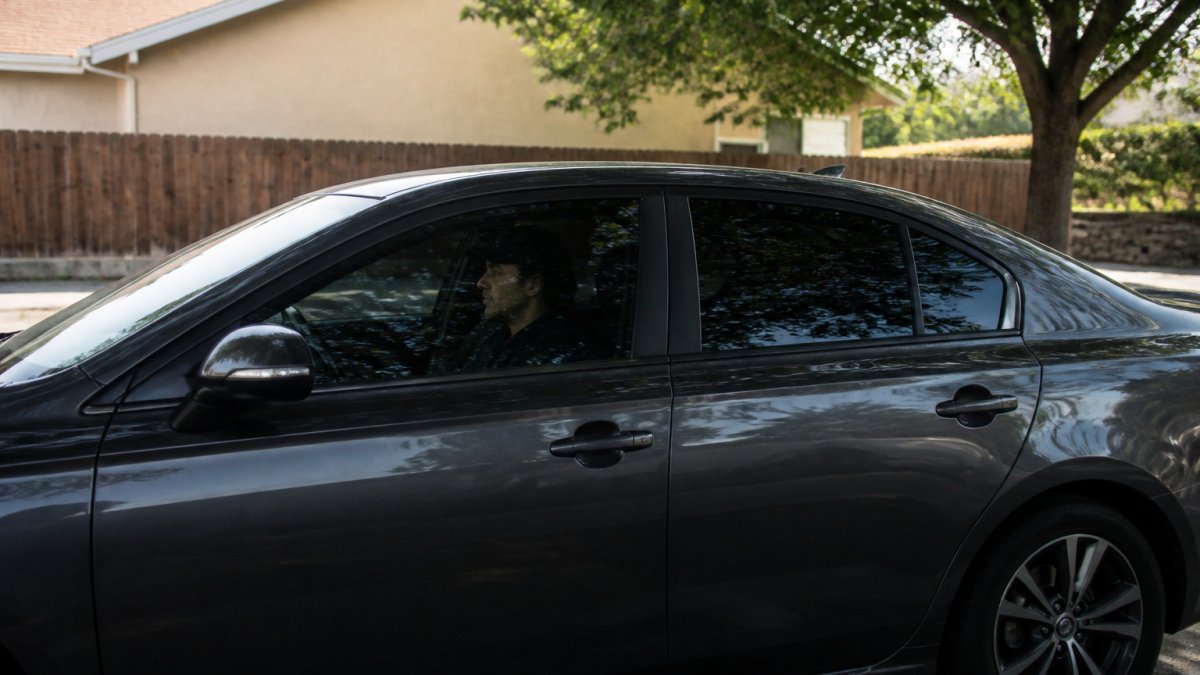
That single principle explains almost every real-world report about 35 percent tint. In bright sun, the outdoors is far brighter than a shaded cabin, so an observer can usually make out occupants, head positions and movement, though facial detail softens.
Daylight, Shade and Night, Side by Side
- Full daylight, sun on the glass: Outsiders typically see silhouettes, posture and motion. Faces are recognizable at close range but lose sharp detail. Light-colored upholstery and a light-colored dashboard reflect more light back through the glass and reduce privacy.
- Open shade or overcast: The outdoor light level drops, so the cabin and the outside come closer to equal. The interior often looks darker to outsiders than it feels from inside, and faces become harder to resolve beyond a few feet.
- Night, cabin light off, well-lit street: The windows can appear nearly opaque from outside. This is the strongest privacy condition 35 percent tint produces.
- Night, cabin light on: The interior becomes the brighter side, and passengers may be clearly visible. Phone screens, map displays and dome lights all work against privacy after dark.
- Night, unlit street, headlights behind you: Headlights from a following vehicle can illuminate your cabin from behind while the observer’s side stays dark, briefly making the interior more readable than expected.
Viewing Distance Changes the Answer
Distance matters more than most drivers expect. From across a parking lot, roughly 20 feet or more, a person in the driver’s seat is usually hard to identify through 35 percent film in daylight. From a few feet away, with a hand cupped against the glass, you can see considerably more. Treat 35 percent tint as protection against casual looking from a distance, not against a determined observer standing at the window.
If privacy at close range matters to you, for example, when parking overnight on a street, combine 35 percent film with a sunshade, locked doors and nothing of value left in view. Film alone will not defeat a flashlight against the glass.
What Changes the Result Besides the Film
Three variables move the outcome more than the film label:
- Factory glass. Most modern side and rear glass already carries a slight tint from the manufacturer. A 35 percent film applied over factory glass usually meters darker than 35 percent, sometimes noticeably so. The film number is not the installed number.
- Interior color and materials. Light gray, tan or white interiors bounce more light back through the glass. Dark interiors absorb it and read as more private at the same film percentage.
- Interior lighting and screens. Dome lights, ambient lighting, phone screens and infotainment displays all raise cabin light and reduce privacy, especially at night.
A practical way to judge your own car is to have someone sit inside at dusk while you walk around it at 5, 10 and 20 feet. That five-minute test tells you more about your real privacy than any percentage chart.
How Much Privacy 35 Percent Tint Really Provides
A 35 percent tint gives moderate privacy. It is enough to stop most casual looking, so valuables on the seat are less visible from the sidewalk.
Privacy depends on several things at once. The lighting outside and inside, how close the observer stands, and the color of your interior all change what can be seen. A light gray or tan interior reflects more light back, which can make the glass feel less private than a dark one.
Viewing Distance and Interior Lighting
Distance matters more than most drivers expect. From several feet away, a person sitting in the car is often hard to identify. From a few inches away, with a hand against the glass, you can see much more.
Interior lighting matters just as much. A bright cabin makes the people inside easier to see. A dim cabin makes the same 35 percent tint feel more private.
35% vs 20% Window Tint: Privacy and Visibility Compared
The main difference between 35 percent and 20 percent tint is darkness. A 20 percent film is much darker, so it gives stronger privacy during the day and at night. A 35 percent film is lighter, so it keeps more visibility from inside the car.
Here is how the two compare:
| Factor | 35% Tint | 20% Tint |
|---|---|---|
| Daytime privacy | Moderate | Strong |
| Nighttime privacy | Moderate, depends on cabin light | Strong |
| Visibility from inside | Better | More limited |
| Overall look | Subtle, factory-style | Noticeably dark |
Choose 35 percent if you want a clean look with good visibility. Choose 20 percent if privacy matters more to you than the view out.
Is 35% Tint Visible at Night and Safe for Night Driving?
At night, the tint’s effect on your view matters more than its effect on privacy.
Watch out: Tint that makes it hard to see pedestrians, cyclists or road signs is unsafe, even if it is legal. Test your visibility at night before you rely on it for driving.
Front windows need the most care. Dark tint on the windshield or front side windows can reduce what you see when reversing, checking blind spots or driving toward oncoming headlights.
Window Tint Legal Limits: Checking Your Tint Before Installation
Tint law in the United States is set state by state, and the rules are not uniform. What is legal on a rear side window in one state may be illegal on a front side window in the next, and windshield rules are stricter almost everywhere. The practical problem is that the number on the film box may not match the number measured on the finished glass.
Why the Film Label Is Not the Legal Number
Your factory glass already blocks some light. When a 35 percent film goes onto glass that meters, say, 75 percent on its own, the combined result is lower than 35 percent, often in the high 20s depending on the glass.
The only reliable check is a meter reading on the finished glass. A tint shop that installs to a legal standard should be able to show you that reading before you pay.
How to Verify Before and After Installation
- Look up your state’s current limits for each window position. Check front side windows, rear side windows, rear window and windshield separately, because most states set different numbers for each. Check your state’s motor vehicle agency for current limits, which can change over time.
- Ask about medical exemptions. Some states offer exemptions for darker tint in certain circumstances. Confirm the rules with your state agency rather than assuming.
- Ask the installer to meter the bare glass first. Knowing the factory VLT of each window lets you predict the finished number instead of guessing.
- Meter the finished glass, window by window. A handheld tint meter gives a direct reading. Record the numbers so you have them if the question ever comes up.
- Confirm windshield rules separately. Many states restrict windshield film to a narrow strip at the top or ban it entirely, and the allowable strip height is often specified in inches. Do not assume side-window rules apply to the windshield.
A film that is legal in one state can be illegal a few miles away. If you drive across state lines regularly, build your tint choice around the strictest limit you routinely encounter, not the most permissive one.
What to Do If Your Installed Tint Meters Too Dark
If the finished reading comes in below your state’s limit, the fix is to remove and replace the film, not to argue about the label. Ask upfront whether the shop meters finished glass and what it does if a window comes in under the limit.
state motor vehicle agency tint limit lookup
Treat the film percentage as a starting point and the metered finished VLT as the legal fact. Check your state’s limits for each window, meter the bare glass, meter the finished glass, and keep the numbers.
Choosing the Right Tint for Your Privacy Needs
The right tint depends on what you want from it. If your main goal is a clean, factory-style look with good visibility, 35 percent tint is a solid choice.
If you carry valuables, park on the street at night, or want strong privacy, a darker film may suit you better. Just make sure the final tint stays within your state’s legal limit.
Professional installation makes a real difference. If you are ready to decide, book NOW with 203wraps for guidance on the right level for your car and privacy needs.
Frequently Asked Questions
Is 35% tint visible at night?
Yes, a 35 percent tint is usually noticeable at night because it lets about 35% of visible light through the glass. Interior lights, streetlights and headlights from other cars make the tint easier to see from outside, while the view from inside can also feel dimmer after dark. Privacy is stronger at night when the cabin lights are off, since the glass blocks more of the view into the car. If you need to see clearly at night, check how the tint looks in low light before deciding.
Does 35% tint provide privacy when the interior lights are on?
Partly. With the interior lights on, a 35 percent tint still lets people outside see shapes and movement, and sometimes faces, especially from close range. Privacy improves noticeably when the cabin lights are off and the outside is brighter than the inside. Darker tints like 20% or 5% do a better job of blocking the view when the interior is lit.
Is 35% tint legal on car windows?
Legal limits depend on the state and on which window you are tinting. Many states set a minimum VLT for front side windows and a separate rule for rear side and rear windows, and windshield rules are usually stricter. Check your state’s current vehicle code or ask a licensed installer before tinting, because a 35 percent tint that is legal on rear windows may not be legal on the front side windows.
How does 35% tint compare with 20% tint for privacy?
A 20 percent tint is noticeably darker and gives more privacy, especially when the cabin is lit at night. A 35 percent tint is lighter, so it offers better visibility for the driver and is easier to stay within legal limits in most states. If your main goal is hiding valuables or blocking views into the cabin, 20 percent provides more coverage. If you want a subtle look with reasonable privacy during the day, 35 percent is often enough.
