
Table of Contents
- Why Does PPF Turn Yellow? The Real Causes
- How to Prevent Yellowing on Paint Protection Film: Step-by-Step
- How to Clean Paint Protection Film Without Causing Damage
- Paint Protection Film Lifespan: What to Expect
- How to Remove Yellowing From PPF (When Prevention Falls Short)
- Common Mistakes That Accelerate PPF Yellowing
- Conclusion: Protect the Film, Protect the Paint
- Frequently Asked Questions
Last Updated: October 12, 2026
Why Does PPF Turn Yellow? The Real Causes
Yellowing is the number one fear for anyone investing in paint protection film. And it’s a fair concern. A film that clouds or darkens ruins the very look you paid to protect.
At 203wraps, we’ve spent over a decade installing film on high-end and collectible cars. Below, we’ll break down the two main culprits and show you how to prevent yellowing on paint protection film before it starts.
Paint protection film yellowing is the gradual discoloration of a clear urethane film caused by UV radiation breaking down the film’s chemistry and by contaminants bonding to its surface.
Two forces drive it. Let’s look at each.
UV Exposure and Film Chemistry
Sunlight is the main driver. Ultraviolet rays slowly break down the polymers inside low-grade film. Over time, that breakdown shows up as a yellow tint.
Quality film fights back with UV inhibitors built into the material. Cheap film skips them, or uses too little. That’s the difference between a film that stays clear for years and one that fogs up in two summers.
A car parked outside every day takes far more UV punishment than a garaged weekend driver. Location and storage matter as much as the film itself.
Contaminants That Speed Up Discoloration
Dirt, road salt, tree sap, and bug splatter all bond to film over time. Left sitting, they stain the surface and trap more UV damage underneath.
Here’s what most guides miss: contamination doesn’t just sit on top. It works its way into the film’s pores and stains from within. Once that happens, no amount of wiping brings the clarity back.
Salt spray is a real problem for daily commuters. If you drive the same highway corridors as our New York and Connecticut clients, you know the winter brine gets everywhere.
Skipping regular washing lets contaminants bake into the film under the sun. Once sap or salt stains the pores, the damage is permanent and the film usually needs replacing.
How to Prevent Yellowing on Paint Protection Film: Step-by-Step
Prevention comes down to three things: the film you choose, how often you clean it, and what you put on top. Get all three right and your film stays clear for years.
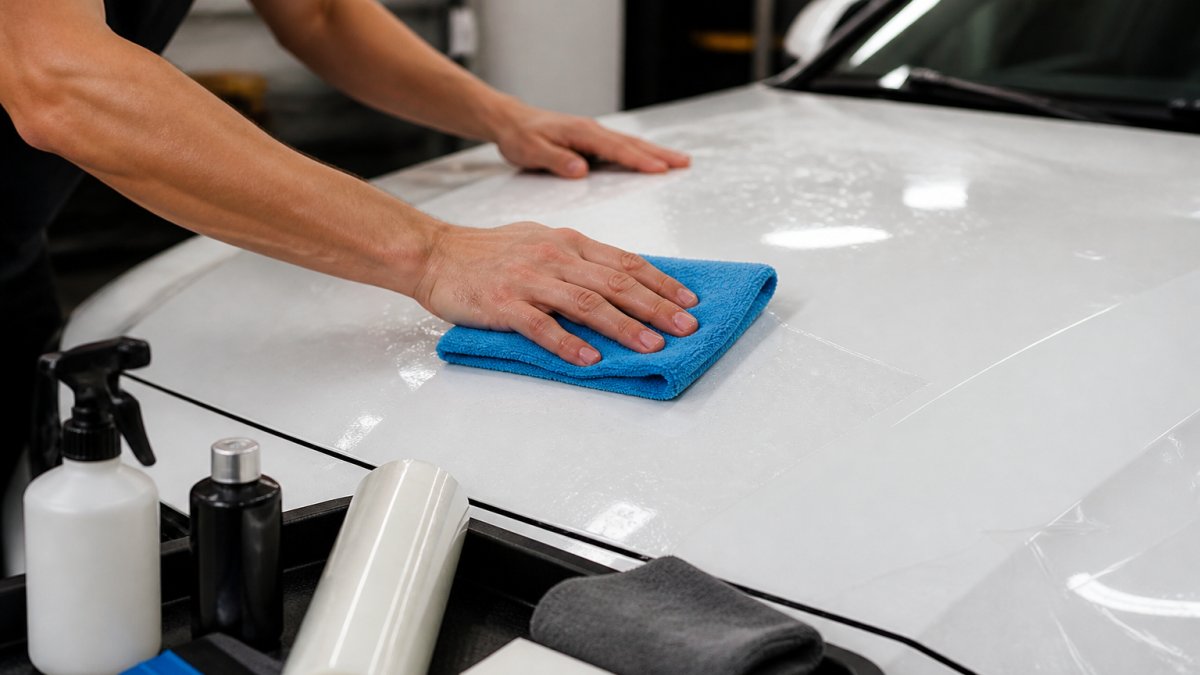
Here’s the exact process we follow.
Step 1: Choose a Film With UV Inhibitors
This is the decision that matters most, and it happens before installation. Ask your installer whether the film carries UV inhibitors and a manufacturer warranty against yellowing.
Top-tier films build UV blockers into the urethane itself. These absorb UV energy before it can break down the polymer chains. Without them, the film has no defense.
If a quote seems too low, the film is usually the reason. Cheaper material cuts the UV package first.
Step 2: Wash and Decontaminate on Schedule
Wash your film every two to four weeks, and more often in winter. Use a pH-neutral car soap and a clean microfiber mitt. Skip the automatic brush washes entirely.
Decontaminate twice a year with a clay bar or iron remover made for film. This pulls out the bonded particles that washing alone leaves behind.
Step 3: Apply a PPF-Safe Sealant
A sealant adds a sacrificial layer between your film and the environment. It takes the UV and contamination hits so the film doesn’t have to.
Use a product labeled safe for paint protection film. Wax and harsh polishes can cloud the surface or leave residue in the edges.
Reapply your PPF-safe sealant every three to four months. It’s the cheapest insurance you’ll ever buy against yellowing, and it takes about twenty minutes.
| Step | Action | Frequency |
|---|---|---|
| 1 | Choose film with UV inhibitors | Once, at install |
| 2 | Wash with pH-neutral soap | Every 2-4 weeks |
| 3 | Decontaminate with clay or iron remover | Twice a year |
| 4 | Apply PPF-safe sealant | Every 3-4 months |
How to Clean Paint Protection Film Without Causing Damage
Cleaning film is not the same as cleaning bare paint. Get it wrong and you’ll scratch the surface or lift an edge.
Start with a rinse to knock off loose grit. Then wash top-down with a pH-neutral soap and a soft microfiber mitt. Dry with a clean microfiber towel, never a bath towel.
Skip these:
- Automatic brush car washes
- Abrasive polishes and compounds
- Pressure washers held close to the edges
- Household glass or all-purpose cleaners
For bug splatter and bird droppings, soak the spot first, then wipe gently. Rubbing dry grinds the debris into the film.
The Specialty Equipment Market Association tracks aftermarket care standards, and the same gentle-handling rule applies across every film brand.
Paint Protection Film Lifespan: What to Expect
A quality film with UV inhibitors lasts five to ten years when it’s cared for. Cheap film without them can start yellowing in two to three.
Paint protection film lifespan is the number of years a film stays clear and protective before it needs replacement, typically five to ten years for premium film with proper care.
Three things shorten that window: harsh sun, skipped washing, and no sealant. A garaged car with a good maintenance routine lands at the top of the range. A daily commuter parked outside lands lower.
Film installed by a certified technician also tends to last longer. Clean edges and proper adhesion stop water and dirt from getting underneath.
The film’s UV package sets your ceiling. Your washing and sealing routine decides whether you actually reach it.
How to Remove Yellowing From PPF (When Prevention Falls Short)
Once yellowing sets in, you can’t reverse it. That’s the hard truth most people don’t want to hear.
Mild surface staining sometimes lifts with a clay bar and a dedicated film cleaner. But if the discoloration comes from UV breakdown inside the film, no product fixes it. The polymer chains have already changed.
At that point, your options are replacement or living with it. A certified installer can remove the old film and apply new material. Done correctly, removal won’t harm the paint underneath.
If you’re weighing film against other protection, the American Chemical Society explains how UV radiation degrades polymer materials, which is the same science behind film breakdown.
Common Mistakes That Accelerate PPF Yellowing
Most yellowing we see traces back to a handful of avoidable errors. Here are the big ones.
- Parking in direct sun daily with no cover or garage
- Using dish soap or harsh cleaners that strip the film’s protective layer
- Skipping the sealant because it “seems optional”
- Running through brush car washes that scratch and dull the surface
- Ignoring winter salt until spring
- Choosing the cheapest film with no UV inhibitors
A common mistake is treating film like it’s indestructible. It protects your paint, but it still needs protection of its own.
Conclusion: Protect the Film, Protect the Paint
Preventing yellowing isn’t complicated, but it does take consistency. Choose film with real UV inhibitors, wash it on schedule, and seal it regularly.
That’s where professional installation makes the difference. At 203wraps, our certified technicians install premium paint protection film built to resist UV breakdown. We specialize in high-end and collectible automobiles, and we back every install with a commitment to clean, flawless finishes. Our team has protected cars across the region for over a decade.
Book NOW with 203wraps and keep your finish clear, protected, and showroom-ready for years.
Frequently Asked Questions
Does paint protection film yellow over time?
Yes, lower-quality PPF can yellow over time, especially after 3 to 5 years of sun exposure. The discoloration comes from UV radiation breaking down the film’s top coat and adhesive layers. Higher-end films with built-in UV inhibitors resist yellowing far longer, often staying clear for 7 to 10 years. Regular washing and applying a PPF-safe sealant slows the process. If your film was installed by certified technicians using premium materials, yellowing should be minimal within the first several years.
Can yellowed paint protection film be restored?
Mild yellowing sometimes improves with a proper decontamination wash and a PPF-specific sealant, but deep discoloration that has penetrated the film’s top coat cannot be reversed. Once the film itself has chemically degraded, no polish or coating will bring back full clarity. In those cases, professional removal and reinstallation is the only real fix. To avoid reaching that point, clean the film regularly and reapply a UV-blocking sealant every few months as part of your paint protection film maintenance routine.
Does PPF yellow more noticeably on white cars?
Yellowing is far more visible on white, silver, and light-colored paint because there is no darker base tone to mask the discoloration. On black or dark blue vehicles, mild yellowing can go unnoticed for years. This does not mean white cars cause the film to yellow faster; it simply makes the change more obvious. Owners of white or pearl-finish vehicles should prioritize films with strong UV inhibitors and stick to a consistent cleaning schedule to keep the film looking clear.
How long does paint protection film last before it yellows?
Premium paint protection film typically lasts 7 to 10 years before showing noticeable yellowing, while budget films may start discoloring within 2 to 3 years. Lifespan depends on sun exposure, how often the film is cleaned, and whether a protective sealant is reapplied. Vehicles parked outdoors in strong sunlight will age faster than garage-kept cars. Following a regular maintenance routine and choosing a high-quality film at installation are the two biggest factors in extending clarity.