
Table of Contents
- What Sets Professional Automotive Window Tinting Apart
- Ceramic Window Tint for Cars: The Premium Option
- 3M vs. XPEL Window Tint: Which Film Performs Better
- Heat Rejection, UV Protection, and Glare Reduction Explained
- Automotive Window Tint Cost: What Drives Your Quote
- Car Window Tint Curing Time and Aftercare
- Choosing a High-End Tint Installer: What to Verify
- Frequently Asked Questions
Last Updated: October 11, 2026
What Sets Professional Automotive Window Tinting Apart
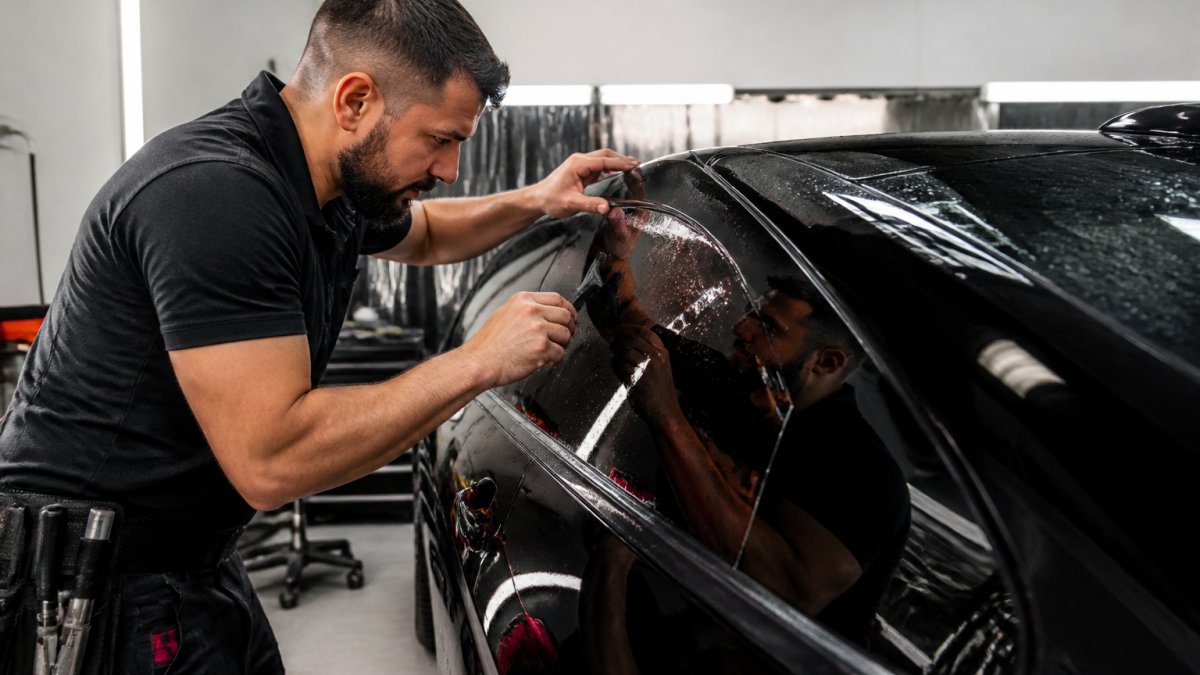
Professional automotive window tinting differs from chain shops in film quality, installation precision, and long-term performance. At 203wraps, we’ve spent over a decade perfecting the craft, seeing firsthand how the right approach transforms both protection and aesthetics.
High-end automotive window tinting requires premium film that delivers genuine heat rejection and UV protection, computer-cut precision, bubble-free application, and model-specific techniques. Rushed jobs degrade within weeks; proper installations remain flawless for years.
Professional work shows in the details: proper edge sealing prevents moisture intrusion, correct curing ensures permanent bonding, and quality aftercare keeps tint pristine. Most shops skip these steps, cutting corners and disappointing customers.
If you’re considering automotive window tinting, ask your installer about their film warranty and installation guarantee. A shop confident in their work will back it with a written commitment. That’s often the clearest signal of professionalism.
Ceramic Window Tint for Cars: The Premium Option
Ceramic window tint for cars uses non-conductive particles to reject heat without interfering with radio signals or GPS, critical for luxury vehicles where every system must function flawlessly.
Ceramic films maintain clarity without fading or discoloration and reject significantly more infrared heat than standard films. On intense sun exposure, interiors stay 10-15 degrees cooler, protecting dashboards, leather, and electronics.
Ceramic window tint for cars costs more upfront but lasts without degradation.
Ceramic films are the best choice for high-end vehicles where appearance and performance matter equally. If you’re protecting an investment, this is where the money goes.
3M vs. XPEL Window Tint: Which Film Performs Better
Both 3M and XPEL offer ceramic options with excellent heat rejection and strong warranties. Practical differences matter more than brand loyalty.
3M offers proven track records across decades with excellent UV protection and heat rejection; finding certified installers is easier in most markets.
XPEL offers comparable heat rejection with slightly better optical clarity in some formulations and has invested heavily in installer training.
Both perform excellently when installed correctly. The difference between brands is smaller than the difference between professional and rushed installation. Choose based on your installer’s expertise with each brand and warranty terms.
Heat Rejection, UV Protection, and Glare Reduction Explained
Heat rejection measures infrared blocking; premium ceramic films reject 50-70% of solar heat, keeping cabins cooler and reducing AC strain.
Quality automotive window tinting blocks 99% of UV radiation, keeping interiors vibrant instead of fading over five years.
Glare reduction softens harsh reflections, reducing eye strain and improving visibility, the benefit people notice immediately after installation.
Not all tint films perform equally on all three fronts. Some prioritize heat rejection at the expense of clarity. Others focus on glare reduction but offer modest heat rejection. Ask your installer for the specific performance metrics of the film they’re recommending, visible light transmission (VLT), solar heat rejection percentage, and UV blocking rate.
Automotive Window Tint Cost: What Drives Your Quote
Film Type and Quality
Ceramic window tint installations are a premium option. Budget films may degrade more quickly than premium options.
Vehicle Size and Window Count
Vehicle size and window count influence pricing. Curved glass, heated windows, or complex shapes may increase cost.
Existing Film Removal
Old film removal may be an additional cost depending on adhesion. Confirm whether removal is included in your quote or charged separately.
Labor and Installer Reputation
Certified technicians with manufacturer certifications charge 15-30% more than uncertified competitors, reflecting the difference between guaranteed results and a gamble.
Additional Services
Edge sealing (preventing moisture intrusion) is standard for high-end installations but may be quoted separately by some shops. Protective coatings that make the tint easier to clean may be available. Warranty upgrades or extended coverage may also be options. Ask what’s included in the base quote and what’s optional.
Location and Local Market
Urban markets with higher overhead and more competition can swing pricing in either direction. Areas with fewer certified installers may see higher prices due to limited supply. Regional climate also affects pricing; shops in high-sun areas may offer competitive rates due to higher volume, while shops in cooler climates may charge more because demand is lower and they have fewer installations to offset overhead.
Getting an Accurate Quote
For an accurate quote, contact at least three installers and request detailed breakdowns showing material cost, labor cost, and any additional services. Transparent pricing demonstrates professionalism; shops that quote over the phone without seeing your vehicle are likely underestimating or planning to upsell later. Compare not just the total price but what’s included: film type, edge sealing, removal of old tint, warranty length, and curing instructions.
Red Flags in Pricing
If a quote is significantly lower than others for the same vehicle and film type, ask why. Common reasons include using lower-quality film, skipping edge sealing, or rushing the installation. If a shop refuses to provide a written quote or won’t specify the film brand and type, that’s a sign they’re not confident in their work.
Request a quote that breaks down material cost, labor hours, edge sealing, old-film removal, and warranty. This transparency lets you compare apples to apples and identify where shops differ in value, not just price.
Car Window Tint Curing Time and Aftercare
Car window tint curing time is one of the most misunderstood aspects of the process. The film doesn’t reach full strength immediately after installation. Depending on weather and film type, full curing can take 3-5 days in ideal conditions. In cold or humid weather, it takes longer.
During curing, water droplets may appear under the film. This is normal and doesn’t indicate a failed installation. The water gradually evaporates as the adhesive sets. Avoid rolling down windows during the first few days, this can disturb the film and create bubbles that won’t disappear.
Aftercare is straightforward but important. Wait at least a week before washing the windows. Use a soft cloth and gentle cleaners, never abrasive materials that can scratch the film. Avoid parking in direct sunlight for extended periods during the first week if possible, as heat accelerates curing but can also create stress points if uneven.
Once fully cured, ceramic tint requires minimal maintenance. Regular washing with standard glass cleaner keeps it looking pristine. The film’s durability means you’ll forget about it within weeks, it simply becomes part of your vehicle.
Choosing a High-End Tint Installer: What to Verify
Finding the right installer separates a good experience from a frustrating one. Use this structured approach to evaluate candidates and avoid costly mistakes.
Step 1: Verify Certifications and Manufacturer Authorization
Reputable installers carry certifications from film manufacturers. Ask for proof of current certification, not just a claim. Certified installers have access to technical support, warranty programs, and training that uncertified shops lack. Request the installer’s certification number and confirm it with the manufacturer if needed. This is a non-negotiable baseline for high-end work.
Step 2: Review Portfolio and Recent Customer Feedback
Look for before-and-after photos showing edge work, bubble elimination, and overall precision. Pay special attention to edge sealing, you should see clean, sealed edges with no visible adhesive or gaps. Read recent customer reviews on independent platforms (Google, Yelp, industry-specific sites), not just testimonials on their website. Look for patterns: Do customers mention the installation looked perfect months later?
Step 3: Confirm Warranty Terms in Writing
A quality installer stands behind their work with a written warranty covering both film defects and installation errors. Ask specifically:
- Does the warranty cover film failure (fading, discoloration, delamination)?
- Does it cover installation defects (bubbles, peeling, edge separation)?
- What is the process for claiming warranty coverage?
- Is the warranty transferable if you sell the vehicle?
- Does the warranty require specific maintenance (approved cleaners, inspection intervals)?
If an installer won’t provide a written warranty or hedges on coverage details, that’s a red flag. Reputable shops have no problem committing to their work in writing.
Step 4: Understand State and Local Tint Laws
Before booking, confirm that the tint darkness you want is legal in your state. Tint laws vary significantly: some states prohibit any tint on the windshield, while others allow up to 70% visible light transmission (VLT). Side windows and rear windows have different limits in most states.
Step 5: Interview About Installation Process and Quality Control
Ask these specific questions:
- Do you use computer-cut templates for my vehicle model, or hand-cut on the fly? (Computer-cut is more precise.)
- What technique do you use to minimize bubbles, squeegee method, heat application, or both?
- How do you handle edge sealing, and is it included in the quote?
- What is your curing time recommendation, and what should I avoid during that period?
- If defects appear after installation (bubbles, peeling), what is your process for addressing them?
- Do you use a humidity-controlled workspace, or do you work outdoors? (Climate control improves results.)
Shops with a rigorous process will answer confidently. Vague or dismissive answers suggest they don’t prioritize precision.
Step 6: Evaluate Post-Installation Support
Ask what happens if you notice issues after the installation is complete. A reputable shop will offer a re-inspection window (typically 7-14 days) to address any defects. They should provide written aftercare instructions covering curing time, window operation, cleaning methods, and what to expect during the first week.
Step 7: Compare Multiple Quotes
Contact at least three installers and request detailed quotes. Don’t choose based on price alone; the cheapest option often reflects corners being cut. Compare:
- Film type and brand
- Warranty length and coverage
- Whether edge sealing is included
- Whether old-film removal is included
- Labor hours and technician experience
- Post-installation support and re-inspection policy
The shop offering the best value, not just the lowest price, is your best choice.
Red Flags to Avoid
- Installer won’t provide written warranty
- Refuses to discuss state tint laws or recommends illegal darkness
- Quotes over the phone without seeing your vehicle
- Can’t show certifications or recent portfolio
- Dismisses questions about process or edge sealing
- Offers significantly lower pricing without clear justification
- No mention of curing time or aftercare instructions
203wraps is ideal for vehicle owners who refuse to compromise on quality. Our certified technicians have over a decade of experience with high-end and collectible automobiles. We use premium ceramic films, computer-cut precision, and meticulous edge sealing. Every installation comes with a written warranty because we stand behind our work. We verify compliance with state tint laws and provide detailed aftercare guidance. If you want automotive window tinting done right the first time, we deliver that standard consistently.
Frequently Asked Questions
What’s the difference between ceramic window tint and standard dyed film?
Ceramic window tint for cars uses advanced nano-ceramic particles that reject heat and UV rays without interfering with electronics or radio signals. Dyed film relies on absorbing heat, which causes it to fade over time. Ceramic film maintains its color and performance for 10+ years, making it the premium choice for high-end vehicles. The trade-off is cost, but the durability and superior heat rejection justify the investment for luxury and exotic automobiles.
Is 3M or XPEL window tint better for automotive applications?
3M vs. XPEL window tint represents two industry leaders with different strengths. XPEL excels in clarity and heat rejection, particularly for high-performance films. 3M offers broader product range and proven longevity. Both are premium brands that resist yellowing and maintain optical clarity. The best choice depends on your vehicle type and climate. A certified installer can recommend which film matches your priorities, whether that’s maximum heat rejection or superior optical quality.
How long does car window tint curing time take before I can use my windows normally?
Car window tint curing time typically ranges from 24 to 72 hours before you can safely roll down windows. During this period, the adhesive sets and the film bonds to the glass. Temperature and humidity affect curing speed; cold or humid conditions extend the timeline. Your installer will provide specific aftercare instructions. Avoid washing the vehicle for at least one week. Rushing the curing process risks bubbling, peeling, or improper adhesion, so patience during this phase protects your investment.
What should I look for in a professional window tint installer?
Verify that the installer holds current certifications from film manufacturers, has documented experience with high-end and exotic vehicles, and uses computer-cut precision equipment. Ask about their warranty on both film and workmanship, check customer reviews for quality consistency, and confirm they follow state and local tint laws. A reputable shop will offer a detailed quote, explain film options with performance specs, and provide written aftercare instructions. Professional installation protects your vehicle’s finish and ensures the tint performs as promised.