
Table of Contents
- Is Professional Window Tinting Worth It? The Short Answer
- Professional Car Window Tinting Cost: What You’re Paying For
- Ceramic Window Tint Worth It? Performance You Can Measure
- Professional vs DIY Window Tint: Where the Difference Shows
- How Long Does Car Window Tint Last?
- Tint Laws, Legal Limits, and Why Cops Care
- How to Evaluate an Installer and Read a Quote
- Frequently Asked Questions
Last Updated: October 16, 2026
Is Professional Window Tinting Worth It? The Short Answer
Yes, professional window tinting is worth it for most drivers, provided the film is quality and the installer is certified.
Professional window tinting is the installation of a thin film on a vehicle’s glass to reduce heat, block ultraviolet rays, cut glare, and add privacy.
Federal Motor Vehicle Safety Standard No. 205 on glazing materials governs how automotive glass is manufactured, though tint darkness itself is set at the state level.
What Professional Window Tinting Actually Delivers
The core deliverables are measurable: lower cabin temperature, reduced glare, and protection for people and interiors. Ultraviolet rays fade upholstery, dashboards, and trim over time, and window film blocks most of that exposure.
Glare reduction matters for driving visibility during low sun and at night, when headlights from behind reflect off glass. Privacy and vehicle security improve too, since dark film hides valuables from casual view, which is a real benefit for commuters who park in public lots.
Professional Car Window Tinting Cost: What You’re Paying For
Most quotes land in a predictable range once you know the three variables that set the price: film type, how many windows you cover, and how much labor the vehicle’s glass requires.
| Coverage | Dyed Film | Carbon Film | Ceramic Film |
|---|---|---|---|
| Two front doors only | $80-$150 | $120-$200 | $180-$300 |
| Full side and rear (5 windows) | $150-$300 | $250-$450 | $400-$700 |
| Full vehicle plus windshield strip | $200-$400 | $350-$600 | $550-$900 |
| Full vehicle plus full windshield | $300-$550 | $500-$850 | $800-$1,300 |
SUVs, trucks, and vans sit at the top of each range because they have more glass and larger rear panels. Two-door coupes with heavily curved rear glass can also push toward the high end, because curved glass takes longer to heat-shrink and fit cleanly.
What Actually Drives the Number
- Film type. Dyed film is the least expensive to manufacture and the least heat-resistant. Carbon sits in the middle. Ceramic uses non-conductive ceramic nanoparticles and costs the most per square foot, which is why it dominates the upper ranges above.
- Window count and glass area. A five-window job on a sedan is not the same as a five-window job on a three-row SUV. More square footage means more film and more labor.
- Glass curvature. Flat side glass installs quickly. Deeply curved rear glass and panoramic roofs require heat shrinking and can add an hour or more of labor.
Why Cheap Tint Quotes Usually Cost More Later
A quote that comes in well below the ranges above is usually cutting one of four things: film thickness and grade, prep time, warranty backing, or installer experience. Cheap dyed film tends to fail in predictable ways, bubbling, peeling, and purple fading within a few years. When that happens, you pay for removal and reinstallation, and removal alone often runs $50-$150 on top of the original install.
Bargain film often bubbles or turns purple within a few years, and removing failed tint can be an additional cost. Ask what film brand and warranty the shop uses before you commit.
How to Compare Two Quotes Fairly
Two quotes for “ceramic tint, full car” are not comparable unless they match on four points: the exact film brand and product line, the list of windows covered, whether old film removal is included, and the length and terms of the warranty. Ask each shop to put those four items in writing.
For current pricing on your specific vehicle, request a quote from 203wraps directly.
Ceramic Window Tint Worth It? Performance You Can Measure
Ceramic film is worth it when heat rejection matters more to you than upfront price. The reason is measurable, and it comes down to four numbers you should ask any shop to show you on the film’s specification sheet.
The Four Numbers That Actually Matter
- Visible light transmission (VLT). The percentage of visible light the film lets through. A 35% VLT film lets 35% of visible light pass. VLT determines how dark the window looks and is the number state tint laws regulate. Lower VLT means darker and less legal headroom.
- UV rejection. The percentage of ultraviolet radiation blocked. Quality films, dyed, carbon, and ceramic alike, typically reject 99% of UV. This is the metric that protects skin and prevents interior fading, and it is not the same as heat rejection.
- Infrared (IR) rejection. The percentage of infrared energy blocked, usually measured in a specific IR band. This is where ceramic separates from dyed film. IR rejection is the closest single proxy for how much solar heat the film keeps out.
These four are not interchangeable. A film can reject 99% of UV and still let most heat through. A film can have a low VLT (very dark) and still have mediocre TSER. When a shop quotes “99% heat rejection,” ask which metric they mean, usually it is UV, not heat.
Ceramic vs. Standard Tint: What Changes in the Cabin
| Film Type | Typical VLT Options | UV Rejection | IR Rejection | TSER | Signal Interference |
|---|---|---|---|---|---|
| Dyed | 5%-50% | ~99% | Low | Low | None |
| Carbon | 5%-50% | ~99% | Moderate | Moderate | None |
| Ceramic | 5%-70% | ~99% | High | High | None |
| Metallic | 5%-50% | ~99% | Moderate | Moderate | Possible |
Dyed film works by absorbing heat into the film and glass, which is why a dyed-tinted car can still feel hot after sitting in the sun, the heat is in the glass, radiating inward. Ceramic film uses non-conductive ceramic particles that reflect a larger share of infrared energy rather than absorbing it, so less heat enters the cabin in the first place.
What That Means in Practice
On a hot day, the practical difference shows up in three places: how hot the cabin feels after the car sits in the sun, how long the air conditioning takes to bring the temperature down, and how much the AC has to work on a long commute.
If you park outdoors at work, commute in summer traffic, or live somewhere with long, intense summers, ceramic usually pays back in comfort and interior protection over the years you own the car.
Ask the shop for the film’s specification sheet and compare TSER and IR rejection across the films they offer. If they cannot produce a spec sheet, that is your answer about the film’s quality.
Professional vs DIY Window Tint: Where the Difference Shows
Professional vs DIY window tint is mostly a question of finish quality and durability. DIY kits are cheaper, but the variables that decide whether film lasts, such as clean-room prep, heat shrinking, and squeegee technique, are exactly what takes years to master.
Professional installation also brings a warranty, and manufacturer specifications are only honored when film is installed by an approved installer. On curved rear glass, DIY attempts frequently trap dust or crease the film.
How Long Does Car Window Tint Last?
Car window tint lasts roughly 5 to 10 years with quality film and correct installation, and ceramic film typically lasts longer than dyed film. Film durability depends on film quality, sun exposure, and how you maintain it.
Care matters. Wait for the curing period before rolling windows down, clean with a soft cloth and non-ammonia cleaner, and avoid abrasive products.
Ask for the film’s manufacturer warranty in writing, not just the shop’s verbal promise. A real warranty covers bubbling, peeling, and discoloration, and it names the film brand so you can verify coverage.
Tint Laws, Legal Limits, and Why Cops Care
Tint laws set legal limits on how dark film can be, and they vary by state, so check your state’s rules before choosing a tint percentage.
For state-specific legal limits, state window tint statutes and VLT requirements and your state motor vehicle department are the sources to check. Getting it wrong means failing inspection or a fix-it ticket, so confirm the numbers for your state before installation.
How to Evaluate an Installer and Read a Quote
Evaluate an installer by certification, film brand, warranty, and shop conditions, not by price alone. A certified technician, a clean and well-lit bay, and a written warranty are the signs of a shop that stands behind its work.
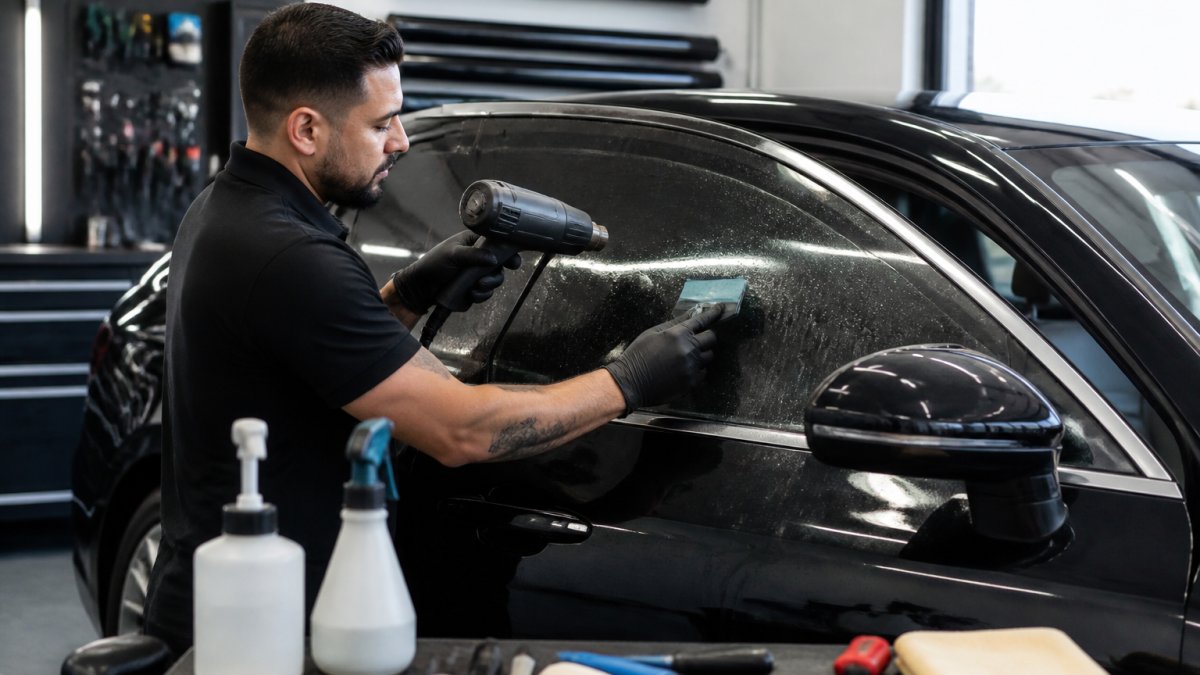
What to look for on a quote:
- Film brand and type (dyed, carbon, or ceramic)
- Which windows are covered, and whether old film removal is included
- Warranty length and what it covers
- Installer certification and shop reviews
The best quote names the film brand, lists every window covered, includes removal of old film, and states the warranty in writing. If a quote is missing any of these, ask before you book.
At 203wraps, our certified technicians install premium film on high-end and collectible vehicles, and we back every job with a clean install and a warranty you can verify. If you want tint that holds up to salt spray, gravel, and summer heat, that is the standard to hold any shop to.
Frequently Asked Questions
Is professional window tinting worth the cost?
For most drivers, yes. Professional window tinting delivers even coverage, fewer bubbles, and a warranty that DIY films rarely match. It also protects your interior from fading and reduces glare, which matters on long commutes. If you plan to keep your car more than two years, the upfront investment usually pays off in comfort and resale appearance. Request a quote from 203wraps to see pricing for your vehicle.
Is 35% or 20% tint darker?
20% tint is darker. The percentage refers to visible light transmission (VLT), so 20% allows less light through than 35%. Many states restrict how dark front side windows can be, so check your local tint laws before choosing. A professional installer can show you samples on your actual glass so you can compare before committing.
Does window tint help keep a car cooler?
Yes. Window film blocks a portion of infrared heat and solar heat before it enters the cabin. Ceramic tint typically rejects more heat than dyed or standard film, which can reduce how hard your air conditioning works. The effect is most noticeable on hot days and during long drives, especially in vehicles with large glass areas.
Is ceramic window tint worth the extra money?
Ceramic tint costs more upfront but offers better heat rejection, clearer visibility, and less interference with phone or GPS signals than metallic films. If you park outside often or drive a vehicle with a lot of glass, the comfort gain is noticeable. For a daily commuter in stop-and-go traffic, ceramic window tint is often the better long-term choice.
How long does professionally installed window tint last?
A quality film installed by a certified technician typically lasts many years, often outlasting the average ownership period. Longevity depends on film quality, sun exposure, and how you care for it. Avoid ammonia-based cleaners and wait for the curing period after installation. Warranties from professional shops usually cover bubbling, peeling, and color change.
Is professional window tint better than DIY tint?
Professional installation gives you a cleaner finish, fewer defects, and a warranty. DIY kits can work for simple flat windows, but curved rear glass and tight corners are where DIY results usually show streaks or lifting. If you care about appearance and long-term durability, professional vs DIY window tint is not a close comparison.
How much does professional car window tinting cost?
Pricing depends on your vehicle, the film type, and how many windows you tint. Ceramic films cost more than standard dyed or carbon films, and larger vehicles require more material. Rather than quote a flat number, a reputable shop will assess your glass and film choice. Contact 203wraps for a quote tailored to your car.
Why do police care about window tint?
Police enforce tint laws because very dark windows can reduce a driver’s ability to see pedestrians, cyclists, and other vehicles, especially at night. Officers also need to see inside a vehicle during traffic stops for their safety. Legal limits vary by state, so check your state’s rules or ask your installer before choosing a tint percentage.
Deciding whether professional window tinting is worth it comes down to how much you value durability, comfort, and protection. Cheap film costs less today and more tomorrow, while a certified install protects your interior, cuts heat and glare, and lasts for years. At 203wraps, our certified technicians bring over a decade of experience, a commitment to clean installs, and premium finishes built for high-end and collectible cars. Book now with 203wraps and get tint that looks right and holds up.